Showing posts with label Great Commandment. Show all posts

Friday, 1 July 2016

Going Further: the heart of my faith = sharing the good news?

See this post for an intro to this series.

What is the heart of [the candidate's] faith: the good news they would wish to share with others? 

This is a very well-timed post to write considering my recent conversation with the rector about her reservations concerning my faith - what my relationship with God looks like, and how I express it to others.

--

So turning to the question, my immediate response is the heart of my faith is a trust in God, and the the good news I wish to share with others is that they can trust God too. God is for everyone. That doesn't mean everyone should be Christian, be religious, or even put Jesus at the centre of their lives. Jesus is the good news but the Messiah, the Son of God, the Word Made Flesh is so much more than the bloke from Nazareth.

Jesus embodies the right ordering of creation, that God and humankind are in harmonious relationship. That is the good news, that is what Jesus being born into the world and fulfilling the Law shows us. God is for everyone because everyone should have a relationship with God. I like John's gospel best, even though it is dense as a jungle and a bit mind-bendy, because of the emphasis on the Spirit and that beautiful prologue about the Word. To have a relationship with God through Jesus is to know the Word by the power of the Spirit, and I don't think that necessarily means knowing the bloke from Nazareth.

I think our mission is to spread the Word, and the Word is however God best has a relationship with each person. Our Word, our story is a unique back and forth between each of us and God. Sure, I think the Christian church and being a follower of Jesus of Nazareth is probably the best road for the majority of people. But the 'majority' of all humankind that has lived, is living, and will live, still leaves a whopping number of people who are the minority (the minority of a massive number is still a big number).

I like the 'many paths on the mountain' pluralism metaphor. If God is the destination, the top of the mountain, there are many ways up the mountain. There are lots of places to start from, there are paths that intersect, and cross, and converge at points. And the top is big, so when people are looking to it, and reach it, it looks different to each individual. Exclusivists, those that say their path is the only one, imagine the mountain has a fence, and a gate to only one, fenced path. Pluralists think it's a free for all. Inclusivists like me think Christ has cleared one path, without any barriers, but some people want or need to go another way and it's just as legitimate, just maybe not as easy.
Terrible drawing of exclusivism
Terrible drawing of inclusivism
Terrible drawing of pluralism
I feel like the perception that is most pervasive among both religious and non-religious folks is that all religion is inherently exclusivist, and that doesn't sit right with most people in modern western first world culture, AND a lot of people in cultures of eastern religion (eastern theological thought is often a lot more pluralistic). I want to share the good news that it isn't like that! God is vastly more complex and loving than to have a boxed in, one-size-fits-all relationship with humankind, when humankind is beautifully and wonderfully made intrinsically varied and diverse. God has created each us as a unique soul so why would God need uniformity in our relationships with God?

The heart of my faith is a trust in God. Some people have trust issues; their relationship to God looks very different to mine. I rejoice with anyone who has a relationship to God and want to invite others to see the glory of serving the Creator who is at the heart of the world. But I don't want to tell them they have to trust God, or follow Christ, or anything other than what Jesus summed up as the only universal truth that everyone can take to heart is 'love God, love neighbour'. Everything else is up for debate, including what that looks like in different people's lives.

I feel the only evil we have to overcome is human evil, and the how and why are right there in the Great Commandment. I don't like overuse of 'evil' as a concept, which links to the terrible messages most people are getting about religion. I am religious because I want to see a better world, and following God in my way gives me the tools and strength to do my part in bringing about that better world. It's not a dogmatic as 'do what God says and you will receive the kingdom of heaven'. More like 'form a relationship with God and seek the ways of love that bring about the kingdom of heaven on earth'. The Word, and Love, are huge, world-encompassing aspects of the vastly greater reality of God, and for me, they are the aspects on which my trust hangs as the heart of my faith, and the aspects I feel called to express and bring people to, in their own way, by the grace of God partly working through me.


Saturday, 9 January 2016

Video: What I was born to do


(I'm writing this assuming you have watched this video and those videos that are linked in it.)

As hard as it is to think about God's plan for us, it is a very human thing to try and gain a sense of perspective, especially nowadays when we have a greater scientific understanding of the 14 billion years of spacetime, and therefore also of the seeming insignificance of our own 80ish years on one small part of this single planet. Add in millennial issues of what counts as success - as The Circus Spirit are discussing this month, how relevant - and often finding it difficult to deal with failure, either trying too hard or not bothering to try at all, and it's unsurprising that I find it a tough subject.

We want an obvious goal in life. That would make it simple. My rector Lucy likes to tell of someone who told her it was easy - Job House Man Car. Tick all those off, and well done, you've succeeded at life as far as she was concerned. But there is very little that is one size fits all, and so we can't really make it simple.

Do I need to figure out what my list is to tick off for success? On the one hand, having a clearer understanding of what I want out of my life and what I think will make me happy will help guide my decision making, give me something to aim for as a starting point, and who says I can't keep adding things to the list? On the other hand, would I be able to cope with failure, if I were to be so bold as to articulate what I want? It would be hard to shrug off failing at something that I had given the significance of being an official thing to achieve in life.

Have a plan for my life vs. take it as it comes. I suppose I fall into the former camp because I don't just want to wait for opportunity to knock, I want to get out there and be proactive in my own life - "You're supposed to be the leading lady in your own life, for God's sake!" to quote the film The Holiday. If I'm going to do that, then I must have something aim for - proactivity is powerless without direction. If I need something to aim for, doesn't it seem best to
- aim for what is most important
- aim for what makes me happy
- aim for what makes others happy
- and aim for what makes the world a better place?

That's summarised by the Great Commandment - love God, love your neighbour as yourself.

- God is most important, for God is Love and Love is at the centre of all things; so aiming for God is to love God.
- If I do that, I'll be aiming for what makes me happy, because I'll be going in the right direction, going with the grain of the universe and living a life of love, which I've always been drawn to. Love gives us connection to the people and world we live with, which is what gives life meaning.
- Love your neighbour as yourself is literally aiming for what makes others happy, from a place of love that is based on self-love
- and this is the divine game plan that will bring the kingdom of heaven, ie. make the world a better place.

My current thinking is that God wants me to a priest, and I agree that this is an opportunity to make me happy, others happy, and the world a better place, in small ways anyway. So it seems like a good plan to direct my decisions over the next few years.

Was it what I was born to do? The character who sings this song, Campbell, wants to be the captain of her cheerleading squad, and lead them to victory at the national championships. She sees this as the one achievement she was 'born to do'.

But that opportunity is taken from her. She's moved to a new school that doesn't have a squad. Sadly, she still thinks it's the entire point of her life, so she lies and cheats to make the dance crew into a squad to take them to regionals then nationals, in an attempt to achieve her raison d'etre. She can't accept the failure so she ends up ruining burgeoning friendships when her deception is revealed.

But there are two characters with better perspective and more maturity than her, and show her where she went wrong and what is really important. Randall explains how high school is not the be-all-and-end-all of life (shockingly) and there are much bigger dreams to dedicate your life too; and Danielle, seeing that she and her crew have got something out of the cheerleading they've been doing despite the deception it was based on, gives Campbell a second chance, giving her a different reason to compete.

They go to compete, but they ignore the rules, forget about winning, and just be themselves, expressive, excited, a crew that loves being with each other and excelling at what they love together. They don't win and Campbell's old team do, but Campbell realises that she won is everything else that matters.

It's a daft show, with great music and a lot of comedy, but that story dealing with not getting what you dreamt of, and realising you don't have to be restricted by your own expectations of your life - that's deep, man.

How do I know I've succeeded? Do I need to know what I was born to do to do it? Do I need to do it? Campbell's story can say several things. You might be wrong about what you were born to do, and if that's the case, it's not the end of the world. A goal is not bigger than the life you have already, especially the people and relationships in it, and should not take precedence over them. Understanding where your life is going is a process, and it's helpful to gain perspective, so you aren't narrow minded and restricted in where life takes you, which in turn restricts your opportunities for happiness and success.

It's counter intuitive, but by not letting the 'goals to succeed in life' that you might have gain too much importance, you will have to greater chance at succeeding in life.

For me? I can't let go a vague plan and some ideas of what I want. That plan is based on ideas of who I am, going back to Hank's video. I have labels for myself too, but he's right that really, we can never be sure of who we are. To paraphrase, I am a story I tell myself, which means it's subjective, incomplete and a little bit of a lie; not just what I was born with but the result of many factors, including the expectations from others and myself. The plan can't be sure because who I am is not sure. The plan cannot be consistent, because I am not consistent.

So I should give up wanting the plan to be sure and consistent, and give up living like the expectation of how I live my life is the only factor. I want to be doing a good job becoming the kind of person I want to be; but these wants and ideas should just be tools, not boxes.

Tuesday, 29 December 2015

Being 'religious'

In the last few months I have realised that I am religious. It may sound weird, that I have only just realised this, looking at my life:

- I've identified as Christian since I was 6
- I have worn a crucifix 24/7 since I was 14, so for almost a decade
- I have been going to church every week for over 4 years
- I'm baptised and, more importantly, confirmed
- I've been increasingly involved in church life, including
     - singing in the choir
     - reading the gospel
     - being a server
     - running the Circus Spirit
     - substituting for the cantor
- I pray daily
- I use prayer beads
- I get ashed and wear it for the rest of the day
- I plan on reading the Bible in a year in 2016
- I keep a spiritual journal
- I stay overnight and sleep in the church for the Easter Vigil
- I even took a month off work to volunteer in Advent

To other people, I am obviously religious. I, and others, find it odd if I don't wear a cross, and I get angsty if I miss a Sunday morning for whatever reason. In such a precarious career as freelance theatre stage manager, church is one of the anchors in my life, alongside my family, my boyfriend, and my friends. My aims in life include living by the Great Commandment, and the Golden Rule; being a disciple to Jesus; centering and orientating my life around my relationship with God.

I'm obviously religious. But if you had asked me last year what I identified as, the list would not have included 'religious'. It was only when someone asked me if one of my friends at church was religious that I said "well, yeah, he is, but he only goes to church as much as I do...oh..." and the penny dropped.

I was taken aback. I almost wanted to defend myself against the accusation. And it's this reaction that has made me think about it a bit deeper. Why did I not want to be called 'religious', when it is true? I'm not claiming the "I'm not religious, I'm spiritual" thing, but I would much rather be 'a person of faith'.

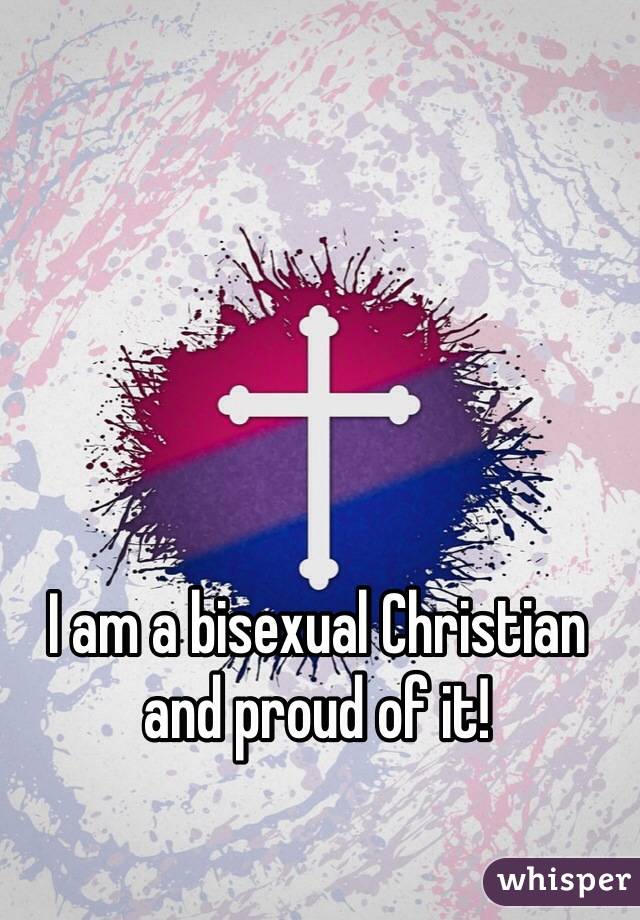
'Faith' has a better rep than religion. I think it's definitely a generational thing; there's a feeling of peer pressure to avoid the 'religious' label, and in many ways, a common issue young Christians have is an instinct to hide their religion. Easier to come out as bisexual than Christian! Millennials pride themselves of being progressive, and liberal, and reasonable, and that leads to a rejection of all things seen as not based on reason, including any spirituality or, and especially, a belief in God. Believing in God is often seen as an indication of inferiority, and so going as far as to be religious itself implies an
irrational adherence to dogma. Modern Western mainstream culture seems to take the view that, alongside gender and race equality, freedom of sexuality, and freedom of speech, the conclusion that there is no God is the obvious, and basically only acceptable, conclusion. It's fashionable to hate religion.

One cannot be religious and considered reasonable, rational, even maybe intelligent. So I think my initial instinct to reject the term comes from a fear that it will class me in the same category as religious fundamentalists, religious nutters, religious terrorists, religious indoctrination, conservatism, creationism, zealots, the judgmental, the out of touch. Calling people religious is often a way of excluding them based on assumptions about their views or behaviour ie. it's a label, so in narrow minds leads to prejudice.

But I am religious. Not because I have been indoctrinated, not because I think everyone should live their lives the way I do, and not because it's easier. I am religious because I practice religion, but I
practice good religion. Bad religion is exactly what Jesus railed against when arguing with the Pharisees etc. Good religion is a structure, a set of tools to sustain the faith, the relationship with Jesus, God, the universe. The practices, the actions and works are not the important bit, but I need them, flawed human being as I am, to keep up my end of the relationship. I use the combined wisdom of the tradition and scripture to give me a head start, rather than starting at the beginning on my own. I wouldn't get anywhere! It's also a useful motivation to do things that, even though reason and experience tell me I should, I probably wouldn't end up doing if on my own.

This is if I get it right, and I do fail, of course I do. When I fail, my religiosity is just as insubstantial and a distortion as it was when Jesus threw his wobbly in the Temple. And that's where the negativity of 'religious' catches me, and makes me squirm. It's a reminder that though I am aware of good religion, and I try my best, religion gets in my way sometimes, making me no better than the fundamentalists I so desperately do not want to be.

But my hope is that I get it right enough to outweigh when I get it wrong. I hope I can live a life that is, yes, religious, but in a way that makes people rethink their assumption that being religious is necessarily a negative thing. I find so much that is good, and useful, and wonderful, in religion, and somehow, I hope I can show that to others.

PS a good book to show more of the good in religion than the "religions do good stuff" argument, I recommend Religion for Atheists by Alain de Botton.

Friday, 27 November 2015

Exploring my doubts

Doubt is not something I want to put words to. Admitting that I have doubts about my calling is quite painful. But doubt is an important part of faith. I don't think a lot of people really realise that. I know for example I've had an argument with my boyfriend about the nature of faith - he thought is was something you feel and not based on evidence. I countered that he was describing blind faith, and I did not recognise his definition as the faith I have.

Faith is not always blind
Blind faith is 100% convinced, but true faith has real conviction because it constantly doubts. Why have faith in something if you haven't reason to? I have doubted pretty much every part of my faith, including the big ones like do I believe in God. I like going back to the very Jewish idea, which I think Anglicanism embraces very well, of arguing. Arguing with your faith, interrogating your scripture, contemplating other possibilities. Moses (Exodus 4) immediately springs to mind as someone who directly shouted at God, questioned God (Exodus 3), and in the New Testment, the Apostle Peter wavered in faith (Matt 14); even Jesus had moments, eg. at the Mount of Olives (Luke 22), and I considered not even mentioning Doubting Thomas as the obvious choice.

These doubters were all true role models of faith. And so I feel stronger for being able to follow their example, and speak out about my doubts, to face them head on, in the never-ending struggle and journey of faith.

***

I have worried that I am deluded. Most of the time it makes so much sense to think that I am 'destined' to be a priest, then I scold myself for being so arrogant, then I worry that not feeling special is a sign that it's not a true calling, but surely modesty is better than self-grandeur...

It gets a little cyclical, and I end up feeling lost and guilty. Okay, so confront it, what if I am deluded? (Forgetting the possibility of being deluded that there is a God, and concentrating on the possibility of being deluded that I feel a calling from God). I have been getting more and more religious, so is thinking there's a calling just part of my very thorough way of doing things and being a priest seems the obvious way of 'doing religion thoroughly', and that's the real reason I'm doing it? Does it feel right because it feels like the way to do that part of my life 'properly'?

Okay, I might have a calling, but what if I'm called to something else? Being ordained and being a full time priest is just one of many callings for Christians. I might be copping out of the hard reality of juggling Christianity and other parts of my life. Many people, most Christians in fact, live out their faith whilst in full time secular employment, why do I feel I have to put my Christianity as not just my religion but my job, and not just that but a community role, a life vocation?

Surely I'm not the right person to represent the Church and lead an example of Christ-like living. I've never been naturally a 'people person', and a lot of people find me too loud, boisterous, direct and intense. I have very liberal attitudes to things like sex and relationships that many in the Church would probably object to, even though I go about my love life with as much care to Love God as much as Love Neighbour as any other part of my life. But part of me worries that I'm just wrong. I think I'm doing good not evil, that I'm living conscientiously, trying to not sin, but what if I'm wrong? I swear, take Christ's name in vain, get drunk, shout at my family, buy nice things, don't give change to beggars. There are people in the world who genuinely think I'm a bad person; there's at least one I can think of who probably actually hates me. That doesn't sound like a priest.

No one seems as enthusiastic about it as me. Is their support just politeness? There's a lot in the literature about other people affirming your calling - nope. One crazy stranger, that's all I've had. Not my priest, my boyfriend, my family, my friends, no one has positively said they think it's a good idea. I'm not trying to criticise them - if that's how they feel, I certainly want them to be honest. So if they are, if I'm in the minority of one that thinks I could be a priest, how likely is it that I'm the one that's right?
I have no issues with my human sexuality

Let's look at the Criteria again (see also previous post) and what I can't do or haven't got.

  • Others have not confirmed my inner conviction.
  • I have barely any spirituality; I generally never sit in prayer to God apart from reading other people's words. Nor have I done any Bible study. I don't see how the world and others have been affected my practice of prayer, and frankly I have serious issues with the notion of 'the power of prayer'. I've never understood how spiritual practice 'sustains and energises'.
  • I've struggled with maintaining appropriateness in professional relationships - I'm a flirt, blunt, emotional. I'm an out bisexual - whoops, Issues of Human Sexuality.
  • People don't follow me, my leadership skills leave a lot to be desired. How can I offer an example of faith when I feel culturally compelled to not mention God so as not to make atheists uncomfortable?
  • I feel anger and fear about mission, a distinct mistrust and aversion to evangelising.
***


So what do I doubt about my calling? I doubt that I'm called at all, I doubt that I'm called specifically to be ordained, I doubt that I'm the right type of person to be ordained, I doubt that I'm right to disagree with my support network, I doubt that I can fit the criteria for being ordained.

And it is terrifying. I hate having doubts. I have so much conviction, assurance and excitement about my calling, it knocks at my core to express doubt. I've used this metaphor before: I have a bedrock of trust in God, on which are pillars of faith, holding up the foundations of my soul, on which the building of my heart sits, in the infusing cloud of my brain. Doubt is lightning spearing from that cloud, and rocking the whole structure. My emotions get knocked about and chaotic, my soul ripples and sends shockwaves through my faith, and my trust is holding firm but not unwobbled.


***

If you want to read the positive side of this argument with myself, read the post Reasons I think I'd make a good priest/want to be priest.

Saturday, 14 November 2015

Reasons I think I'd make a good priest/want to be priest

(See also my post on Why I don't think I'm called to be a Lay Reader.)

This is a hard exercise. Not because I haven't thought about and have a few ideas of why I think I would suit being a priest, and I certainly know why I want to be a priest; no, I find it difficult to stop myself feeling like I'm bragging, or being attention seeking. I've said it before on this blog, it feels like saying "look at me, I'm special", and no reasoning with myself has been enough to convince me that it isn't that.

Rationally, I understand it is important for me to be able to articulate evidence for my position, defend that position. I'm not going to be attacked per se, but I will be challenged, rightly so, questioned heavily to explore my sense of calling and what it will mean for my future, in a tangible way for other people (ie the Church) so they can be sure of implementing changes in my life.

So that's what I'm going try to do. Here goes.

Why do I want to be a priest?

To quote my spiritual journal (SJ): "It seems inescapable, inevitable and wholly desirable."

I want to be able to live my life as a disciple of Christ, because I think following the good news is the way the majority of people could live their lives and move closer to the coming of the Kingdom, establishing a closer relationship with God and therefore improving life for all.

I have had a niggling suspicion that I might be ordained since my late teens, and that hasn't scared me. It's felt comforting, I've been looking forward to it. I realised at about the same time that my faith has progressed in clear steps, thoroughly, from the ground up. I've always been given an opportunity, pointed towards the next step, at exactly the moment that I have gone through and become comfortable with the last. That upward gradient naturally carries on to ordination in the future, in my judgement of the evidence.

I can't imagine life ending up any other way. I can't see myself managing to fully live my calling to be a disciple of Christ any other way. Knowing that I could put my faith in the centre of my life in an all encompassing way? That's what I want. I won't manage to live that way, the way I want, if I carry on with just a secular job. How can I best Love God, Love Neighbour? (SJ)"Doing what I think is good, standing against wrong that I encounter, preventing wrong happening. Show love, mercy and forgiveness to all those I encounter in my life." And I have no ambition in stage management, I don't want to make a career out of it. Being a priest is the right method for me to do God's work, and it's becoming obvious that it is the best choice for me.

The church services that I connect with most are the ones when I'm at the front. I'm the cantor, or I'm a server. I'm an active role in the worship, and able to be part of the team that provides the service for others to use as worship.

Why do I want to be a priest? Stories. They are the essence of life, at least in my understanding of it. I love telling them, reading them, watching them, living my own story, being part of other people's, listening to others tell their own or another's, facilitating the telling of them. My holy scripture is in a narrative form - that's the story I want to share and blend into my own. "In church we don't just tell the story [of the Passion], we live it together day by day by eating and drinking together in this Eucharist" (I'm quoting this sermon by my rector).

What am I passionate about? Doing the right thing. Being a good person and showing others they should too for many reasons, but ultimately in response to the universe and the love of God that permeates every place and moment in spacetime. That's what the story tells me.

And to quote my spiritual journal again: "I want to serve, devote my life to God's will and God's people, spreading the story, and bettering the world in the aspiration for the kingdom of God."

Why do I think I'd be a good priest?

When I first got an inkling of a call, I would not have made a good priest. I was proud, blunt, inconsiderate, only just reconnecting with others after years of loneliness, quick to take offence and slow to forgive.

But the core parts of me were appropriate; there was groundwork for a holy life. I've always been passionate, and focused. I have a strong confidence that I think comes from a bedrock of trust in God, and a positive outlook on life. When I commit, I'm dedicated, and even back then I would go the extra mile for projects or for other people. I've always felt an intense connection with love, though at the time, hormones influenced where I focused my energies! Eros was my idol for a while, I will admit that; I was not immune to the angst of the teen years.

But in the years since, I have grown into a stronger sense of agape. As I've written before, I committed to self-improvement when I realised I was not coming across in a particularly universally liked way, so I learnt patience, forgiveness, greater consideration, grew a thicker skin and calmed down my rather aggressive style. I refuse to hold grudges or stop giving people chances. I'm now a good listener for example, I have been told a number of times since; I genuinely enjoy hearing people talk and gaging how to respond to them. Doing stage management has been a training ground for ministry, for sure. There is change, pressure and stress, with a need for balance and flexibility (I'm paraphrasing the Summary of Criteria) in all that stage management do, and I have been developing the skills for just that. Now I'm the one on the team who takes joy from what I can, big or small, and shares that with others.

I think a gift I can bring is helping others see the sacred in the secular. And it might sound illogical if I can't claim to manage to do so in my own life, but helping others is an overall theme I want in my life, and however odd it seems, that feels like part of that theme. You'll see in my profile that "I feel like a good word to sum up who I am and what I do is 'Facilitator'" and I stand by that as supporting my opinion that I would make a good priest.

If I look at the 'official gifts', I'd say my top 3 are mercy, faith and hospitality, with also discipleship and possibly a little wisdom. I feel able to say I have integrity, and an innate honesty. My natural abilities are confidence, love, generosity, and focus. I'm a very good confidant. 

It baffles me that people can act maliciously for their own purposes - the idea of manipulating a situation for my own gain as the primary motivation never occurs to me. Lying is basically out of the question, and breaking the rules has to come from a very strong understanding of how fundamentally wrong the rules are. 

Why do I think I'd be a good priest? Because I'm a good stage manager. Because I want to, including being open to learn, change and improve. I suppose because I'm meant to - I trust God has given me the gifts to answer this call faithfully, that doing so to best of my abilities will be enough. Because I can love, and lead, and comfort, and help. Because I love the church. Because I want to put my relationship with God first. Because I want to be the light of the world and the salt of the earth. Because I think it is a job and a life that I would enjoy, love doing and being, and be good at.