Showing posts with label ordinal. Show all posts

Wednesday, 22 March 2017

Towards Ordained Ministry: Session Five

This post details my experience of Session Five of the Towards Ordained Ministry course. See my previous posts about session onetwo and four to find out what the TOM course is.
--


Spirituality - Will you be diligent in prayer, in reading holy Scripture, and in all studies that will deepen your faith, and fit you to bear witness to the truth of the Gospel?

The person who was supposed to take this session phoned the organiser an hour beforehand to say they were ill and wouldn't make it; so Neil himself had to do itRevd Neil Evans is the Director of Ministry for the London Diocese, and it was encouraging that 20 years of ministry stood him in good stead to cover the entire topic of spirituality in ministry with only an hour's notice!

He started with the classic reassurance that we all struggle and wrestle with prayer, and there is no such thing as a expert in prayer, followed by the hackneyed but true "pray as you can, not as you can't".
Image result for christian monks praying

A bit of background on him and his experience of prayer started with his training at Mirfield, where he learnt monastic prayer, which is regular, communal and supportive. Once he left the community, he had to find a new way to pray, and he explained three ways he has found useful.


One is apostolic, or 'on the go', which is living in a prayerful way, going out in the world but always being firmly based in an underlying spirituality.
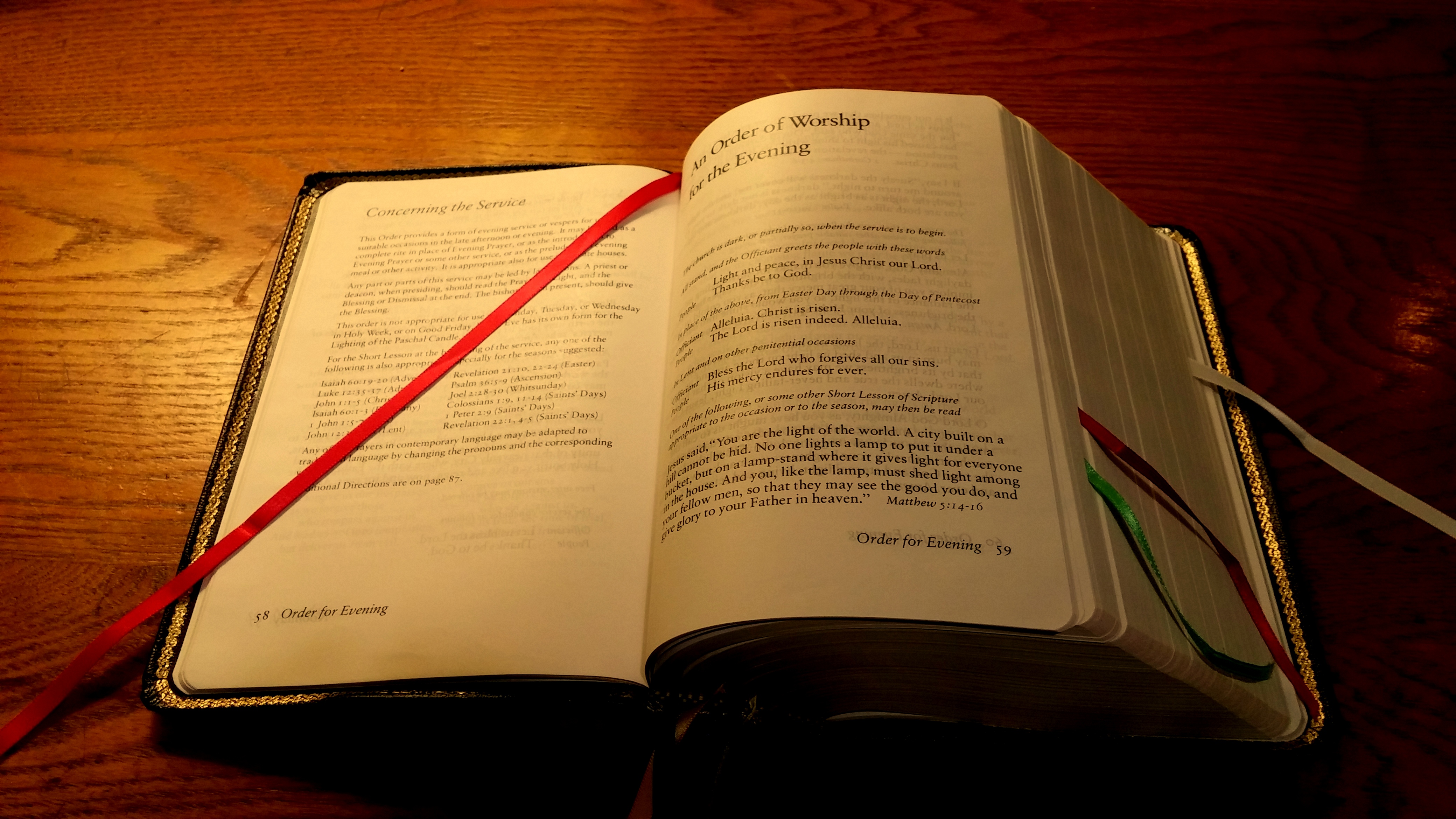


Image result for anglican daily officeThe second is the daily office which is tool that you can hold onto, and he has found it has rooted him; morning prayer is a great place to start the day and go out from; and not being able to choose favourite chunks of scripture is good, being given them means you engage more thoroughly.


And the third is an annual retreat, always finding space for it every year.
Image result for spiritual retreat

He asked us to discuss with our neighbours "What does prayer mean to you?" and the answers that were fed back included
- liturgical vs charismatic prayer has a difference for each of us
- the acronym PACTS is useful - Pause, Adore, Confess, Thank, Supplicate
- there are examples to follow in the Bible
- working in a church really cements the difference of private vs corporate
- pastoral, with people in the moment
- discipline as there is no substitute
- bring everything to God including the mess
- we don't have to pretend and yet we are still loved
- there is space for spiritual gifts as different expressions of awe
- not just speaking to God as Father but also approach as Creator
- counter to common perception, it is not just asking but more being in the presence

There are very different ways to pray but one can't disagree with somebody's else's way - it's not wrong. just not right for me. Church buildings soak up prayer and cathedrals are saturated with it, but the key to any type is 'is God being honoured'? The "gift of the CofE" is that that can be done in many traditions! If God is worshipped, disagreeing with a tradition is meaningless.

So what works for somebody comes from who they are; the sort of person I am invites me to pray in a certain way. All personality preferences are valid (though you can take it too far) as God will not desert us where ever we are. We are entering into the presence of God, putting ourselves in the way of God, by and for finding ourselves in that presence.

There are dangers in praying, pitfalls we can easily fall into, such as telling God what to do, avoiding getting things done ourselves, and also in such environments like prayer groups, falling into gossiping. There's also a lot of complexity around prayers for healing, and Neil only touched briefly on the subject, basically saying that miracles do happen but there are no simple answers and ultimately it boils down to "Thy will be done".


Image result for praying

He moved on to 'ministerial development review' and the question of how one went about judging a priest's prayer life, but basically, in an intangible way, people do just 'know' if their priest is praying. More tangible measurements are questions like 'who supports you in your prayer life?' which he posed to us and some answers that came back included:
- spiritual director
- having a day off
- I said my agnostic/atheist boyfriend and a woman across the room empathised that her similar husband had also helped her
- tools eg emails, apps - structure
- other broken people you can't fix
- room mates who are also 'bad at prayer', collectively providing accountability
- church prayer ministry team
- being around someone who is themselves disciplined, by example or 'osmosis' as it were
- social media - both friends and strangers

We finished with as form of praying scripture (Mark 9.2-29) which wasn't really for me but I did get an interesting moment or two out of it.


--
The previous sessions were:

Authority - Do you accept the discipline of this Church and give due respect to those in authority?
The Bible Do you accept the holy Scriptures as revealing all things necessary for eternal salvation through faith in Jesus Christ?
Doctrine - [I missed this one] Do you believe the doctrine of the Christian faith as the Church of England has received it, and in your ministry will you expound and teach it?
Ministry Will you be a faithful servant in the household of God, after the example of Christ, who came not to be served but to serve?

The last one will be:
Mission - Will you lead Christ’s people in proclaiming his glorious gospel, so that the good news of salvation may be heard in every place?

Friday, 3 February 2017

Towards Ordained Ministry course: Session Two

This post details my experience of Session Two of the Towards Ordained Ministry course. See my previous post about session one to find out what the TOM course is.
--

I googled the speaker before this event, the Rector of St Bride's Fleet St, and I was looking forward to hearing from her as she seemed pretty awesome. Plus getting our teeth into the topic 'The Bible' from a priest's perspective was quite a fun prospect.

I wasn’t disappointed. She tackled what could have been quite a controversial topic very well, imparting wisdom without opinion in a very down to earth manner.

There were lots of anecdotes and five minute pauses for us to turn to our neighbours and discuss something before feeding back to the group.

Intro
She laid her cards down from the beginning, encouraging that diversity is good for our understanding, and we all need to engage with the Bible for ourselves. She also told us a little about herself and her church, including the titbit that the first newspaper was founded by a woman.

Her story
When she got into it, she started by taking us through the place scripture has had in her own journey. It started with Anglo-Catholic Sunday school and RE lessons being simply Bible stories, using the KJV, the version that is “like, what God actually said”, which of course was tough to read, especially without help. She “didn’t know how to read” the Bible.

She eventually went to evangelical bible studies “because they did them better.” Then in her first year of theological college, the academic biblical study was “dislocating” and exploded her assumptions of scripture and informed her use of it in worship. She said she was “so grateful to go through that process”, and though she had to rethink a lot, it “all came back together”, meaning the initial loss turned into a profound understanding of scripture.

“Critical engagement” is key, because the power of scripture is in its “complexity” so ask the hard questions! And don’t skirt round the difficult bits.

“Living Word of God”
At this point she gave three examples of how scripture can be to us the ‘living word’.

One, having a “verse collide with your life” which can do things like make you realise your own emotion, and “unlock a situation”, effecting the external circumstances.
Two, reading something can give new perspective to overcome an internal struggle or a new direction after the resolution of an internal struggle.
Three, for 29 years she had to give between 4 and 7 addresses a week, and only extremely rarely did not speak to the lectionary texts. Of course she came across the same texts over and over, but they “always spoke to me in new ways”, and the texts she had to work, pray and engage with most led to “cracking” sermons.

The Bible is “gloriously subversive”, like the fact that it tells us it’s always the least suitable, the least capable person who is chosen to do God’s work - the ancient Abram, the argumentative and stammering Moses, the persecuting Pharisee Paul. When she went on a tour of Paul’s route through Greece, it “hit me like a ton of bricks” that his experience had, at the time, felt like a failure, and only God could see the big picture that we now see, of the success story.

The subversive-ness is in the call to humanity in all our brokenness and frailty, and that like Paul we should rejoice even if all we see currently is bad – we follow the crucified Christ, so we know that suffering is part of ultimate success. The Bible shows us we  have to think differently about what results look like”.

“Scripture is baffling”
Here she briefly touched on the stuff a lot of us don’t like, such as God obliterating whole nations in the OT, or being told we must hate our families and no one is good, in the NT. Her advice on how to engage was to inhabit the challenging texts in our prayer life, which might shed some light; and she reiterated that academic engagement can inform scripture in liturgy.

Interpretation
Following on from that, she did point out that the Bible does need to be interpreted, because when reading it, we’re “juggling” lots of factors, and it can have a big impact – just look at women’s ministry. But we can’t be blinded by the divisions over scripture that are currently fashionable, because they have changed radically over time.

For example, in the 1590s, weddings rings were a passionate issue of contention because they weren’t in the Bible. She’s a very keen fan of Richard Hooker, often cited as the author of Anglican morality, and alongside Cranmer and BCP, is the closest we have to a founding father – point being when he was writing his defence of Anglicanism, it included a huge amount on the use of wedding rings.

Another debate ran around the use of anaesthesia in childbirth, as ‘the Bible clearly states’ that the pain is our punishment handed own from Eve. You see, the engagement with scripture is not and will not ever be static.

But that begs the question, who do you decide to listen to? Who has the authority to interpret the Bible? It is personal and one must have a direct relationship with it, but there is a risk that we aren’t always well-balanced and it’s not always the Spirit that inspires interpretation! It is crucial to experience scripture in community and share and listen to reflections with others.

What is it
In a rather backwards way, she ended with how to define the Bible. It’s has two parts and an apocrypha, it’s made up of many genres, it’s the story of a promise and its fulfilment, written by many authors over a period of more than 1000 years.

We need a balance of acknowledging the process of a “fluid collection” of scrolls being shaped into the book we now have vs the reality that we acknowledge it as the Word.

It’s also a “very, very dangerous” book, look at poor Tyndale and result of his translation into English.

Looking at the Gospels in particular – we need them all!:
Matthew – set pieces, Messianic, polished
Mark – reader does the work, rough edges
Luke – tabloid, about people, engaging, Holy Spirit, the poor
John – like stained glass– need to see it from inside, mysticism, Christ’s divinity

The actual question
Finally she turned to the vow that was the title given to her for this talk, from the Ordinal – “Do you accept the holy Scriptures as revealing all things necessary for eternal salvation through faith in Jesus Christ?” Going back to her favourite author Hooker, the Anglican understanding is not Catholic, who believe it is “not enough” for salvation, nor Puritan, who believe that it is the only source of guidance for everything not just salvation.

Its authority for an individual must come in two stages; first, one must simply trust, based on one’s heritage of tradition that acknowledges its authority; and then second, one must pray and study to discover its innate authority for oneself.

--

The previous session was 
Authority - Do you accept the discipline of this Church and give due respect to those in authority?
Future sessions will be:
Doctrine - [I will miss this one] Do you believe the doctrine of the Christian faith as the Church of England has received it, and in your ministry will you expound and teach it?
Ministry - Will you be a faithful servant in the household of God, after the example of Christ, who came not to be served but to serve?
Spirituality - Will you be diligent in prayer, in reading holy Scripture, and in all studies that will deepen your faith, and fit you to bear witness to the truth of the Gospel?
Mission - Will you lead Christ’s people in proclaiming his glorious gospel, so that the good news of salvation may be heard in every place?


Saturday, 28 January 2017

Towards Ordained Ministry course: Session One

A few nights ago I went to the first session of the London Diocese’s ‘Towards Ordained Ministry’ course. DDOs and college chaplains in the diocese refer candidates and potential candidates to this every year; it is another tool within the resources for discernment, but it lies in that in-between world of not quite being BAP prep but also being more intentional and sure than initial exploration events. Talks are based on the vows in the Ordinal in the context of ‘Pursuing your Vocation in the Diocese of London’.

This is how they put it:
“Here is a great opportunity
-to explore and learn more of your vocation to the ordained ministry
-to get to know others from different traditions than your own
-to hear speakers who themselves have been along this road
-to share in discussion and prayer”

I’ve got to be honest, it’s the first time I’ve felt positive about the Diocese’ vocation resources; it’s such a shame that they don’t manage to support people earlier in the process as well as this course supports people who are further along.

Richard Chartres
Anyway, the first session was a corker. The theme was Authority, based on the vow to “accept the discipline of this Church and give due respect to those in authority” and we were honoured to be addressed by The Rt Revd and Rt Hon Dr Richard Chartres, outgoing Bishop of London.

All my experiences of Bishop Richard – my confirmation, a drinks reception at his residence, several Easter Vigil services at St Paul’s – have confirmed his reputation as a wise and caring yet competent man, and this session was no exception. It was a privilege to hear him speak, with eloquence, wisdom and humility, and a smattering of humour, as well as get a chance to talk to him in the relaxed mingling beforehand. He asked where I had come from and when I said St Martin’s, his follow-up was “Ah, which part of the empire?” which shows you a little of our reputation within the city.

I knew one other pastoral assistant there, from our Area PA support group, and he and I chatted with three girls sitting next to us, two from slightly higher churches and one from a very much lower church.

He spoke for about an hour, so I’m going to just summarise my notes, but I didn’t write everything down, just the things that struck me, though hopefully I’ll be able to convey a flavour of his talk.

--


In his introduction, he talked of balancing a need to ‘listen profoundly to colleagues’ whilst also being aware of the danger that ‘heavy structure’ (like endless committees) can be a huge ‘energy drainer’.

1.
His talk was then structured in three parts. The first was the root of being ‘one holy, catholic, and apostolic church’, and the importance of the Church of England’s identity as part of its authority. We have never denied that there are other parts of the ‘1HCAC’ and often, if not quite adapted to, at least encouraged local expression of faith (subtext being: remember we’re not Catholics, homogenising and exclusivist).

Ecumenism is now framed in a context of looking forward to the ‘great and coming’ church of the Kingdom, but the CofE has the privilege of being able to reach in any direction and touch the whole spectrum of ‘church’.

One of my favourite points he made was that the clergy must not just be collaborative, but instead ‘conjunctive’, not just making joint-efforts but genuinely joining and combining. Because we are fundamentally and intentionally not sectarian, we must look for allies in the mission on the ‘shared passion’ simply for the Lord Jesus Christ.

2.
An ‘assent on worship’. This was an interesting section which touched on the fundamental difference between Christian and Muslim understandings of God. Whilst in Islam they submit to a Supreme Will, Christians reach out to an Almighty Love. The key is the transforming truth of the Trinity, for our communion is not static but dynamic, as God’s true nature is. From ‘Adam where are you?’ through ‘Samuel! Samuel!’ through ‘Mary!’ to the climax of the Incarnation itself, it is into dynamic relationship that we are called. Bishop Richard advocated the BCP as a ‘balanced and simple diet of scripture-based worship’...

3.
…which led nicely into the authority of scripture and the creeds. A wonderful phrase he used about
scripture was the importance of ‘hearing the whole symphony’ rather than extracting ‘bleeding gobbets’ to rely on and 'bash each other over the head' with. ‘Spacious inhabiting of scripture’ is important, within a ‘community of interpretation’. Crucially this includes the writers of the Creeds, that though long-dead, using the Creeds is a way of reading scripture not just with our contemporaries but also our predecessors, who deserve as much respectful deep listening as anyone alive now.

This leads us into being able to, as Common Worship puts it ‘proclaim [the faith] afresh in each generation’. Bishop Richard emphasised the importance of having a presence on modern platforms, and inhabiting the ‘territory of the 92%’ ie. the population of London that does not engage in Christianity. He advocated creativity as crucial to success in this.

After his talk, there was a time for questions. The first was ‘When did you discover your vocation?’ and his immediate response was ‘After I was ordained’. He explained that it was only once he was a deacon working in a parish that he found his vocation in doing the ‘ordinary work and being admitted to the tragedy behind every face’. He also pointed out that it was necessary to have healthy distance between the role and your own person – do not assimilate.

He also returned to ecumenism, which he said works when we look to the whole community and as conjunctive allies, looking in that same direction together. He warned of the trouble in the future (that we will inherit as the next generation of clergy) and condemned schism as ‘obstinately metaphysical’ especially in the context that for the under 30s, church is becoming ‘post-denominational’. He went on to lament the ‘ignorance of Christian grammar’ in the country.

--

Future sessions will be:

- The Bible - Do you accept the holy Scriptures as revealing all things necessary for eternal salvation through faith in Jesus Christ?
- Doctrine - Do you believe the doctrine of the Christian faith as the Church of England has received it, and in your ministry will you expound and teach it?
- Ministry - Will you be a faithful servant in the household of God, after the example of Christ, who came not to be served but to serve?
- Spirituality - Will you be diligent in prayer, in reading holy Scripture, and in all studies that will deepen your faith, and fit you to bear witness to the truth of the Gospel?
- Mission - Will you lead Christ’s people in proclaiming his glorious gospel, so that the good news of salvation may be heard in every place?