Showing posts with label ritual. Show all posts

Wednesday, 15 June 2016

Going Further: Different models of mission and ministry

I've been digging through all the documents, forms and guidelines for candidates, DDOs, advisers, reference writers etc (available on the CofE website here). 

I would really recommend doing this - it gives a much better idea of what the church is looking for and what you're going to go through than pretty much any of the supposedly informative resources that are supposed to help you!

It's thrown up a few interesting points that I think I need to explore, either because I haven't yet explored them, or because I haven't explored them in as much depth as the documentation emphasises. I'm going to write a post on each point and this series of posts will be called "Going Further".


"Can the candidate reflect on different models of mission and ministry that they have experienced?"


I have been working on experiencing different models of ministry, but I'm not sure about different models of mission, and I haven't really reflected on the experiences I've had. Next month I'm hoping to put together some clips I've been recording about various churches I've visited, but two minutes to camera straight after a service isn't really deep reflection.


I will be the first admit that I haven't experienced a large range of ministry. When I first started going to church, it was in Australia whilst I was travelling, and I went to a different church every week as I made my way down the east coast, and continued doing so in New Zealand. But my memory of these services isn't extensive; they felt more in the vein of market research than worship at the time, and really I only remember being deeply impressed by the Antipodes' predilection for cake with their tea every week, not just biscuits!

Since then, I went to a few churches in London before St James' Piccadilly, but it is there that I have actually got to grips with communal worship and got involved, the only place I would class myself as a 'member of the regular congregation'. In the last few months, I've worshiped as a visitor in various places; I have been to lots of weekday services, worshiped at vocations events, done a whole weekend of Anglo-Catholic worship, and started familiarising myself with worship at my new church, St Martin-in-the-Fields. I have also chatted with several university chaplains, and helped one with some service feedback research.

Reflection

The Catholic weekend provided my first proper understanding of common parish ministry. It was very clear how geographical the focus was ie. their jurisdiction is the people and places within the parish bounds, and that was the biggest factor is the demographics of congregants, and the sort of services and programmes the churches offered. The physical parish sets the parameters of the ministry. There was no point in an incumbent being appointed and coming in with their own agenda. Their role seemed very reactionary, and the onus was very much on the clergy to be hands-on, in-charge, doing what was needed.


This ministry seemed restricted, and I don't mean that as a criticism, just an observation of the situation. They provided worship, that was their main mission, and then, where they could, helped those in need within the parish, supported local schools, and were involved in local life - events, charitable initiatives, celebrations etc. It was all very good work, and I admired how the prevailing attitude was can-do, positive, and doing the most that they could with what they had.


It was very different to ministry at SJP. SJP is a gathered community, so the geographical parish has little to no influence on the demographic of the congregation. It has been known for people to visit from the nearby hotels - I was very welcoming of a gentleman who strongly reminded me of the Monopoly man, and as we were chatting, I couldn't help but wonder if the three piece suit, chained pocket watch, bowler hat, and (I kid you not) monocle, as an outfit, might just be worth more than my parents' house - but it's rare. Stephen Fry lives in St James' Sq, and as a parish resident was kind enough to give us an interview for our quarterly magazine, but obviously doesn't come on a Sunday!
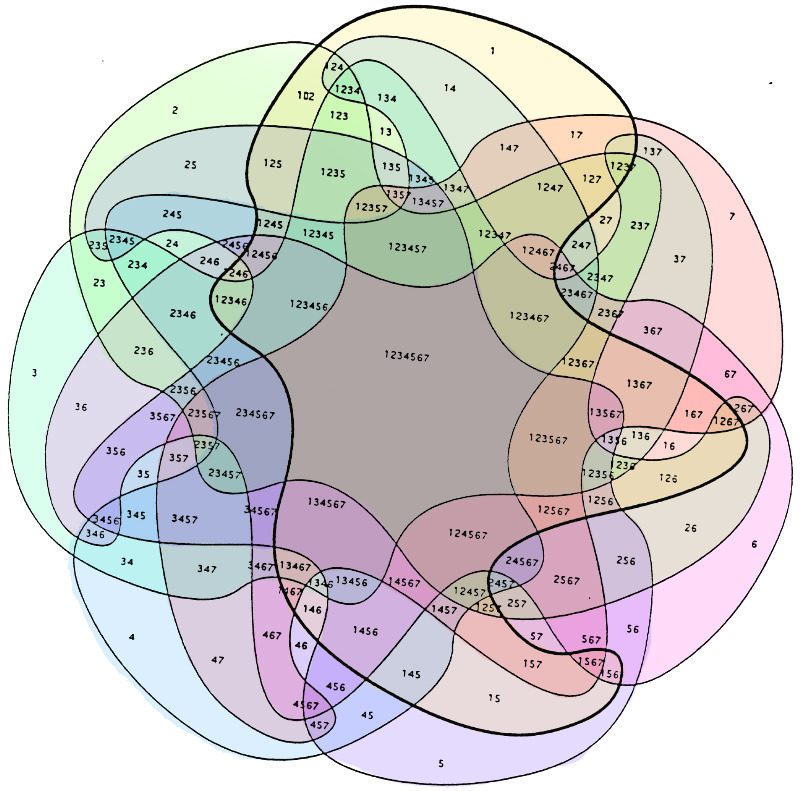
Anyway, the community of St James' has chosen itself. The church's main attraction is not it's the one nearest - the church's main attraction is its soul. The vision of the church is a radically inclusive interpretation of what it means to follow Christ, with a large drive to be proactive in creating change which can be seen in their mission statement. And the diversity of the community goes beyond one congregation. There are people who identify as part of the SJP community who have never met; it's a network of groups, and massive, multiple Venn diagram.
So it is deeply impressive that the ministry of St James' is just so good. I have been told over and over that there's nowhere like SJP and good gracious is that true! There is just so much going on - if that's the diagram of the people, imagine what management of it all would be drawn as! The key as I see it has been delegation. Ministry is provided by the clergy certainly, but also the entire team of staff really, like the vergers, and also a dedicated set of long-term volunteers, enthusiastic mid-term volunteers, ad-hoc volunteers, and basically everyone is welcome to pitch in.

It's a way to keep the behemoth running, and it works because of two things. One, the prevailing attitude is of encouragement and a rejection of judgement. And two, people respond to that attitude because they have chosen the church themselves, and if you've actively aligned yourself with a community, you are much more likely to want to support it.

Being a visitor at weekday services has been interesting; I’ve been to seven, three in Cambridge and four in London. I didn’t think about it before I started, but I shouldn’t have been surprised that the churches that are most likely to have actual services during the week – rather than other activities – are Anglo-Catholic, and high Anglican churches. So there hasn’t been the diversity of experience I thought I would get from visiting so many. It has been achingly lovely that the services are so familiar; the theory of Common Worship in practice is wonderfully reassuring for a newcomer.

It didn’t really give me an idea of their ministry though. I occasionally looked round at notice boards and the like, and the priests were varying degrees of welcoming. Some didn’t come up to me at all, some stood by the door and did a basic handshake greeting, and some kept me in conversation about myself, why I was there etc. Obviously the latter was most enjoyable for me (an extrovert). So the only ministry I really experienced was a dedication to keeping up tradition and a regular, frequent schedule of worship and Eucharist. Only two had coffee afterwards, both in Cambridge, and presumably they did so because they were morning services, as opposed to lunchtime or evening. The third morning service, also Cambridge, was nice simply because I was the only person who turned up, which pleased the priest no end. The intimacy of a two-person Eucharist was novel and absolutely great – the feeling of connection and sacredness was totally different to a big Sunday morning congregation affair.

The eighth church I have visited was a Sunday evening service at a conservative, evangelical church. TOTALLY different ministry, jeez. Not a Eucharist service, to my surprise. Millions of young people and students, singing worship songs with a band. A leader in casual normal clothes speaking about the church’s recent activity, and then interviewing one of the young people about their journey from Hindu to atheist to Christian, with very leading questions like “What was it that made atheism just not work for you?” Then a humongous sermon that didn’t really say much except repeat and underline very basic principles of the faith. And it was Pentecost, but was that mentioned? Nope. Which made this outfit I happened to be wearing stick out even more.

The leader came straight up to me and was very insistent in recommending I read the Gospel (as if I haven’t). A small part of me wondered if he thought I was possessed by a fire demon.

So obviously this experience was a very different ministry. The service was simple, singing and talking and reading the Bible. The thinking was minimal, the speaker similarly sticking with simple truths and not going very deep. Doesn’t appeal to me in the slightest, but people want different things out of their communal worship, and their religion itself I suppose. Not everyone responds/finds it useful to have a structured liturgical year, or have a physicality to their ritual of moving around, bowing, call and response, eating and drinking. For some, life is complicated, and religion is a way of having easy answers to big questions, so there is a part of life they don’t need to think or worry about.

It was popular, so the ministry did appeal to a lot of people. And – leaving the conservatism aside – creating a simple space for people’s spiritual life to be a relaxing, easy experience I suppose is a good ministry to provide, and the basic principles extolled were about the same as I’ve experienced elsewhere. I just hope that as the congregants get older, they go further afield to seek deeper wisdom so their journey with God doesn’t get stuck at this surface level beginners stage.

When it comes to mission, I don’t really think I have any experience. It immediately brings to mind “God Hates Fags” signs, and that’s definitely from media intake rather than personal experience.  My reflection on my experience of mission is that I need to get some!


Monday, 25 April 2016

Video: Living on a prayer

Less vocation-related, but a sharing of only my second experience leading a group religious discussion about prayer. See the video for my presentation, or the full text is below, followed by notes from the discussion.


Prayer is a big topic, but here at Circus Spirit, we decided to concentrate on “What is prayer?” and “Does it work?”

What is prayer? A year ago, I might have been able to give you a simple answer, when actually I didn’t really know.

Does it work? Again, a year ago, I would have shied away from thoughts of ‘the power of prayer’. I knew that I was supposed pray, but I also knew that I was absolutely terrible at it. I chose this topic in no small part to educate and motivate myself.

But improving at prayer is a tricky business. Priest Kevin Scully puts it quite neatly: “How does one learn to pray? By praying. Is there a way to learn more about prayer? Yes, by praying. What does one do if one experiences barrenness in prayer? Pray. How can one deepen a sense of the divine? By prayer.”

It’s a very subjective act, and I would put forward that ‘what is prayer’ and ‘does it work’ are both subjective questions.

That said, as with most human activities, there are a lot of similar experiences. Prayer is a common feature of most religions, and even people who don’t have a religion, pray, often in their own way and for their own reasons. People pray for all sorts of reasons and to all sorts of objects – to one divinity, to many gods, or to gurus, spirits or angels, saints or the dead, or concepts, like ‘Wisdom’, personified in the Psalms for example.

I talk to God. I talk to God with a reverence that I would give a leader and a boldness as if I were talking to a friend. My most common prayer is gratitude. My second most is generally a desperate plea for help.

This echoes a classic structure of prayer from my own religion, Christianity. It is often described as ‘adoration, confession and petition’; I was introduced to it long before I knew such big church words; I was introduced to it by a friend, whose advice was to pray the ‘teaspoon prayer’. TSP = thank you, sorry, please.

This is the way that I and many sustain our connection to God. Like any relationship, it takes time and effort, and whilst good to acknowledge where we know we’ve done wrong and ask forgiveness, the confession, it is also a dynamic of give and take – adoration and petition. As for petition, I ask for things, I do, because it’s not a one sided relationship where only I put in an effort.

And as for adoration, I praise God for the blessings in my life and the wonders in the world. Whilst I do try to show this gratitude in my everyday life, it is important for our relationship to communicate directly and put into words my gratitude.

Note, I did not say it was important for God, but important for our relationship. Often an intellectual barrier to beginning, growing and sustaining a prayer life is, if God, an all-knowing divinity already knows what I’m sorry for, how grateful I am, and what I want or need, why ask? Now, as a religious person, an easy answer for me to give would be ‘because God commands it’.

But that’s not good enough. That’s not enough reason, for me. So I found a few reasons why God might command it. As these are my thoughts, they are inevitably Christian-centric, and they certainly aren’t an exhaustive list. They may not even be right! But here we go.

Why would God command us to pray? If we were blessed without supplication, if we got good things in life having not asked at all, we could be tempted to assume independence. For God and humanity both, that is the opposite of what many feel are our true natures. They would say our natures, God’s and humanities natures, are of relationship; we can see it in humanity, because many agree that it is a base purpose and desire of a person to seek connection and intimacy, and we see it in God, in Christianity anyway, because God is a trinity, a single power in a status of eternal relationship.

Similarly, many would say that God desires communion, like a Father finds an unreadable scribble given by his child precious beyond measure. It cannot be denied that people’s experiences throughout the millennia have been of a divinity that communicates. Now you may not think any of the experiences were supernatural or divine in nature, but you can understand the conclusion of some of those who do think they were divine, that God communicates because God does want to hear from us directly, even though it has no impact on what God knows. It is not the content of, nor even the scribble itself that the Father cherishes; it is the act of giving, and being given the scribble that bonds the child and parent.

As I said, a relationship needs effort, and cooperation on both sides. For a lot of people, prayer opens our hearts so God may work on us; we have to open our end before God can easily get through. This is also a reason we need to pray to an all-powerful God – even an all-powerful God would hope to work with a subject that is willing and open to being worked upon. I’m not saying it’s necessary, but you can understand why God would prefer it that way.

Christianity also has a tradition of meditation, which is attempting to reflect on revelations of God; and a tradition of contemplation, which is simply bathing in God’s love.

An answer to the question ‘what is prayer’, in comparison to these two similar states, meditation and contemplation, might be that prayer is focused time of sometimes monologue, and sometimes dialogue, that we may be aware of grace and blessing, and aware of our own wrongdoing; a time to remember to be grateful, and to be repentant. To my mind, prayer is pure attention, an expression of our response to life and the world.

David Macintrye wrote of prayer in the 1800s, and he quoted someone called John Laidlaw who said “A sense of real want is the very root of prayer”.

But if that’s the case, what’s with all the tat that often surrounds prayer? What’s with prayer beads, mandalas, prayer mats, icons, bells to get God’s attention, using scripture to pray, and all the millions of words of written prayers, whole books of them?

Now this can be answered in two ways, and applied to all props, costume and ritual in religion – firstly, humanity is a bit rubbish left on its own to contemplate the ‘other’ in the world; most of humanity needs tools to help it focus, otherwise ‘pure attention’ is corrupted by the distraction of something shiny, or delicious, or naked, that seems must more important and certainly more interesting. Nothing wrong with shiny, delicious, naked things, but if you want a relationship with God, if you want to connect with that ‘other’ within you and all around you, if you want a chance to see the extraordinary in the ordinary, you have to pay attention.

And secondly, prayer can be a sensual experience, not just about what you say. The words may be intensified by the tactile motion of running prayer beads through your fingers. Or if you’re not speaking but ‘listening to the silence’, an atmosphere enhanced by pungent incense, or an environment with rich beauty for the eyes to feast on, or an icon of a saint whose life story speaks to you of God; even the colourful, embossed cover of a book of holy scripture which glorifies its contents – if you’re listening to the silence, that experience, that living in the moment of stimulated senses, the experience itself of the coming together of beauty, that experience can be a wordless prayer

So the need for ritual is common, even in silent spontaneous prayer.  In Islam, there is an understanding of two areas of prayer, the spontaneous, and the official to be recited. Most rituals offer some form of written prayer.

There’s private written prayer, such as a prayer diary, or prayers written on the prayer boards in churches. There are official prayers, in the aforementioned books of prayers, or prayers of intercession at public acts of worship that are composed in advance for the occasion. Prayers can be danced, said, sung, said in tongues, chanted.

And of course there are religious structures of daily prayer. Official practice, either mandated or not, is for Muslims to pray 5 times a day, Jews to pray 3 times a day, and for some Christians to pray 8 times a day (though most prescribe 2 as a more reasonable practice!).

Prayer does have a spiritual core, but it is often most effective when it has a practical element. That is why it is a practice, and we are often called to incorporate it as part of our lives, not just let it sit isolated and separate from our lives.

I’m going to end by quoting Richard Sibbes, an Anglican theologian from the Elizabethan era, who has a practical answer to why we should pray. He said “It was a rule in ancient times, “Lay thy hand to the plough, and then pray.” No man should pray without ploughing, nor plough without prayer.” Which is a pretty way of saying life is not worth living without attempting to find its meaning, but wrestling with that meaning is pointless without also living.

Amen.


Points raised in discussion afterwards:
- pray to live, live to pray
- change perspective from if I don't get get what I ask for, God isn't listening
- God can still get in if we are closed
- sense of 'in the moment'
- prayer provides refocus, leads to perspective and can have effect
- prayer, meditation and contemplation can be linked and feed into each other
- not just we speak to God and God speaks to us, the conversation can overlap in the 'Spirit praying within us'
- all-powerful God's power is love and love is not coersive
- the act of prayer can generate the words, rather than the reverse

- should not feel guilty about petition