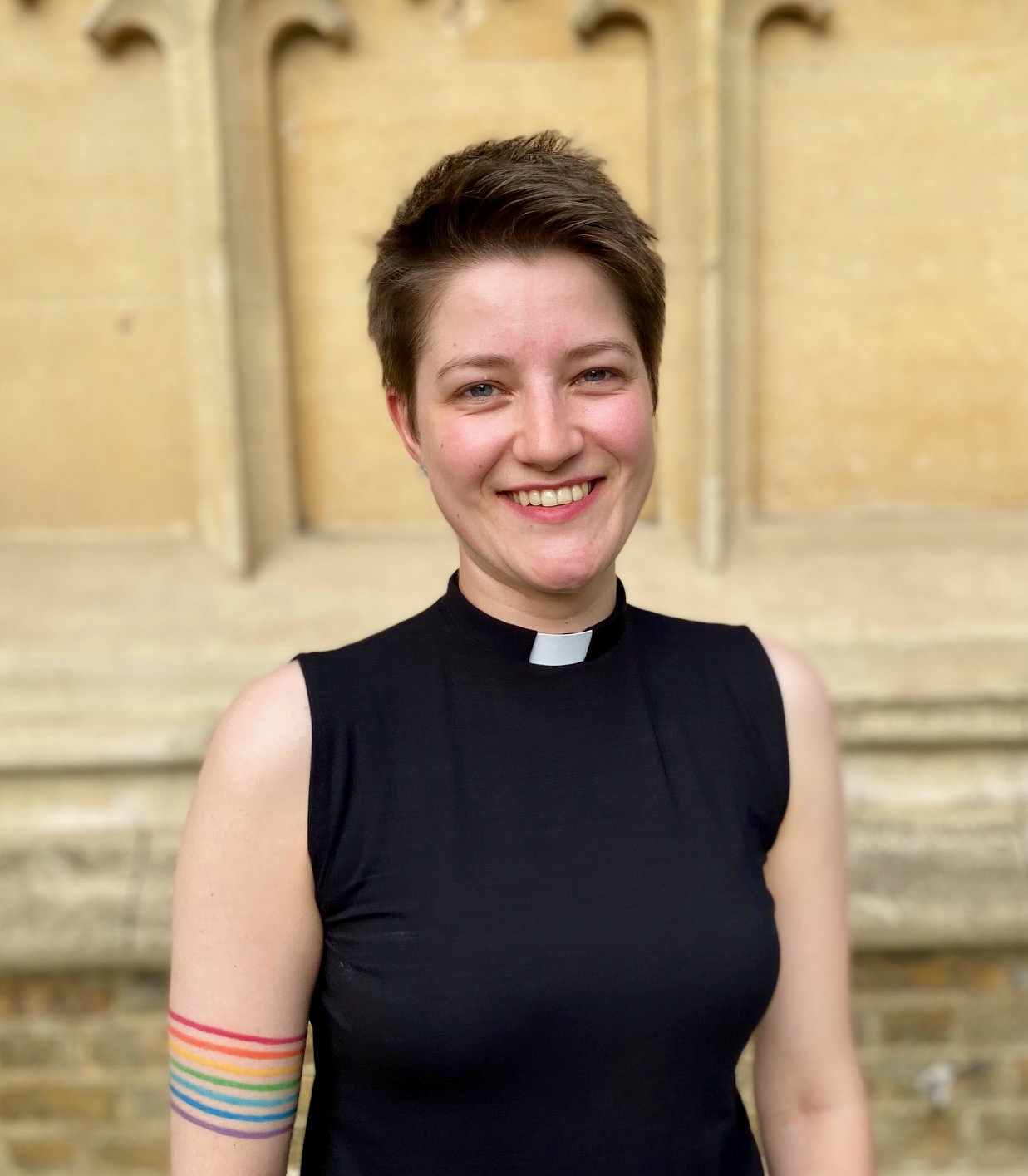
Showing posts with label curacy. Show all posts

Wednesday, 7 September 2022

My future in the army? Seven years following a call

I am into my third year of curacy, and my second of priesthood. (If you want to see a little of what I've been up to, I have updated my Steps page with some highlights). As I have said throughout this blog, discernment of vocation is a rolling task, and my journey to ordained priest was just one chapter. Okay, may be more like a volume, but one of many in the series of my life. Our calling as Christians is never just one thing, to be figured out, then just keep doing it until you die. Even for clergy, whose calling has this headline to it, the context in which we are a priest changes; either called to the same place and/or people which will inevitably change simply with time, or called to different places and different people at different times.

Third year of curacy takes a turn towards 'the next step', looking ahead and starting to think about 'what's next', because just like the official discernment process looks to BAP, the BAP looks to college, and college looks to curacy, curacy looks to (usually) First Incumbency. This is often framed as the You've Made It ⭐️ stage: discernment and formation is done, the ordinand caterpillar has gone through the goo of the curacy chrysalis and emerged a slightly wet vicar butterfly. The diocese will help you with things like training, supervision, and mentoring (I believe), and eventually you'll be on the hamster wheel of MDRs (Ministerial Development Reviews). 

From what I can tell, the latter can be used brilliantly as a tool for clergy to continue in discernment and formation, but depends entirely on the drive of the individual, so some use it as a tickbox exercise because they are all-consumed by their parish. Any thought of personal development is dismissed or repressed because it is not priority enough to warrant carving time for amongst the day-to-day demands of their current role. Because it is 'personal', it is hard for clergy to see the wood for the trees - their 'ministry' only counts if it is parish-related.

I don't blame clergy who end up in this position one jot, and I will inevitably find myself in that groove at some point. I can only hope that I will manage to climb back out of it before I am irredeemably entrenched.

Theologian Frederick Buechner defines vocation as the place where “your deep gladness and the world's deep hunger meet.” (See more here.) It is easy to slide from one extreme to the other on that scale, either doing something joyful and purposeless or something worthwhile and soul-sucking. The CofE is built on the parish system; it's the beating heart of this member of the body of Christ on and of this land, and I don't think it is possible to understand oneself to be part of the CofE without some tether into that system. So the majority of the clergy that are ordained into it are rightly called to be parish priests of some variety. I may at some point in the future discern that my calling will take me there, but at the moment, I feel called somewhere else. That is not currently where my deep gladness and the world's deep hunger meet. 

The seed of a calling to chaplaincy was planted in 2014 (God bless the Church Times book tent at Greenbelt!) you can see my post about it in 2015 here, and it has snowballed. From another post, a summary of my calling can be: 

"The main thing the [military] personnel reflected was that the Padre must care; 

and I thought "I can do that". 

I started reading about military chaplaincy. I talked to my first military chaplain in March 2016, see here. I started to grasp that military chaplaincy is a 'niche' calling, and discerning it was going to have to self-directed. At events, I chose to attend anything that discussed chaplaincy (where I got nuggets like thinking of it as a bit like being a friar in a community). Once I got to theological college, I did a placement with a school chaplain, but got excited when an RAF chaplain visited, so signed up to their recruitment stuff and did a visit in the summer of 2019. 

That May, I had talked to an incredible woman. [I love this story so I'll put it in full. A friend of mine from sixth form ended up in Newcastle, so we hung out while I was up in Durham. He invited me to a trip with his uni alpine society that includes alumni, and so we drove down to Cheddar Gorge. Over that weekend, I spoke to another alumni, and the clergy thing came up, and then so did the interest in the army. He said he was a reserves medic and loved their padre, and put me in touch with her.] That conversation not only got me so excited ("Sign me up, I want to do that!") but she put me in touch with the priest running the pilot Chaplain Cadet scheme. So I ended up spending Sep 2019-June 2020 at the NUOTC on placement.

My point is, this idea that I want to sign up as an army chaplain after curacy, rather than be an incumbent, has not come out of the blue, and it's not about running away from something (parish) but towards something (padre). It has been 8 years of discernment as a thread in my wider discernment. I'm looking at my 'next step' fairly early; one usually doesn't look until Christmas in year 3. But the application process means coordinating the behemoth institutions of the Army, the CofE, and the NHS, so I was advised that cracking on in January 2022 meant I would be sorted well in advance of the entry point Sep 2023.

I want to end my curacy with both feet still in the door. It might seem like getting things sorted early is the opposite of that, but doing all the application forms and visits and fitness training (I've joined a gym! WTF?! Follow me on Twitter to keep up with that drama) well in advance means that I won't be doing it in the last six months of being here, so I can really be here up until the last.

Like I said, I am a CofE priest, and that means I be definition can't leave the parish system as such. I am still operating under a bishop's licence as a chaplain, and I might up end up transitioning to be a reservist, where you are much more anchored in a diocese. I don't want to be a chaplain who disconnects, holes up in their institution, and imagines their ordained status as 'absolute' ie unrelated to any place (in the CofE, one cannot be ordained without being ordained into a role), as if their ministry is floating in a bubble. 

Some people suggest chaplaincy as a place for curacy and that is a rather stupid idea in my opinion. Curacy is, as Lucy always says, where you learn your muscle memory as a priest, and a priest in the Church of England is a priest of this Church and of this place, England. The ministry of this member of the body of Christ is defined as on and of this land, most definitively exercised in the parish system. Cof E Chaplains have anything to offer the places they serve because they are rooted in that system, and technically so are all the people they serve. If you are in or of an English diocese, you are under the cure of a bishop, shared to a specific priest in each place. I never want to forget that, and so regardless of my growing call to chaplaincy, this curacy has been my focus for its parochical nature. I am a CofE priest, I cannot pick and choose parts I like and think are 'relevant' to some future role I may have. 

I get that I am sounding a little defensive. I have picked up some very unjust opinions of chaplains from within the parish system, and so it is important to me in my reflections that I do not see them as different and certainly not opposed. Chaplaincy is more important now as less people go to church because it means the church going to where the people are. I see it as a very twenty-first century ministry in that regard, in a similar way to the church waking up to the importance of cathedrals. 

So at the moment, the next chapter looks set to be army chaplaincy. I say looks to be because firm plans are rarely a good idea in discernment; I try to keep to dreams and ideas most of the time, until decisions are needed, and they are not needed yet. The application process is rolling on, but I benefit from the policy that if I am offered a commission, I have five years to take it up. There's a lot of other factors in life to consider in the decisions to be made, and I'm trying not to rush, whilst at the same time sensibly getting on top of things that take time.

My questions are still the same as ever - where am I called to, what am I called to, who am I called to? My prayer always comes back to the verse quoted in this blog's title: "Let me hear of your steadfast love in the morning, for in you I put my trust. Teach me the way I should walk in, for to you I lift up my soul." (Psalm 143). Discernment continues to be hard, which is not what I thought would happen. I thought I would make it through to being a fully qualified priest at the end of curacy and it would let up slightly, that I would have established my sense of purpose so following a path would be easier.

But it is a rolling task, as I said. I feel lucky that I have been gifted the years of groundwork that mean I do not see end of the curacy as a big, scary void that I have to fill with some job somewhere that I'm only starting to think about now. My next step is not decided, but it is slowly being sketched out, a dream of a butterfly with camo wings. I think it will be both worthwhile for the world and joyful for me; I can imagine that I will work to feed a part of the world's deep hunger, and get my own deep gladness. That's what it feels like when I contemplate being a padre. I can do that.

Friday, 15 October 2021

07/09/2021 Six years a-calling

Yet again an anniversary post that is a little late!

What does it mean to have a calling once you've been ordained?

The 'process' is so geared towards this final goal of ordination that it has nothing more to say afterwards. It's about post-ordination training. You're not discerning any more, you're doing it, you're living out your calling.

Well, I think that's not the right attitude at all. At the moment, I am following a training path of discovering what kind of priest I am to be. Then I must discern where I am called to after curacy, how to navigate things on my own, and also negotiate all the different parts of my life together as a priest. Discerning the lifestyle that goes with the vocation is as never-ending a task as the vocational stuff itself.

Life leading up to priesting proved a challenge. I kept forgetting that I was going to be priested, that it is a big deal and that I should have been getting excited by it. There was no building of anticipation. I will have to look back on my life and see two ordinations that were stripped back, joyless stepping stones, rather than celebratory, defining moments, as well as attend the ordinations of others that will be everything I never got, and I am severely disappointed. Is that selfish? Should I not just be glad that I could be priested? 

I have had some very formative moments recently enabling me to put into practice the theory about boundaries - how to put ministry things aside when having time off, how to put personal things aside when at 'work', plus deciding what priorities I have, when does the personal reasonably intrude, when does ministry reasonably ask sacrifice. This is also the tussle I'm having with my feelings about the priesting. I find it hard to discern what is reasonable to be upset about, and what is actually just one of the many parts of the vocation that I have to accept as asking a lot and move on. 

Once you're ordained, what are you willing to do or forsake for your calling?

My answer to that in 2021 will be different to what I would have said in 2015 before all this, and to what I would have said in 2019 while at college. It will change again over the years, I am sure. As will the answer to what I am not willing to do. 

Luckily, I am in a tradition where I could get excited about my first mass. Being priested meant starting to preside at the eucharist, and the first time I did that, I was able to actually be with the people who love and support me, as well as the people of my parish. What it means to have a calling right now is reflecting on what the eucharist means and what my part in it will be, as well as learning how my TI wants me to do it, and what I like and what I don't. 

Thoughts of the future are also getting bigger and bigger. In 2016, life narrowed down to the next year at SMITF, then it turned to the next three years at Cranmer, now it is the next 20 months of curacy with thoughts to what next after that. Will I get into the army, train at Sandhurst, then start as a chaplain? Is that where I'll be in 2024? Nothing is certain, nothing as been certain since I started this journey, but with the priesting, there is only being signed off my curacy as the final, definite hurdle, after which the world opens up again and I can look to live with opportunity and possibility, with more certainty, or at least choice and autonomy, than I'll have known for almost ten years. Only 20 months left on the vocation treadmill, and then... anything. 

Am I 'called' to be an army regulars padre? Am I called to a combination of roles, part time at a cathedral, a college chapel, and reserves army perhaps? Am I called to a particular part of the country, or to travel to different places around the world?

Right now I'm more concerned with the sermon I haven't finished, the LLF discussion group next week, the Advent course to write, the Christingle service to plan, the Deanery Chapter meeting we're hosting, posters to design and send off to print, a possible wedding couple to meet, an assembly series on the Lord's Prayer to design, going on two self-led readings days, trying to get ahead on Christmas cards and presents, my tax return is due, and the works on my leaking roof are still going on.

I wrote about the micro and the macro in my last blogpost, and that continues. What I've been reflecting on recently is how much I'm working out what I have learnt over the last six years. Noticing moments that I can track back to my year at St Martin's for example. My hairdresser commented recently that she was always impressed that I was able to answer all her questions, that I knew so much and could quote the Bible. Now, I don't think of myself as excelling in theological education - I have evangelical friends who know the Bible way more, catholic friends who know history and liturgy way more, and fellow curates who are much better and wider read than me in theology. 

But six years in, one thing I have is six years of doing this, intentionally, on top of interest and church engagement for 4 years before that. I am so, so grateful that I got three years to study, that I have a budget for putting books on my expenses, the time to put aside two days to read. I don't talk theology academically a lot, but those 6-10yrs are the underpinning of all that I do (on top of 29 years in relationship with God). 

Whether I'm debating integrity with the vicar, explaining marriage law to the LLF group, bantering at POT about how many sacraments there are, having tea with the only other female clergy person in the deanery, having dinner with a bereaved congregation member, chatting with the headteacher after assembly, shadowing the local hospital chaplain, scheduling emails, voting for Synod, handling DBS checks, hauling chairs from church to my house, communicating on the parents WhatsApp, or interviewing an evangelical who is against same-sex marriage - it's all coming from the years already done and the continuing study and formation, and generally not consciously at all.

It feels like, since August, I have started to turn a corner in my curacy. I am starting to show a marked confidence in most of what I'm doing, which is really encouraging. One factor will definitely be that since things opened up again in July and people are feeling more confident about living with Covid, I've been able to know people better, get to know some I had not even met yet, and just spend time over things that used to be restricted or impossible.

I definitely need a retreat though. This comes up every time I have spiritual direction. I had gotten into the discipline of a week's true retreat once a year, generally in the summer. That just wasn't possible last year, fair enough, but still hasn't been possible this year, which is starting to be a problem. That's why I'm using up annual leave for a week off soon, and two of those days are dedicated non-fiction reading days - both in bookshop cafes, one in this city, one in another. It's a plaster over the issue, and I'm planning on a proper retreat in the new year, but it'll tide me over, I hope.

One last thing I'll leave with you. The feeling of 'calling' waxes and wanes; sometimes I just don't have any sense of why I'm doing this with my life, other times I am overwhelmed with a sense of rightness and purpose. One of those times was when I read this sermon by Sam Wells as part of my sermon prep. It brought up feelings I don't think I've really felt in earnest since I plunged into college. I now relate to the opening illustration, the sense that my priesthood is bigger than my religion, the difficulty of being obedient, and holding to the fundamentals as "being practiced in the presence of God and being a reconciling presence in the life of others". I have definitely started to see what it means "to open your heart not only to see your own tears but to share the tears of others, to face the bleakness and tragedy of much of human life sustained only by one fragile consolation – that nothing can separate us from the love of God in Christ".

I'm up and running in 'Year Two' of curacy though it feels a bit like 'Year One 2.0'. Six years later I've come so far, and I thank God for getting me here. Who knows what will happen over the next 12 (11!) months?

Monday, 21 June 2021

Being priested

Please note: Some of these posts were written on my retreat, and because of Covid, it was a restricted experience compared to 'normal'. This blog is committed to recording how I felt in the moment throughout my journey of vocation, so please take these thoughts in that spirit, especially coming from an external processor (!) rather than being a definitive picture of my eventual opinion of the whole experience.

Also, pictures are near the end!

Friday 18th June 2021 11am - 1pm

The retreat itself is a pretty restricted affair, due to various factors. On Wednesday, we gathered at the church in the evening for the Bishop's charge, and a rehearsal of the service. We left our robes there, and returned home (though one of the other curates and I went to a local pub for pizza first).

Yesterday I was at home, logging onto Zoom a few times for prayers and addresses from the retreat leader. Around these online pockets, the plumbers were in looking at a leaky pipe, I did my laundry, did the hoovering, and cleaned the bathroom, made meals and drinks, had a lovely nap, went into church to have a practice of my first mass, read the paper, scrolled Twitter, and spent the evening as I usually would, watching streaming platforms on the TV.

I think it was a very good way to spend the day. Others have different needs and capabilities in these weird times of 'remote' retreats, and all power to them. I really enjoyed doing the offices, even on Zoom, especially in the morning as we don't pray corporate morning prayer at my curacy church; and the addresses have been good too, based on the Five Little Scrolls.

Now we have arrived at the retreat house, Friday morning. We started with a Eucharist, then our third address, and now we're just milling around the lounges until our rooms are ready at 4pm. I made the point at my deaconing retreat (which was Wed-Sat) how it took me two days to actually settle in, "properly stop and feel myself relax" because it is difficult to wind down. I do not anticipate getting to any state of reflection before we go to the church tomorrow afternoon. I would normally go on retreat somewhere in the country, and spend a lot of time on my own, both in private in my room, and on long walks. The latter is of no use to me in East London - this retreat house is fine and lovely but the location just doesn't suit me for a retreat - and the former is rather curtailed by the wait. I totally understand that checking into these places necessitates these waits, but we're leaving at 4pm tomorrow, so I just don't think I am going to get the time and space I need for this retreat to have significant impact.

At least I am less nervous/stressed than I was about the deaconing. There's no intimidating grandeur like there was at the cathedral, with the diocesan bishop, and I'll have a few more people in the congregation (last time it was 4, tomorrow it will be 15. Friends! Parishioners! BOTH my parents!!). Everyone is not clenched and terrified about Covid practice and being caught getting it wrong; we all know the drill now. I feel confident and excited about taking on these new orders, taking on the responsibility of presiding at the eucharist, this calling set apart to minister in word and sacrament, and "tell the story of God's love". 

Regulars on this blog will know my use of the analogy of God's workshop in my vocation journey. Previously I was up on my axles, then I was pootling round the yard getting used to the changes. Now I think is the time I will leave the yard, and head out onto the road. I am called to be a priest, and tomorrow I will be ordained a priest. Being deaconed was a major boundary crossing, adding holy orders on top of being part of the laity, so in one way, being priested is a lesser boundary. But it is the culmination moment, the climax of this first chapter of following my vocation, they are the orders that ultimately determine who I am supposed to be.

Tomorrow will be what it will be, another restricted affair, after a disappointing retreat, but it's really not the end of the world. I'll get over it. I'm going to be a priest! That's the thing that means anything. I can go back to my parish, and bless them, declare that they are forgiven, and step into the role of our great high priest to provide that liminal space that God may meet God's people, and the people may meet God, at Jesus' table. Ritual matters, and ordination services as they usually are have a purpose; I look forward to the future when they can return in full glory. But I will not be less of a priest without it. My family, friends and people of the parish will not be less part of our journey together as a community of many callings of which this is one milestone.

Saturday 11am-12noon

After lunch yesterday, I ended up chatting to some of the other deacons and it was really great, having spent months not being able to get to know them at post-ordination training because it was on Zoom. We got into our rooms about half three, and I unpacked, then watched an episode of something before Evening Prayer. It was good to finally have some privacy and truly be able to relax. I may be an extrovert, but being on retreat is one time I will happily claim the need for solitude and quiet. We prayed, then had a lovely dinner, followed by drinks and nibbles together. It was really nice just to socialise with our peers. This extrovert got both things she needed! After compline, I retreated (lol) again and had some quiet time before going to sleep. 

This morning we had breakfast, morning prayer and our last address, I read a bit of the paper, and now we are milling around again having had to leave the rooms at 11. Again I recognise the necessity of this whilst expressing my frustration that the situation does necessitate it. I'm now in the lounge again, surrounded by some day visitors having tea. We will have a final act of worship, lunch, then some are leaving at 2 for the first service, we're leaving at 4. Who knows what we'll do while we wait, I have already suggested the pub! I am currently in my jeans as we've been told we can ask to have a room briefly to get changed in later.

Today I will be ordained a priest. I was very glad that the retreat leader gave us permission in her address that today is not a day for profound thoughts. The pressure for this retreat to be so solemn and reflective and profound has been noticeable, though who knows if I'm imagining it. You can read the subtext in what I have written that I am trying to justify that it has not felt that profound or explicitly 'spiritual' so far for me. It hasn't been wasted time for all that though. It has been a chance to put aside all other pulls on my resources and time, an opportunity to be together with those going through the same journey, and a pause to ready myself for the whirlwind this evening. God is good at taking advantage of such things. I trust that the Spirit is always working.

I have made the most of it in truthful acknowledgement of my capabilities and needs. I am also lucky that I don't have a spouse, kids or any other household to coordinate much with, other than telling my guests what they need to know, so I can concentrate on myself before I am made a priest in the Church of God for the rest of my life. I am also lucky that I have parishioners in my curacy church who want to come a celebrate this moment with me, so the next chapter of my priesthood over the next few years has connection to the people I will be serving first. I am supported, by those who love me, those I work with, and those I am church with, which is a joy because they all play a part in this moment of my life following Jesus, a life which means nothing without others. I am not being made a priest for me, I am being made a priest for all God's people to and with whom I will minister, over the next decades of my life.

There's an overlay of the micro and the macro today. Short-term, being priested now means going back to the parish and being able to preside, starting next Sunday. It means a change of rota, a change of focus in my training, additional ability to connect with people. But long-term, and ontologically, being priested now means starting a significant part of what my life means, of my purpose and place under God. It means going forward to many places and being able to preside there too, to be eventually trained to the point that I will follow calls to other places, and many people, and exercise all that priestly ministry encompasses. 

I want to hold to both of these. It is the unenviable position of Christians to live in the abundance of both/and, for we follow the Christ who ruptured false binaries, such as divine and human, joy and suffering, micro and macro. It does not lessen the importance of either to hold to both, and in that complicated and difficult sweet spot, I feel closer to God, for I am closer to the Truth, the Way and the Life. My way and my life today is both celebrating with my friends and family that my years of priesthood are beginning, and also embracing my immediate future of being part of leading our little corner of the kingdom from my privileged position at a simple wooden table

This retreat has given space for us to reflect on the the personal significance of being priested, and I am grateful. From tomorrow, it will get subsumed into the micro, and I will joyfully be part of that as well. Both/and. Giving up your life and receiving abundant life. Living for others and knowing Christ died for you. Church of God and parish life. 

Sunday 7pm-8.30pm

I am a priest. Boom. 

It is bizarre to look back and see how long it has been since I first articulated a call, a call to this, this which I am now. I am no charismatic, but I have had a few moments of mystical encounter, and lots of Providence. One thing these last few days has linked now with all the way back to my late teens, 16-18, when I first said something about priesthood (which was ridiculous because I had only ever gone to church annually for the Christingle). I drew something, which I saw in my head, in some notebook somewhere. It was a black and white compass. I was bowled over last September when I went to the Royal Foundation of St Katherine and found that same image in the marble of the floor of the chapel. This time round, I have been able to accept and process this, this wonderful connection point that gives such continuity to a journey that has not always taken an obvious path. And the quote around it from St Augustine of Hippo is outstanding - "We do not come to God by navigation, but by love".

Yesterday was amazing. My heart was pounding as we started the service, having been cloistered away from all our supporters as they arrived. The moment of kneeling with the bishop's hands on my head, and my training incumbent's hand on my shoulder, was one of unexpected peace, calm and deep joy. I found so many reasons to smile throughout the rest of the service. 

Laying on of hands

It was such a happy time afterwards to greet all my supporters - representatives from my parish, my friends from my sending church, clergy who have been part of my journey, my family, my godfather, my friend who has been with me since those odd times as teenagers, and my incredible partner who did a sterling job holding me steady in my over-excitement. 

Training incumbent Steve, and members of St Johns'

After much cautious hugging and greeting everyone who had come, I got changed went for dinner with family and friends at a local pub. It felt so normal, and I was overwhelmed that I got some fabulous presents, ranging from holy oil stocks and a wooden paten and chalice, to a Jesus Shaves mug and a ring with a saga behind it. We ate, we drank, we were merry.

Me and my friend Simon, a fellow cider drinker

This morning I attended the two services at my curacy church, laying the altar and reading the gospel. I wore my stole in its new arrangement - as a deacon, I wore it across my body over the left shoulder and tied at my right hip, for the diaconate is a serving ministry, and this is reminiscent of the towel Jesus tied around himself to wash the disciples feet

Deacon

I am still a deacon, but now I have had the orders of a priest added, and so I wear the stole around my neck and hanging down on either side of my front, for a priest takes the role of Christ at the table, and so takes on his yoke, which we kiss when we put it on because the burden is light.
Priest!

Sitting there in St John's sanctuary with this small change to indicate what had changed in me, I felt like I had landed. That's the best way I can describe it. This is where I am, and who I have become, and it is right and good. It's an incredible feeling, like realising you're in love with someone and they are in love with you, and everything has aligned just right; like walking into somewhere you feel is home and relaxing in your bones with tension you didn't realise you had; like finishing the last of a long series of books you've been reading for years. 

The journey continues. This is not the end, but another beginning (yay for cliches). And I am well up for it!

Wednesday, 14 October 2020

07/09/2020 Five years later - now ordained!

See my previous anniversary posts: One year, two years, four years

My ordained team photo, taken outside my curacy church

My other anniversary posts might have been a bit late into September, but it is unfortunate this year that I have made it into October before getting round to it. I do think I can be given a bit of slack though, due to the global pandemic and the small matter of getting ordained. 

So it's finally happened. I'm sitting here in a clerical collar. And I must say I really haven't processed the whole thing yet. Let's start with a look over the last year.

It's been a much bigger shift than my last anniversary posts have covered. Last September I was starting third year, courting a curacy, and worried about my dissertation. I was part of a community, with a house full of friends, and I had a very full and exciting summer with lots of travel and new people and experiences. I felt like I was on a conveyor belt. 

Now the whole world has changed, and then my corner of it has changed even further.

I didn't get to enjoy my final term and engage in the the rituals of ending properly. I moved house in fraught and subdued circumstances, back to a city with a very different rhythm to the one I was leaving. An empty house with my three pieces of furniture, all on my own, my first time in full control of a household. I started a curacy without being ordained, and with worship a far cry from what is usually is. 

When you read the literature about stress, I tick most of the boxes for big life changes - moving house, new job, committing to a relationship, money worries, on top of times of uncertainty, lack of control, and additional responsibilities. I am very lucky that I have secure employment and housing, and I have not been bereaved, but I think it's still fair to say I have had a lot to handle.

Yet again, it is lots of life stuff, not so much God stuff that has taken most of my time and energy, and whilst everything has been turned on its head (again), the religious stuff is coming to the fore, but not so much my own spirituality. Learning and committing to a new church as one of its clergy, at a time when everything is weird and we don't know what Advent will look like, is bloody hard. All clergy have to put effort into maintaining their own spiritual lives underneath day to day ministry, but I think those of us starting curacy this year are at a disadvantage that we have more to get under without the benefit of years of practice.

Anyway, the ordination. Here's a glimpse of what I was feeling the day before it happened, and some snippets from the livestream of the service itself.


(the full ordination service is available here)

It definitely now feels like I've started something, I'm in a new chapter (and of course, I have joined deanery chapter, haha!). Who I am has now clicked into place with the life I've been living, and all the small inconsistencies have been smoothed out. Even just watching this video back a few weeks later, I do feel like a different person. It's not dramatic, but it is noticeable. And I'm not as worried about having a 'schema'; all the rhetoric about being yourself as a clergyperson rather than fitting into a set pattern of 'what a priest is' makes so much sense - who I am behind this collar is as much a clergyperson as my colleagues, but in so many different ways, and that's beautiful and marvellous.

My sense of self has definitely cleared up since I wrote about it in August. I am no longer fractured or unsettled. My identity is more certain. I cannot know how this all would have gone down if I had been ordained in July in a world without Covid-19, but no matter. 

How are me and God doing? Well, in a previous post I wrote "God and I have a very slow-moving relationship, because it is true that I do better at things in life if I get to work up to it in a thorough and methodical manner. God understands that better than I do when I'm being blinded by my enthusiasm and passion." This still rings true. I understand quickly but retain slowly, so building up to being an ordained curate by doing it as a lay one first might have been a bit of a blessing.

God is the undercurrent, as always. I get comfort and reassurance when I stop and check in. As per my MO, daily corporate prayer is an anchor point, particularly the eucharist on a Monday evening. The eucharist has also been a touchstone place for me and God.

Am I still on my axles in God's workshop? I haven't thought about this imagery much lately, but I re-read some posts and came across it. I thought when I last wrote about it that I would eventually "set down off the stand ready to hit the throttle into curacy, to warm up the tyres and get to grips with the upgrades, so that I can journey well in the rest of my life in ministry". I don't feel like I've necessarily hit the throttle as such. I was stuck revving the engine with a depressed clutch for a while, but I have nosed out the garage doors now. I can feel the sun on my new, novel parts, and I'm slowly testing out my new shape and features in the yard.

I can see the life-long learning ahead of me. Growing as clergy will happen every day - slow days, days off, bad days. I like who I have become in five years. I am where I should be, lucky son of bitch that I am. I love God, I love people, I love the Church (for all its flaws). I love being ordained, at least so far.

Being public property will get wearing. Working too many hours will be hard. Holding people through the highs and lows of life will take a toll. Meeting problems I cannot fix will wound my soul. I cannot predict what else this life is going do to me, or the people in my life. I cannot predict what my life will look like. But thank God I was called so young - the unexpected adventures ahead, the anticipation of the unknown, it's an incredible gift. I hope I never take it for granted. And I hope I can keep taking you along with me.

Thursday, 9 July 2020

When I am a curate...

This is a post that was first drafted, I don't know, about a year and a half ago, maybe. It's been sitting here, and every so often an idea has occurred to me to think about later, so I've opened this draft up and popped the idea in, creating a list. Now I've started as a curate (though as a lay licensed minister rather than a deacon) so I'll have to stop simply adding things to it and then forgetting about them, and instead post it in the hope and intention that I will start doing them.

I've got three categories here. The first is 'personal', and it is the longest. Now, on a vocations blog, you might think such a list would focus on more religious things than anything else, but I'm here to show you the reality. All the gumpf one encounters on the discernment hamster wheel is very religious, and so is a lot of the training. Sure, this is a good focus, and should be the groundwork that such a process gives candidates. But my experience has had a wider impact on the unreligious parts of my life, and, to be honest, I'm not surprised there is not a lot of attention or guidance to these areas, because of course this is the part that makes every vocation story different.

There is no standard story. I have been incredibly frustrated over the last five years (wait, five years?!) by the vague tone of almost every piece of guidance and advice, as all I wanted was some concrete how-tos and a reassuring roadmap. Sadly, this was never going to happen, and it's only now that I can see it. There is no how-to, there is not a roadmap beyond the vague guidance. Said vague guidance is the only content that it is possible to give to everyone, because ultimately they're not going to have a universal experience. Some will have similar patterns and some will overlap, but many will not.

No two vocation stories are the same, and some are incredibly, wildly different. I mean, just look at me and my brother. We shared a lot in a 16-year window of our stories, then mine went through drama school, lodging in London, working at a church, theological college, and then becoming clergy. His (to give a very inaccurate and brief overview) went through a normal uni degree, moving back home, training to be an MMA fighter, working for a shop, then in an office, becoming a coach as well as a fighter, and then also getting a normal part time job.

You might not believe me, but there are other curates in the Church of England right now whose story has as much in common with mine as my brother's does ie. not a lot. Even if one shares a general vocation to something like 'priesthood', no two vocation stories are the same, and some are incredibly, wildly different.

Anyway, so one of the reasons for the disparity of vocation stories is the personal context. Different backgrounds, life structures, responsibilities, financial situations, personalities, priorities and values lead to a wonderful variety of clergy lives. My life as a clergy person is unique, and that is mostly due to the personal context, not the religious.

Okay, enough waffle, here's my first list. 

Personal
  • I would like to create and stick to a running schedule
  • It would be wonderful to get some singing lessons
  • I am really keen to try to get to know the people who live nearest to me
  • I plan to subscribe to newsletters for local events, and cultural opportunities eg theatres
  • It would be a good idea to do the DVSA enhanced rider scheme
  • I want to sign up to give blood and possibly other donation options eg eggs, bone marrow etc
  • I would like to ride my motorcycle to visit friends across the country
  • I want to occasionally visit my grandparents
  • I want to subscribe to a daily newspaper and the Church Times
  • I fancy getting and using a bread maker
  • I am very keen to try to be more eco-friendly
  • It would be nice to visit other curates I know from Cranmer Hall who are in London
So I've been in my curacy house for just under 4 weeks now. I've already met some neighbours, subscribed to a local newsletter, and digitally to a newspaper, plus gone to see my grandparents. I have also been setting up my new house with eco in mind, so all my cleaning products/equipment are as plastic-free as possible. I did plan to start running before starting at the church, but that hasn't happened, still on the to do list, as are a lot of things. 

The CofE have got a good thing right in some of their training, because in the last five years (seriously, five years!) I have imbibed a good sense of looking after oneself as a priority within the context of ministry. These things are on this list because they will hopefully help build a life where I am able to minister to the best of my ability, and lay a foundation for a full life that won't lead to burn out. The groundwork is important, and it continues from college into this phase.

The next two sections are the religious stuff, and I have separated out 'spiritual', which overlaps religious and personal, and 'clerical', which are things I want to do specifically because I am clergy.

Now I'm sure those of us in discernment/training/ministry all have a picture in our minds as to the kind of priest we dream of being, and I'm also sure that none of those dreams will ever be real people. We instead will learn over the years what kind of priest we are and will grow into. My sending rector has always said that curacy is the time to build up my 'muscle memory' for the basics of priesthood, and I'm trying to hold to that. Obviously my training vicar has responsibility within that, seeing as he has the experience to know what those basics should be that we want to work on.

This list is not coming from that perspective - I don't need to make a list of the basic priestly things the learn in curacy, for starters because ministry division already have criteria I need to meet to pass IME phase 2! (Initial Ministry Education - phase 1 was training at college) And it is again a slightly vague and unquantifiable thing - there is still a focus on personal formation, but there's also things like liturgical education, and every training incumbent is going to have slightly different priorities on how to use the 3-4 years of curacy to best effect. There is so much that priests do and could do, and not enough time to cover it all, so those priorities lead to a triage of what to cover and what to leave to 'get round to' or just not cover at all.

So this list is none of that. These are things I have seen done, heard about, or thought of for one reason or another over the last few years that I fancy having a go at to see how much they might play a part in the priest I'm going to become.

Clerical
  • seek out my local Churches Together
  • visit all the cafes, shops, businesses and bars in my parish
  • research local initiatives and see if there's anything I can support
  • track my hours
  • register with the local library
  • Maintain links to the army chaplains department
  • Attempt to train in Godly Play
  • acquaint myself with the key people in my episcopal area and diocesan offices eg funeral directors
I have visited some shops in the parish - I know by name two of the three people who work at the deli down the street, for example; and my long-awaited haircut was achieved at the salon right next door to said deli. But I've got a long way to go. I have printed out an unlabelled map which I hope to fill with my own labels as I explore the parish. I'm lucky that it is in fact only about 0.5miles square in size! But that does add the pressure to get around all of it - no excuses. Churches Together is something to check with my vicar; tracking hours is a tad optimistic I reckon, but I thought I'd give it a go; I have registered with the local library service, so I need to pop down to my nearest one and have a look; I have already had lunch with the senior army chaplain for London; wow, I had forgotten the Godly Play thing, this is why I write things down; and we'll see how the last one goes, considering being in the middle of a pandemic.

Lastly, there are two things that I really hope I can achieve from a spiritual point of view.

Spiritual
  • I’ll go on a retreat, where I can access Anglican services, once a year
  • set up a 'prayer space' to see if that is helpful to me
The first one is priestly 101, and a habit I have been trying to form over the last few years, so we'll see if I can keep that going; and the second one is going to be interesting, given that I have not got the luxury that some of my contemporaries do of a five bed house with a garage and a garden. I have been very lucky in where I am living, but its smaller square footage does make finding a corner for said prayer space a little bit of a challenge. 

There it is, the list I have been sitting on. Now is the time to activate it and see what sticks. 

As you can see this is not a post reflecting on 'the end of my time as an ordinand'. I may have anticipated doing something like that, but now I've reached this point, typing this in my first week at St John's, it's not the big transition I thought it was going to be.

Going from lay person to ordinand shattered my whole world and I started again. Going from ordinand to curate is continuing to build on top of being an ordinand. I am not starting again, because it is the same project, the next step, rather than a new journey. And I feel ready for it. It may be exhilarating, and make me a little nervous, but becoming a curate is nowhere near as frightening as the feeling of stepping into the void that starting at college was. Let's be fair, I've also grown up three more years since then, so that's a factor too. I'm more confident, I feel a fraction more knowledgable and experienced, and I am eager to learn more and more of what I've started absorbing into who I am and how I honour God with my life. 

I am doing what I have been doing for five years, and wish to do for decades to come - following my calling, living my vocation, discerning God's path for me. I am so lucky, and I will give it my all.

Sunday, 17 November 2019

Being a third year ordinand

Some things are common across any ordinand who is in their final year. We are in a weird limbo where curacy conversations have probably started over the summer, and for many, visits, confirmation, a bit of bureaucracy, then an announcement might actually come before Christmas.

So first term is a lot of extra effort arranging the next step, but by the end, it might all be set up, and you've still got two terms to go before actually taking it. It is one of the most common comments about final year, that one is both now and not yet (yes, that's a theological reference, a-thank you) excited about curacy but having to concentrate on dissertation or ILP, assignments, lectures and placements. Plus still dealing with the infantilisation of being a student, accommodation issues, finance juggling, and trying to actually have a life beyond college.

This week I had a curacy visit, and everything else at college has been an extra effort; my motivation has been seriously affected by the future talk, going round the parish, getting to know the team (and I'll reiterate what I wrote last time, no, I can't tell you where it is yet) and all the exciting details that are triggering my imagination. My mind is time-travelling to next summer, my Pinterest is full of furniture I'll never be able to afford, and wait, what further biblical studies essay?

On the horizon I will be ordering an ordination stole, inviting people to the ordination service, buying other vestments and clerical wear, that day that is coming when I will put on a clerical collar for the first time, and eventually organising moving dates. All that will come with more academic deadlines, leavers events and who knows what else will be thrown at us before we can finally get our teeth into this curacy business.

Other things are singular to third years, who are commonly very much a minority, as more people have two years of ordination training at college than three. I have made several comments this term to the effect that being a third year means pendulum-swinging between cynicism and nostalgia, adding to an already complex long-term relationship with the establishment. In getting to know yet another bunch of bright-eyed, bushy-tailed first years, it is hard not to feel some empathy with the ancient of days (oh my, another reference, this time biblical - that'll be the evangelical influence!) using phrases like some old codger in the nursing home - "back in my first year, it was all very different. You don't know how lucky you are!"

This is probably true of most third or further year students across academia, but I think there is something particular to an ordinand - most of us had a life before this, a first degree, a career, friendship circles and established favourite drinking holes, and now we've moved, we're retraining, and we're going to move again; the world-weariness is deeper, with those extra laters, than a 21yo finishing their economics degree is going to have.

Being a third year ordinand means finally feeling confident on placement but not having the collar of authority and invitation that a lot of friends and peers who have already gotten ordained have in their ministry contexts.

It's being incredibly bored at this point of explaining the discernment and training process to people in your life who, let's be honest, have actually heard it fifteen times already, but unlike the people at college, aren't living it, and therefore it slips from their memory.

It's looking at the four walls of your student accommodation and seeing the ghosts of piles of packing boxes, both as a step back in time to arriving at college, and a glimpse into the future of leaving, finally, getting out, and getting on.

It's being determined within all this nonsense to be present, to not make the mistake of some of the two sets of third years you've seen go before you of checking out early. So yes, get to know the shiny new first years; go to college events as if a party in a lecture hall is still incredibly exciting fifth time around; complain about the food (whilst incredibly grateful that you have it, especially with enough experience to know what is worth having and what is worth avoiding); and yes, make stupid theological jokes in general conversation/blogposts because you're still here.

You're still in this confessing college environment. You're still chained to the academic machine that demands words in chunks of 1500, 2500 and eventually 12,000. You're still living your life, every moment, every breath God gives you, and each of these days is of equal length, and ideally of equal value, to any days coming which are the other side of that line in the sand that is ordination. The line in the sand that was going to theological college is a distance memory, disappeared over the horizon behind you, and it seems like such an age since you crossed it that surely this stage is over. But it is not. It is still going, and you are called into this moment, as with every moment, to be blessed, and to be a blessing, whatever that means in this context, right now.

These lines in the sand are useful reference points; we are but only human after all. But they are not set by us, they are not in our control - what we do between them is.

As a third year, I am constantly reminding myself that I do not want to look back at my time at college with a glumness that it was a grind to get through and thank God I'm out of it. No, I want to look back and remember thanking God that I was here, now, with these people and in this place.

I'm trying, and I'm failing, and I'll keep trying. For one more year.


Sunday, 15 September 2019

07/09/2019 Four years since start of exploration of vocation

Now obviously the date this post is published is not that of the title, but the idea of the post is to mark the date in the title, so I've kept it for the look of the thing!

I've been looking over the past anniversary posts, and whilst I did one after one year and one after two years,  I am shocked that I didn't do one last year, and I can only apologise. 2018 and 19 have been sparse for content here, but that doesn't mean I've not been doing anything - it's just that I've been getting on with college, concentrating on the detail of my vocation rather than contemplating the big picture. Why would I? Once I arrived here, I had three years set out in front of me, a red carpet that I only had to follow.

But the end of the carpet is in sight and suddenly the prospect of stepping off it needs addressing. To be honest, my post a few months ago did a good job of summing up the feeling of second year. Since then, I have spend two weeks in Belgium, and done 4 weeks parish placement, which was lovely - great people, and a fabulous vicar, with loads of experiences and stuff; I was very pleased to reflect that I felt very comfortable being the ordinand, the one alongside the vicar ie. I felt competent.

I have also spent 4 days with RAF chaplains, who were so hospitable and generous; I had a proper holiday which did me a lot of good, as well as a holiday visiting friends who are simply mad and joyful; I had a week's retreat at Pluscarden Abbey, which was okay, though I should have gone to an Anglican one really; I took my motorcycle to Scotland so I've had a lot of experience to make me a better rider; and I have just got back from a two week placement with the army chaplains, which was amazing.

That's a lot to go through in 14 weeks. I'm so glad I have a little bit of time before term starts to reorientate and sort out my life a bit. But also, since then the wheel has been turning on conversations around curacy - in case you don't know, I can't tell anyone anything until a curacy is absolutely confirmed, but I can say I am looking at somewhere. Plus I really need to get cracking on my dissertation. The end of this chapter is nigh and the planning for the next already in motion.

In amongst it all, feeling like one is on a conveyor belt, contemplation of vocation is hard to fit in, though I will say I am very interested in army chaplaincy, and I am very pleased that I will be doing my term time placement with a university officers training corps. I haven't had any doubts that I am supposed to be here and I am called to be an ordained priest in the Church of England, and I've been doing overall pretty well. I'm so happy to have the motorcycle, and I think that will have a significant effect in my third year.

It's still weird to think that this time next year I'll be ordained a deacon. Wearing a collar, ministering in a parish, oh, and have money coming in again! A very different life to the last two years, and a new sense of being - to be ordained itself still seems distant and unimaginable.

Four years later, life has changed completely, several times, and will change completely again. God remains consistent and steadfast, but I am changed, almost completely as well. Some of that is growing up, and some is shifting priorities and wider understandings.

I'm starting to waffle, I'm sorry. Life is pretty full and whilst I am glad about that, I can sometimes lose sight of 'me' in 'my life', so reflecting on the last year is a little hazy. Hopefully it'll get processed in the depths of memory and I'll have figured it out once I look back on it in the future. I think that's a common experience of full time college, even without the priestly formation stuff.

Who knows what third year will bring? I cannot guess, but I'll let you know.