Showing posts with label Millennial. Show all posts

Wednesday, 14 October 2020

07/09/2020 Five years later - now ordained!

See my previous anniversary posts: One year, two years, four years
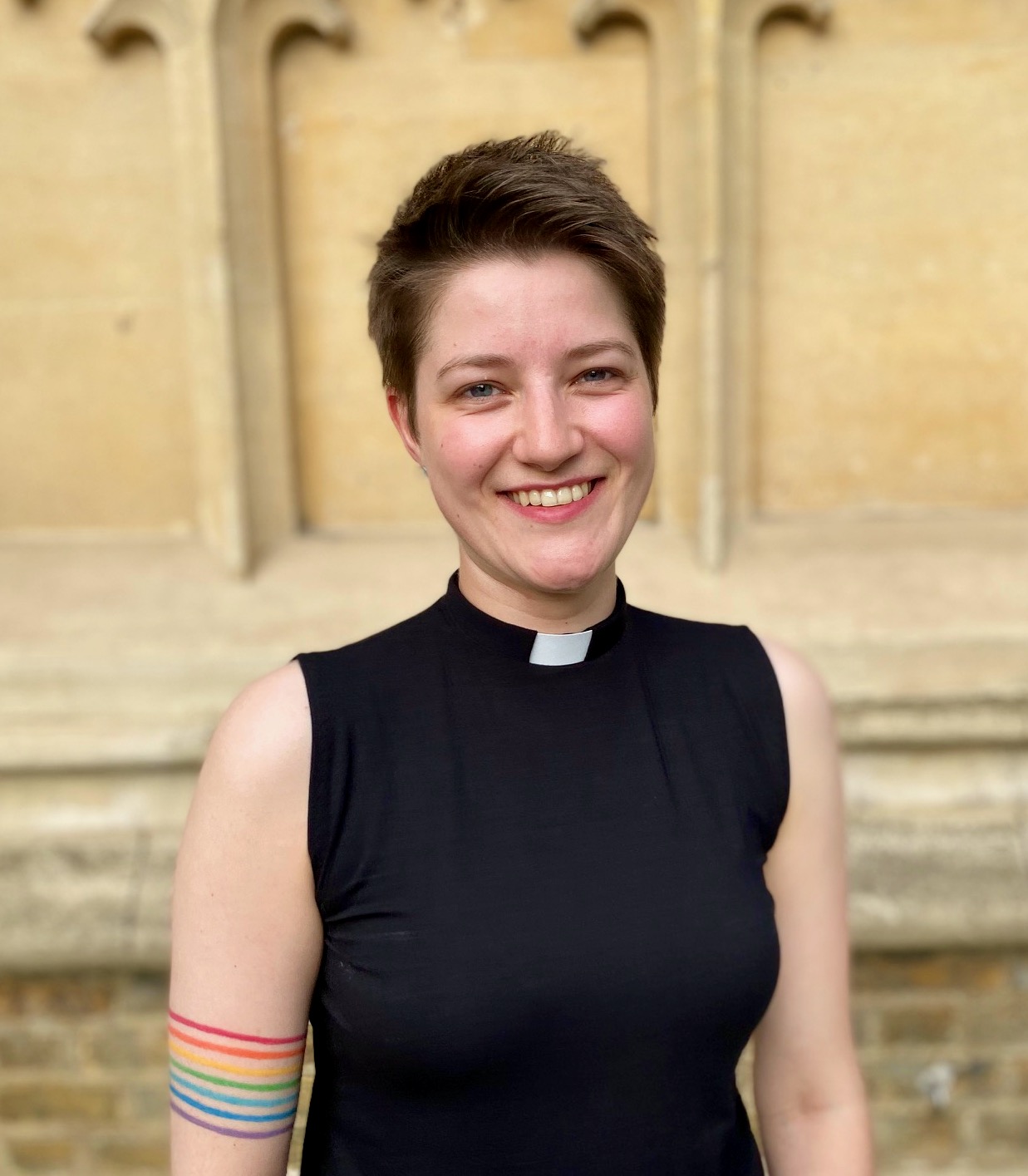
My ordained team photo, taken outside my curacy church

My other anniversary posts might have been a bit late into September, but it is unfortunate this year that I have made it into October before getting round to it. I do think I can be given a bit of slack though, due to the global pandemic and the small matter of getting ordained. 

So it's finally happened. I'm sitting here in a clerical collar. And I must say I really haven't processed the whole thing yet. Let's start with a look over the last year.

It's been a much bigger shift than my last anniversary posts have covered. Last September I was starting third year, courting a curacy, and worried about my dissertation. I was part of a community, with a house full of friends, and I had a very full and exciting summer with lots of travel and new people and experiences. I felt like I was on a conveyor belt. 

Now the whole world has changed, and then my corner of it has changed even further.

I didn't get to enjoy my final term and engage in the the rituals of ending properly. I moved house in fraught and subdued circumstances, back to a city with a very different rhythm to the one I was leaving. An empty house with my three pieces of furniture, all on my own, my first time in full control of a household. I started a curacy without being ordained, and with worship a far cry from what is usually is. 

When you read the literature about stress, I tick most of the boxes for big life changes - moving house, new job, committing to a relationship, money worries, on top of times of uncertainty, lack of control, and additional responsibilities. I am very lucky that I have secure employment and housing, and I have not been bereaved, but I think it's still fair to say I have had a lot to handle.

Yet again, it is lots of life stuff, not so much God stuff that has taken most of my time and energy, and whilst everything has been turned on its head (again), the religious stuff is coming to the fore, but not so much my own spirituality. Learning and committing to a new church as one of its clergy, at a time when everything is weird and we don't know what Advent will look like, is bloody hard. All clergy have to put effort into maintaining their own spiritual lives underneath day to day ministry, but I think those of us starting curacy this year are at a disadvantage that we have more to get under without the benefit of years of practice.

Anyway, the ordination. Here's a glimpse of what I was feeling the day before it happened, and some snippets from the livestream of the service itself.


(the full ordination service is available here)

It definitely now feels like I've started something, I'm in a new chapter (and of course, I have joined deanery chapter, haha!). Who I am has now clicked into place with the life I've been living, and all the small inconsistencies have been smoothed out. Even just watching this video back a few weeks later, I do feel like a different person. It's not dramatic, but it is noticeable. And I'm not as worried about having a 'schema'; all the rhetoric about being yourself as a clergyperson rather than fitting into a set pattern of 'what a priest is' makes so much sense - who I am behind this collar is as much a clergyperson as my colleagues, but in so many different ways, and that's beautiful and marvellous.

My sense of self has definitely cleared up since I wrote about it in August. I am no longer fractured or unsettled. My identity is more certain. I cannot know how this all would have gone down if I had been ordained in July in a world without Covid-19, but no matter. 

How are me and God doing? Well, in a previous post I wrote "God and I have a very slow-moving relationship, because it is true that I do better at things in life if I get to work up to it in a thorough and methodical manner. God understands that better than I do when I'm being blinded by my enthusiasm and passion." This still rings true. I understand quickly but retain slowly, so building up to being an ordained curate by doing it as a lay one first might have been a bit of a blessing.

God is the undercurrent, as always. I get comfort and reassurance when I stop and check in. As per my MO, daily corporate prayer is an anchor point, particularly the eucharist on a Monday evening. The eucharist has also been a touchstone place for me and God.

Am I still on my axles in God's workshop? I haven't thought about this imagery much lately, but I re-read some posts and came across it. I thought when I last wrote about it that I would eventually "set down off the stand ready to hit the throttle into curacy, to warm up the tyres and get to grips with the upgrades, so that I can journey well in the rest of my life in ministry". I don't feel like I've necessarily hit the throttle as such. I was stuck revving the engine with a depressed clutch for a while, but I have nosed out the garage doors now. I can feel the sun on my new, novel parts, and I'm slowly testing out my new shape and features in the yard.

I can see the life-long learning ahead of me. Growing as clergy will happen every day - slow days, days off, bad days. I like who I have become in five years. I am where I should be, lucky son of bitch that I am. I love God, I love people, I love the Church (for all its flaws). I love being ordained, at least so far.

Being public property will get wearing. Working too many hours will be hard. Holding people through the highs and lows of life will take a toll. Meeting problems I cannot fix will wound my soul. I cannot predict what else this life is going do to me, or the people in my life. I cannot predict what my life will look like. But thank God I was called so young - the unexpected adventures ahead, the anticipation of the unknown, it's an incredible gift. I hope I never take it for granted. And I hope I can keep taking you along with me.

Monday, 25 April 2016

Video: Living on a prayer

Less vocation-related, but a sharing of only my second experience leading a group religious discussion about prayer. See the video for my presentation, or the full text is below, followed by notes from the discussion.


Prayer is a big topic, but here at Circus Spirit, we decided to concentrate on “What is prayer?” and “Does it work?”

What is prayer? A year ago, I might have been able to give you a simple answer, when actually I didn’t really know.

Does it work? Again, a year ago, I would have shied away from thoughts of ‘the power of prayer’. I knew that I was supposed pray, but I also knew that I was absolutely terrible at it. I chose this topic in no small part to educate and motivate myself.

But improving at prayer is a tricky business. Priest Kevin Scully puts it quite neatly: “How does one learn to pray? By praying. Is there a way to learn more about prayer? Yes, by praying. What does one do if one experiences barrenness in prayer? Pray. How can one deepen a sense of the divine? By prayer.”

It’s a very subjective act, and I would put forward that ‘what is prayer’ and ‘does it work’ are both subjective questions.

That said, as with most human activities, there are a lot of similar experiences. Prayer is a common feature of most religions, and even people who don’t have a religion, pray, often in their own way and for their own reasons. People pray for all sorts of reasons and to all sorts of objects – to one divinity, to many gods, or to gurus, spirits or angels, saints or the dead, or concepts, like ‘Wisdom’, personified in the Psalms for example.

I talk to God. I talk to God with a reverence that I would give a leader and a boldness as if I were talking to a friend. My most common prayer is gratitude. My second most is generally a desperate plea for help.

This echoes a classic structure of prayer from my own religion, Christianity. It is often described as ‘adoration, confession and petition’; I was introduced to it long before I knew such big church words; I was introduced to it by a friend, whose advice was to pray the ‘teaspoon prayer’. TSP = thank you, sorry, please.

This is the way that I and many sustain our connection to God. Like any relationship, it takes time and effort, and whilst good to acknowledge where we know we’ve done wrong and ask forgiveness, the confession, it is also a dynamic of give and take – adoration and petition. As for petition, I ask for things, I do, because it’s not a one sided relationship where only I put in an effort.

And as for adoration, I praise God for the blessings in my life and the wonders in the world. Whilst I do try to show this gratitude in my everyday life, it is important for our relationship to communicate directly and put into words my gratitude.

Note, I did not say it was important for God, but important for our relationship. Often an intellectual barrier to beginning, growing and sustaining a prayer life is, if God, an all-knowing divinity already knows what I’m sorry for, how grateful I am, and what I want or need, why ask? Now, as a religious person, an easy answer for me to give would be ‘because God commands it’.

But that’s not good enough. That’s not enough reason, for me. So I found a few reasons why God might command it. As these are my thoughts, they are inevitably Christian-centric, and they certainly aren’t an exhaustive list. They may not even be right! But here we go.

Why would God command us to pray? If we were blessed without supplication, if we got good things in life having not asked at all, we could be tempted to assume independence. For God and humanity both, that is the opposite of what many feel are our true natures. They would say our natures, God’s and humanities natures, are of relationship; we can see it in humanity, because many agree that it is a base purpose and desire of a person to seek connection and intimacy, and we see it in God, in Christianity anyway, because God is a trinity, a single power in a status of eternal relationship.

Similarly, many would say that God desires communion, like a Father finds an unreadable scribble given by his child precious beyond measure. It cannot be denied that people’s experiences throughout the millennia have been of a divinity that communicates. Now you may not think any of the experiences were supernatural or divine in nature, but you can understand the conclusion of some of those who do think they were divine, that God communicates because God does want to hear from us directly, even though it has no impact on what God knows. It is not the content of, nor even the scribble itself that the Father cherishes; it is the act of giving, and being given the scribble that bonds the child and parent.

As I said, a relationship needs effort, and cooperation on both sides. For a lot of people, prayer opens our hearts so God may work on us; we have to open our end before God can easily get through. This is also a reason we need to pray to an all-powerful God – even an all-powerful God would hope to work with a subject that is willing and open to being worked upon. I’m not saying it’s necessary, but you can understand why God would prefer it that way.

Christianity also has a tradition of meditation, which is attempting to reflect on revelations of God; and a tradition of contemplation, which is simply bathing in God’s love.

An answer to the question ‘what is prayer’, in comparison to these two similar states, meditation and contemplation, might be that prayer is focused time of sometimes monologue, and sometimes dialogue, that we may be aware of grace and blessing, and aware of our own wrongdoing; a time to remember to be grateful, and to be repentant. To my mind, prayer is pure attention, an expression of our response to life and the world.

David Macintrye wrote of prayer in the 1800s, and he quoted someone called John Laidlaw who said “A sense of real want is the very root of prayer”.

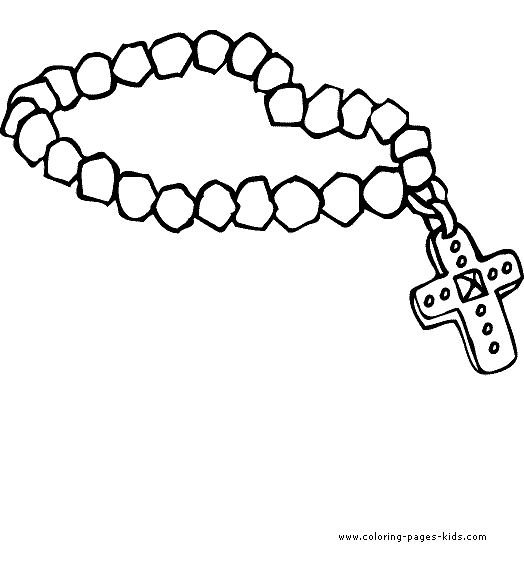
But if that’s the case, what’s with all the tat that often surrounds prayer? What’s with prayer beads, mandalas, prayer mats, icons, bells to get God’s attention, using scripture to pray, and all the millions of words of written prayers, whole books of them?

Now this can be answered in two ways, and applied to all props, costume and ritual in religion – firstly, humanity is a bit rubbish left on its own to contemplate the ‘other’ in the world; most of humanity needs tools to help it focus, otherwise ‘pure attention’ is corrupted by the distraction of something shiny, or delicious, or naked, that seems must more important and certainly more interesting. Nothing wrong with shiny, delicious, naked things, but if you want a relationship with God, if you want to connect with that ‘other’ within you and all around you, if you want a chance to see the extraordinary in the ordinary, you have to pay attention.

And secondly, prayer can be a sensual experience, not just about what you say. The words may be intensified by the tactile motion of running prayer beads through your fingers. Or if you’re not speaking but ‘listening to the silence’, an atmosphere enhanced by pungent incense, or an environment with rich beauty for the eyes to feast on, or an icon of a saint whose life story speaks to you of God; even the colourful, embossed cover of a book of holy scripture which glorifies its contents – if you’re listening to the silence, that experience, that living in the moment of stimulated senses, the experience itself of the coming together of beauty, that experience can be a wordless prayer

So the need for ritual is common, even in silent spontaneous prayer.  In Islam, there is an understanding of two areas of prayer, the spontaneous, and the official to be recited. Most rituals offer some form of written prayer.

There’s private written prayer, such as a prayer diary, or prayers written on the prayer boards in churches. There are official prayers, in the aforementioned books of prayers, or prayers of intercession at public acts of worship that are composed in advance for the occasion. Prayers can be danced, said, sung, said in tongues, chanted.

And of course there are religious structures of daily prayer. Official practice, either mandated or not, is for Muslims to pray 5 times a day, Jews to pray 3 times a day, and for some Christians to pray 8 times a day (though most prescribe 2 as a more reasonable practice!).

Prayer does have a spiritual core, but it is often most effective when it has a practical element. That is why it is a practice, and we are often called to incorporate it as part of our lives, not just let it sit isolated and separate from our lives.

I’m going to end by quoting Richard Sibbes, an Anglican theologian from the Elizabethan era, who has a practical answer to why we should pray. He said “It was a rule in ancient times, “Lay thy hand to the plough, and then pray.” No man should pray without ploughing, nor plough without prayer.” Which is a pretty way of saying life is not worth living without attempting to find its meaning, but wrestling with that meaning is pointless without also living.

Amen.


Points raised in discussion afterwards:
- pray to live, live to pray
- change perspective from if I don't get get what I ask for, God isn't listening
- God can still get in if we are closed
- sense of 'in the moment'
- prayer provides refocus, leads to perspective and can have effect
- prayer, meditation and contemplation can be linked and feed into each other
- not just we speak to God and God speaks to us, the conversation can overlap in the 'Spirit praying within us'
- all-powerful God's power is love and love is not coersive
- the act of prayer can generate the words, rather than the reverse

- should not feel guilty about petition

Tuesday, 29 December 2015

Being 'religious'

In the last few months I have realised that I am religious. It may sound weird, that I have only just realised this, looking at my life:

- I've identified as Christian since I was 6
- I have worn a crucifix 24/7 since I was 14, so for almost a decade
- I have been going to church every week for over 4 years
- I'm baptised and, more importantly, confirmed
- I've been increasingly involved in church life, including
     - singing in the choir
     - reading the gospel
     - being a server
     - running the Circus Spirit
     - substituting for the cantor
- I pray daily
- I use prayer beads
- I get ashed and wear it for the rest of the day
- I plan on reading the Bible in a year in 2016
- I keep a spiritual journal
- I stay overnight and sleep in the church for the Easter Vigil
- I even took a month off work to volunteer in Advent

To other people, I am obviously religious. I, and others, find it odd if I don't wear a cross, and I get angsty if I miss a Sunday morning for whatever reason. In such a precarious career as freelance theatre stage manager, church is one of the anchors in my life, alongside my family, my boyfriend, and my friends. My aims in life include living by the Great Commandment, and the Golden Rule; being a disciple to Jesus; centering and orientating my life around my relationship with God.

I'm obviously religious. But if you had asked me last year what I identified as, the list would not have included 'religious'. It was only when someone asked me if one of my friends at church was religious that I said "well, yeah, he is, but he only goes to church as much as I do...oh..." and the penny dropped.

I was taken aback. I almost wanted to defend myself against the accusation. And it's this reaction that has made me think about it a bit deeper. Why did I not want to be called 'religious', when it is true? I'm not claiming the "I'm not religious, I'm spiritual" thing, but I would much rather be 'a person of faith'.

'Faith' has a better rep than religion. I think it's definitely a generational thing; there's a feeling of peer pressure to avoid the 'religious' label, and in many ways, a common issue young Christians have is an instinct to hide their religion. Easier to come out as bisexual than Christian! Millennials pride themselves of being progressive, and liberal, and reasonable, and that leads to a rejection of all things seen as not based on reason, including any spirituality or, and especially, a belief in God. Believing in God is often seen as an indication of inferiority, and so going as far as to be religious itself implies an
irrational adherence to dogma. Modern Western mainstream culture seems to take the view that, alongside gender and race equality, freedom of sexuality, and freedom of speech, the conclusion that there is no God is the obvious, and basically only acceptable, conclusion. It's fashionable to hate religion.

One cannot be religious and considered reasonable, rational, even maybe intelligent. So I think my initial instinct to reject the term comes from a fear that it will class me in the same category as religious fundamentalists, religious nutters, religious terrorists, religious indoctrination, conservatism, creationism, zealots, the judgmental, the out of touch. Calling people religious is often a way of excluding them based on assumptions about their views or behaviour ie. it's a label, so in narrow minds leads to prejudice.

But I am religious. Not because I have been indoctrinated, not because I think everyone should live their lives the way I do, and not because it's easier. I am religious because I practice religion, but I
practice good religion. Bad religion is exactly what Jesus railed against when arguing with the Pharisees etc. Good religion is a structure, a set of tools to sustain the faith, the relationship with Jesus, God, the universe. The practices, the actions and works are not the important bit, but I need them, flawed human being as I am, to keep up my end of the relationship. I use the combined wisdom of the tradition and scripture to give me a head start, rather than starting at the beginning on my own. I wouldn't get anywhere! It's also a useful motivation to do things that, even though reason and experience tell me I should, I probably wouldn't end up doing if on my own.

This is if I get it right, and I do fail, of course I do. When I fail, my religiosity is just as insubstantial and a distortion as it was when Jesus threw his wobbly in the Temple. And that's where the negativity of 'religious' catches me, and makes me squirm. It's a reminder that though I am aware of good religion, and I try my best, religion gets in my way sometimes, making me no better than the fundamentalists I so desperately do not want to be.

But my hope is that I get it right enough to outweigh when I get it wrong. I hope I can live a life that is, yes, religious, but in a way that makes people rethink their assumption that being religious is necessarily a negative thing. I find so much that is good, and useful, and wonderful, in religion, and somehow, I hope I can show that to others.

PS a good book to show more of the good in religion than the "religions do good stuff" argument, I recommend Religion for Atheists by Alain de Botton.