Showing posts with label Selection Criteria. Show all posts
Showing posts with label Selection Criteria. Show all posts
Friday, 2 December 2016

Tuesday, 29 November 2016
Video: DDO 4
Thoughts on the lay person's report:
She very much structured her conversation and her report within the Criteria, which is interesting to see. Her report doesn't give a lot of opinion or judgement but she lays out who she thinks I am by summarising what she heard. So for example under criterion A: vocation, she doesn't say whether she thinks I have one, but puts what I said about it, sometimes couched as 'Georgina recognises this'. Later, she says I am committed to ministry, which is not how I phrased it, that's her interpretation, which is good, I'm glad she got that impression, because it is true, but such a clear statement is in my favour. A really nice and positive sentence is "I found Georgina to be very self aware and perceptive." Whoop! And the end is just great: "I found Georgina open and honest with an enormous amount of enthusiasm...Georgina is willing, articulate and reflective, with an engaging manner." That's encouraging.
My to-do list:
- Revise my enquiry form
- contact the chaplain at a prison
- contact a friend who is a priest in a 'normal' parish about shadowing for a week
- contact the army chaplain I spoke to about visiting her
- start the process of getting a spiritual director
- list examples of leadership that I have done
- go to open days (scary!)
Sidenote: If you in the UK, the Gabriel Collective are having an event in London on December 10th 2016, which should be amazing. We'll be making films about the meaning of Christmas. Sign up on the website.
Wednesday, 23 November 2016
Three assessments
No video today. Not just because I didn't remember to get my camera out before and after each one of the three meetings I've had, but also I've needed time to collect my thoughts on these meetings. Before each one I was flustered and nervous, scared even. And after, my mind was mostly white noise, digesting the 90 minutes of my life that were pretty important that had just happened.
 Assessment one - the priest
This one was pretty fun. I met him at his work where he's a chaplain, and he was wonderful at putting me at my ease. It felt relaxed, which was a nice atmosphere when there was also a threatening undercurrent of assessment. We drank tea from dainty tea cups that he had been amused to find in the kitchen.
Regarding the things I had discussed with the rector, I did remember most of the time to 'answer the question', though I got more chatty towards to last half hour; and I remembered to make eye contact and smile. I only managed to cover 3 out of the 7 important points I had wanted to mention, but at least I got a few in there.
Here are some of the questions I could remember whilst on the bus on my way home, some based on the form I filled in that he had been sent - with timelines of my life, my faith, my church life, my calling, questions like "why do you feel you've been called to be ordained", "what is your greatest failure/your greatest success", employment history, and hobbies - and some based on things he'd read on this blog, which he had found because I mentioned it on the form; and some of the questions are basically based on the Criteria, and the sort of things that are important to cover when considering an application to ordination.
- would you be proud to represent the CofE
- how do you deal with stress
- when has your trust in God been shaken
- what have you learnt from the pastoral assistant job so far
- why did you choose what you did on your form under 'your greatest failure'
- why does being a good stage manager mean you think you'll be a good priest
- what has made you doubt your application to be ordained
- where do you find your stillness
- how do others perceive you
- do you have a life eg what do you do outside work/church
- what does your boyfriend think of your calling
- why did you start your blog
- what do you mean when you say that doing this job feels like 'homecoming'
I think I did okay. We seemed to 'connect' as the rector put it, and I didn't say anything that made me wince or regret opening my mouth. It was nice that he'd shared a bit about himself as well, and I even found myself asking him a question or two, which made it feel much more conversational than interrogative.
But it's impossible to really know how well I did, because whilst the fact that it was a nice conversation is surely a good thing, you can really get on with someone, and still not think they're called to be a priest, or wouldn't be a good priest, and that's ultimately what he was assessing.
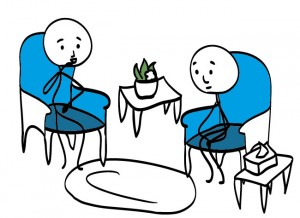 Assessment two - the psychotherapist
This was terrifying. Honestly, she was fine and nice but she did her job very well, which meant she was ruthless at digging into what I was saying. Now, I felt with this one that I had an obligation to be completely genuine, a tad less guarded so that it could be a true assessment. I'm still debating whether being so unfiltered was a good idea, but that's what I did.
It was a bad start as I was late getting there. I didn't have the space that I did with the first one to build up to it and prepare my mind with how I would come across and what I wanted to say. But it was very different conversation than the first, which was to be expected. It was a purely psychological assessment rather than anything to do with God or the church. It was almost clichéd that she started with 'tell me about your childhood' and at various points in later conversation seemed a little obsessed with sexuality, grilling me about my teenage romances which was probably the only point that I made the decision to keep some things private, which I don't think was unreasonable. I gave her answers enough without laying bear all the details.
I did cry once during the conversation. I had been giving a description of a part of my past and when she fed back I was overcome with fear that I had made the stupid mistake that I had been worried I would make ie. concentrating on the details and thereby risking her getting the wrong impression of me. At least I did remember to make eye contact, and I did manage to realise I was waffling and shut up on occasion.
Things we talked about included - incompetent managers, crisis, my family, my first memories, my friends, my boyfriend, coming out, previous partners, being bullied, self-development, anger, and change.
90 minutes was not enough time. There seemed vast swathes of who I am and what I've gone through that we didn't cover, which worries me. Again, I have no idea what the report is going to conclude. At a guess, if there were any issues to be raised these are my suspicions - authority, control, self-worth, pride, empathy. Now I'm not saying that these are issues I definitely have or definitely not have, they're just possible things that might get flagged, and only a rough guess. I'm not a professional psychologist, I don't know if these things were issues or not! We all have issues, it's whether they are big enough to be a problem that will be the stumbling block.
This one was pretty fun. I met him at his work where he's a chaplain, and he was wonderful at putting me at my ease. It felt relaxed, which was a nice atmosphere when there was also a threatening undercurrent of assessment. We drank tea from dainty tea cups that he had been amused to find in the kitchen.
Regarding the things I had discussed with the rector, I did remember most of the time to 'answer the question', though I got more chatty towards to last half hour; and I remembered to make eye contact and smile. I only managed to cover 3 out of the 7 important points I had wanted to mention, but at least I got a few in there.
Here are some of the questions I could remember whilst on the bus on my way home, some based on the form I filled in that he had been sent - with timelines of my life, my faith, my church life, my calling, questions like "why do you feel you've been called to be ordained", "what is your greatest failure/your greatest success", employment history, and hobbies - and some based on things he'd read on this blog, which he had found because I mentioned it on the form; and some of the questions are basically based on the Criteria, and the sort of things that are important to cover when considering an application to ordination.
- would you be proud to represent the CofE
- how do you deal with stress
- when has your trust in God been shaken
- what have you learnt from the pastoral assistant job so far
- why did you choose what you did on your form under 'your greatest failure'
- why does being a good stage manager mean you think you'll be a good priest
- what has made you doubt your application to be ordained
- where do you find your stillness
- how do others perceive you
- do you have a life eg what do you do outside work/church
- what does your boyfriend think of your calling
- why did you start your blog
- what do you mean when you say that doing this job feels like 'homecoming'
I think I did okay. We seemed to 'connect' as the rector put it, and I didn't say anything that made me wince or regret opening my mouth. It was nice that he'd shared a bit about himself as well, and I even found myself asking him a question or two, which made it feel much more conversational than interrogative.
But it's impossible to really know how well I did, because whilst the fact that it was a nice conversation is surely a good thing, you can really get on with someone, and still not think they're called to be a priest, or wouldn't be a good priest, and that's ultimately what he was assessing.
Assessment two - the psychotherapistThis was terrifying. Honestly, she was fine and nice but she did her job very well, which meant she was ruthless at digging into what I was saying. Now, I felt with this one that I had an obligation to be completely genuine, a tad less guarded so that it could be a true assessment. I'm still debating whether being so unfiltered was a good idea, but that's what I did.
It was a bad start as I was late getting there. I didn't have the space that I did with the first one to build up to it and prepare my mind with how I would come across and what I wanted to say. But it was very different conversation than the first, which was to be expected. It was a purely psychological assessment rather than anything to do with God or the church. It was almost clichéd that she started with 'tell me about your childhood' and at various points in later conversation seemed a little obsessed with sexuality, grilling me about my teenage romances which was probably the only point that I made the decision to keep some things private, which I don't think was unreasonable. I gave her answers enough without laying bear all the details.
I did cry once during the conversation. I had been giving a description of a part of my past and when she fed back I was overcome with fear that I had made the stupid mistake that I had been worried I would make ie. concentrating on the details and thereby risking her getting the wrong impression of me. At least I did remember to make eye contact, and I did manage to realise I was waffling and shut up on occasion.
Things we talked about included - incompetent managers, crisis, my family, my first memories, my friends, my boyfriend, coming out, previous partners, being bullied, self-development, anger, and change.
90 minutes was not enough time. There seemed vast swathes of who I am and what I've gone through that we didn't cover, which worries me. Again, I have no idea what the report is going to conclude. At a guess, if there were any issues to be raised these are my suspicions - authority, control, self-worth, pride, empathy. Now I'm not saying that these are issues I definitely have or definitely not have, they're just possible things that might get flagged, and only a rough guess. I'm not a professional psychologist, I don't know if these things were issues or not! We all have issues, it's whether they are big enough to be a problem that will be the stumbling block.
Assessment three - the lay person
For the last one, we met on Sunday evening, so I was a little tired after a day's work and I hadn't had a lot of time of switch gears. But overall I think it went well. She was very nice, made us tea, and she had prepared a set of questions, again based on the form and the criteria. A nice moment was when she said that she read my form and she felt that rather than it being just being a bunch of facts, it was written in such an open way that a "real person" was in there.
Again, I remembered eye contact and to just answer the question (mostly) but I definitely waffled more than I had with the chaplain. We talked about:
- my personal development through training and being a stage manager
- the parallels of stage managers and priests
- singing in worship
- leadership
- children's work
- the Gabriel Collective
- this blog
- dealing with difficult people at church
- my brother, parents, and boyfriend
- the rector's role in my journey
- God working in my life through opportunity and bolt-out-the-blue moments
- St James' Piccadilly
- my first children's Bible
- looking after one's physical and mental well-being
*
Blimey Charlie, they've whizzed by. I'm seeing the DDO again this week; he should have at least one report, if not two or even all three. I feel like I used to after exams - as if I should be nervous, but knowing that there's nothing I can do, so I'm suspended, hanging motionless waiting for the next step, the consequences of my actions.
I hope I've done okay. I hope I listened to the small voice of God in my heart and followed where God willed.
I won't be posting the full reports, but I will summarise them for you. So stay tuned!
Again, I remembered eye contact and to just answer the question (mostly) but I definitely waffled more than I had with the chaplain. We talked about:
- my personal development through training and being a stage manager
- the parallels of stage managers and priests
- singing in worship
- leadership
- children's work
- the Gabriel Collective
- this blog
- dealing with difficult people at church
- my brother, parents, and boyfriend
- the rector's role in my journey
- God working in my life through opportunity and bolt-out-the-blue moments
- St James' Piccadilly
- my first children's Bible
- looking after one's physical and mental well-being
*
Blimey Charlie, they've whizzed by. I'm seeing the DDO again this week; he should have at least one report, if not two or even all three. I feel like I used to after exams - as if I should be nervous, but knowing that there's nothing I can do, so I'm suspended, hanging motionless waiting for the next step, the consequences of my actions.
I hope I've done okay. I hope I listened to the small voice of God in my heart and followed where God willed.
I won't be posting the full reports, but I will summarise them for you. So stay tuned!
Monday, 26 September 2016
Video: Gabriel Collective
Above is a vlog of my day at an event called Gabriel Two. I was there working with the Gabriel Collective who were the team that put on the event. Check out more videos and info at gabrielcollective.org.
I got involved in Gabriel Collective because I vlog on this blog, and I caught wind of them on the Church of England podcast I think, or on Twitter maybe, because they encourage and support young people sharing their faith via online video. Now obviously I'm actually just sharing my personal vocation story here, but that is still a vehicle for evangelism I suppose, and at 24, I count as a young person.
It's been good for me, being part of GC, because Criteria H: Mission and Evangelism is one of the bumps I hit when going through the Criteria for Selection to the Ordained Ministry in the Church of England. You can watch the relevant section of one of my oldest vlogs here (link starts at Criteria H at 27:46 - don't judge me, I hadn't started actually editing the videos I put up at that point!) to see where I was on the subject a year ago. I should do another video (shorter and actually edited this time) going through the Criteria again, thinking about it. It's going on the to-do list!
Anyway, I had a great time at Gabriel Two, and I'll plug the Collective's message for a moment - anyone can do this! Get out your phone and put a faith-related video on Youtube - if muggins here can do it, it shows jut how easy it is. Have a go!
And for those following the story of this blog, things are still going well at St Martin's and I'm seeing the rector of St James' on Saturday, so you can expect the next installment some time after that.
Wednesday, 29 June 2016
Sixth chat with the rector
On 22nd June 2016 I met with the rector again. We talked first of Scotland, as I spent a week staying with friends -
[*Side note about my time in Scotland*
The household was one preteen, one teen, mother and father. The latter is a parish priest, so I put my vocation hat on at various points throughout the week. Talking about my vocation to a priest who is a personal friend, more catholic than me, with a very different disposition (read: quiet, composed, academic introvert), a parish priest in Scotland not England (so working for the Scottish Episcopal Church, which is Anglican but not CofE), and not of my hyper-liberal millennial bubble, was a good experience for me. He was very helpful talking about ministry, and let me sit in on a meeting with the pastoral group, and overall it was interesting seeing a priest at close quarters in the home, hearing about and seeing the day-to-day rhythm, and events and tasks involved in the job.]
- but we quickly got down to business. Last time we met, she said she would talk to the curate, talk to my clergy line manager at SMITF, and read some blog posts/watch some vlogs. She also said that she had talked to the ADO (area director of ordinands), the person to whom she will send me when she writes a reference. I was hoping to get that process going this summer, but she put her cards on the table - she doesn't want to, yet.
So let's address the disappointment here before I continue. Yes, it's disappointing, especially as she doesn't want to refer me for at least another few months probably, bringing my total exploration pre-official discernment process to a year.
Following your calling is often an endurance test against frustration and human gatekeepers, a feature of our chosen paths about which the writer of this blog and I have commiserated each other. It sometimes feels like God is reaching into your life and deliberately putting things in the way of the path you want to take. Apparently, the path you want to take is never the one God wants you to take, even though you're trying to follow God's calling in the first place! I've mentioned God breaking down my expectations before, so really it's my own fault that I built up another plan for the future, another set of expectations to meet, not learning from the past at all. It's just so counter-intuitive to have the level of no control that even includes no expectations, I'm finding it very tricky. Doesn't stop God, God's plans still chug along, it just leads to disappointment for me. So I'm trying not to let the disappointment hang around. I do trust in God ultimately, it's not a crushing defeat, there are no crushing defeats in following God if I listen to what I'm being told to do, so I have confidence that all shall be as it should.
It was really helpful that she expanded her reservations - we engaged in discussion about how I had not given her a sense of my faith. It was in the context of 'resilient faith', an important thing to have but also, crucially, for selectors to see that I have, as it is a serious risk that in the the first few years of ministry, new priests get burnt out without the sustenance of robust faith. So over the time that we've spent talking, she hasn't seen evidence of 'who I am in the light of God' and what my relationship with God is like.
 I've got to admit, I was a little astonished. Of the nine criteria, Faith was not on my list of concerns. I suspect that it's such a fundamental part of my life, it's so obvious as a basis for my calling, I've not acknowledged it explicitly in itself, or studied it, instead focusing on the manifestations of my faith, and how to go where it leads me, rather than consider the big picture, the backdrop, the bedrock on which is all stands. "They should demonstrate a personal commitment to Christ and a mature, robust faith which shapes their life and work. Candidates should show an ability to reflect critically on their faith and make connections between faith and contemporary life. They should demonstrate a capacity to communicate their faith engagingly and effectively." I have not demonstrated this, and therefore, quite rightly, my rector does not have confidence to send me to be held up to this measure.
So my homework is to do the daily examen exercise, from which I am to write notes to bring to our next session in two weeks. Apparently she sees hints of what she's looking for in my videos, and when I read out my written notes eg from my spiritual journal, so this exercise is to the wean me into looking for God in my life more consciously, and then get me to talk about it, starting with a medium that I'm better at than the pressured situation of talking one-to-one, 'off the cuff' as it were.
Things are progressing, and though it's not at a pace that is comfortable - apparently seeing her again in two weeks is 'meeting again quickly' - all shall be well. I have faith in that.
[*Side note about my time in Scotland*
 |
| My trip did not involve bagpipes. |
- but we quickly got down to business. Last time we met, she said she would talk to the curate, talk to my clergy line manager at SMITF, and read some blog posts/watch some vlogs. She also said that she had talked to the ADO (area director of ordinands), the person to whom she will send me when she writes a reference. I was hoping to get that process going this summer, but she put her cards on the table - she doesn't want to, yet.
 |
| Disappointed panda is disappointed |
Following your calling is often an endurance test against frustration and human gatekeepers, a feature of our chosen paths about which the writer of this blog and I have commiserated each other. It sometimes feels like God is reaching into your life and deliberately putting things in the way of the path you want to take. Apparently, the path you want to take is never the one God wants you to take, even though you're trying to follow God's calling in the first place! I've mentioned God breaking down my expectations before, so really it's my own fault that I built up another plan for the future, another set of expectations to meet, not learning from the past at all. It's just so counter-intuitive to have the level of no control that even includes no expectations, I'm finding it very tricky. Doesn't stop God, God's plans still chug along, it just leads to disappointment for me. So I'm trying not to let the disappointment hang around. I do trust in God ultimately, it's not a crushing defeat, there are no crushing defeats in following God if I listen to what I'm being told to do, so I have confidence that all shall be as it should.
It was really helpful that she expanded her reservations - we engaged in discussion about how I had not given her a sense of my faith. It was in the context of 'resilient faith', an important thing to have but also, crucially, for selectors to see that I have, as it is a serious risk that in the the first few years of ministry, new priests get burnt out without the sustenance of robust faith. So over the time that we've spent talking, she hasn't seen evidence of 'who I am in the light of God' and what my relationship with God is like.
 I've got to admit, I was a little astonished. Of the nine criteria, Faith was not on my list of concerns. I suspect that it's such a fundamental part of my life, it's so obvious as a basis for my calling, I've not acknowledged it explicitly in itself, or studied it, instead focusing on the manifestations of my faith, and how to go where it leads me, rather than consider the big picture, the backdrop, the bedrock on which is all stands. "They should demonstrate a personal commitment to Christ and a mature, robust faith which shapes their life and work. Candidates should show an ability to reflect critically on their faith and make connections between faith and contemporary life. They should demonstrate a capacity to communicate their faith engagingly and effectively." I have not demonstrated this, and therefore, quite rightly, my rector does not have confidence to send me to be held up to this measure.
So my homework is to do the daily examen exercise, from which I am to write notes to bring to our next session in two weeks. Apparently she sees hints of what she's looking for in my videos, and when I read out my written notes eg from my spiritual journal, so this exercise is to the wean me into looking for God in my life more consciously, and then get me to talk about it, starting with a medium that I'm better at than the pressured situation of talking one-to-one, 'off the cuff' as it were.
Things are progressing, and though it's not at a pace that is comfortable - apparently seeing her again in two weeks is 'meeting again quickly' - all shall be well. I have faith in that.
Wednesday, 20 April 2016
Video: Vocations Weekend with the Society of Catholic Priests 2016
Below I have outlined in more detail the events in the video, and have included the notes I made at various sessions.
FRIDAY
After arriving at the accommodation and checking in, we gathered in the chapel for tea, biscuits and cake (which was soon to become a theme of the weekend!) to mingle and awkwardly try and get to know each other. We were a mixed group - late teens, 20s, 40s and 50s, 6 men and 4 women, from all over the UK and a couple of other countries as well, on a variety of places on our journeys of faith and vocation.
Our three guides for the next couple of days were a curate at a local church from the Society, an ordinand and parish assistant from another local church, and a member of the Community of the Resurrection, a religious community nearby. They gathered us, and the curate promptly introduced everyone to the "not an icebreaker" exercise of giving one's name, and the story of one's shoe. Vespers were said before dinner, after which we re-congregated in the chapel.
We spent the evening together, first with the curate telling us her story of vocation, and then breaking into groups to discuss our own. My notes from that session were:
- I was introduced to the term 'altar in the loft' syndrome, which refers to children playing at being priests in the same manner as 'playing house', or 'playing doctors and nurses'
- joy/confidence - sharing gospel
- Time is always an element of our journeys, but crucially it is God's time
- BAPs can be horrible - that can be a sign that it's the wrong time
- I was particularly partial to the imagery that discernment includes mountains to climb and ditches to fall in
Compline followed, and many of us walked to the local 'Spoons, having found the intended pub closed, much to the dismay of the curate.
SATURDAY
After breakfast, we set off in a few cars to the first church of the day, for Eucharist, a cup of tea, and a chat with the parish priest, a lovely woman who had had her calling to priesthood slightly later in life. She told us of the struggles in the area, holding the parish together when two merged, the new building and its cafe, all sorts.
I have notes in this slot, but I'm not sure if they were from this session. Here they are anyway:
- if your path turns from vocation into career building, it'll feel wrong
- we are often called to abandon our nets like the disciples, our nets often being our security
Piling back into the cars (the day's drivers were heroic) we were soon at our next stop, where we met Rachel Mann. Look her up. She's awesome. She spoke so eloquently and passionately, even those in the group who might have taken issue with her transwoman identity spoke of their admiration for her obvious faith. I didn't get my notebook out anywhere near early enough but I did write:
- priests aren't superheroes - ours is a vulnerable God who carries the wounds of the cross forever
- people want to love their priest, and be loved by their priest
Speeding on, we visited what was obviously the prettiest church, as it was the parish of our curate guide. Tea, soup and sandwiches was followed by a chat with our monastic guide, who talked of his calling to religious life.
We were greeted at the next church with, you guessed it, tea and cake. We spend some time in groups reflecting on our day, and what I got strongly was a new appreciation for the importance in most parishes (but not mine, so it was a novelty) of the actual geographical parish
We moved to the side chapel for what was for me the most useful session, with the Bishop. Bishops are the decision makers in the CofE, so getting his perspective, especially on their decisions regarding candidates for ordination, was a real insight. He also spoke wonderfully of calling, and faith.
- making a difference
- thirst for sacred and longing for encounter with God
- our buildings provide space for the 'other', as well as resource and equip a community
- the criteria should be part of my prayer on my vocation
- looking for evidence of real, authentic, lived out friendship with Christ, and a want for others to find the friendship
- not a social club - first duty and joy as a church is worship
- discipline of prayer (an unsurprising theme of everything I have heard or read on vocation)
- how are things between me and God? not how should it be or what state am I working towards, Right Now, even if I'm on a difficult path, is there a sense of peace about that path? if there is, I am where God wants me to be
- how am I the living gospel?
- service - servant community, love in action
"Go into all the world, and preach the gospel, and use words if you have to " - St Francis [yay for subtle evangelism! Must remember this quote]
- being ordained in a privilege
- looks for sense of need for growth - TTI (theological training institute) is place/time for formation
- woundedness is not the barrier - what you do with it can be
- the priestly ministry is distinct within ministry of all believers
- preaching, teaching, sacraments, pastoral care, mission
- the uncomfortable thought "that is what I was born for"
- Is this what Jesus is asking?
- red flag - overconfidence, if the candidate thinks themselves already everything required and God's gift to the church
Vespers followed, and after a brief rest, a fun meal shared on the Curry Mile.
SUNDAY
Breakfast and checking out preceded returning to the church where we talked to the Bisop the night before, for morning prayer with the parish priest. Of course we grabbed tea and biscuits, before sitting in the social room for a chat with him about the process. He gave us the perspective, to add to the Bishop's, of a member of the panels that report back from the BAPs.
- discernment involves listening to others, listening to God
- BAP is not an interview for a job, it is a time and place to get to know you and line you up in the context of the criteria
- in younger candidates, less emphasis on evidence, more on potential
- there's a gap in uptake of women under 30, especially non-evanglicals
Going through the criteria
A - being able to tell your story
- listen but also talk to others including those outside the church
- don't be embarrassed
- priest - sacraments, service, connections, represent and enable others to witness Christ, leader
- can be uncomfortable language, don't be scared of the words
B - asked where you've been to, basically tell your story and understand your own personal tradition including how you got there and which forces have shaped you
- good to experience other churches
- two telling questions - what are your interests outside the church? What do you believe will be the main elements in your future ministry?
C - friends can be part of spiritual direction, not crucial to have official spiritual director, though advised
D/E/F - mostly assessed at the actual BAP rather than preceding paperwork
- being able to talk, and honestly, about difficult times
- be relaxed
- say who you are, assessment is of your calling as you, not the person you think they want you to be
G - not just being a believing Christian - critical, articulate, involvement in your life
- can have nuanced 'coming to Christ' rather than dramatic conversion
- what do I understand Christ to be? can have different expression
H - mission and evangelism = two separate terms!
- look up five marks of mission
I - flexibility of mind, openness to change and challenge
- awareness of others' vulnerability
- breadth of personality eg films, reading etc
TIPS
- talk to people about my calling in and outside church
- diocese vocation fellowship?
- run with what you find interesting
- not too bothered about being on the PCC or synods
- in the group activity, listen to others' views and draw things together
- get involved at parish level but also focus on bigger picture eg Greenbelt
- be informed about the Church
- inform about religious/spiritual interests and explore why inspired by certain people
- PRAY. Discipline is important, regularity is very Anglican
- placements can be good
- red flag - over-assertiveness, though show vulnerability, only in a balanced way
Mass was basically Catholic, which was an novel experience. Not my cup of tea though. Talked to some of the congregation, over tea naturally, and had a fab lunch of cold meat, hard boiled eggs, salad, bread and cheese.
The last session was a bring and share. People brought books that inspired them, Bible verses, a teddy, and I took my children's Bible, because that's where my story always starts, and it reminds me that I am dedicating my life to a story, the telling and sharing of stories, and I should never forget that.
Benediction of the Sacrament and laying on of hands was all new as well, but rather sweet. I had to run to catch my train, but made it in time, and got home. Yes, I cried that night as seen in the video, but I meant what I said.
I would highly recommend a vocations weekend, I got so much more out of it than day conferences, not just as we were able to fit more organised stuff in, but also from learning from my companions as we got to know each other through worship, sharing meals and experiences together.
Friday, 27 November 2015
Exploring my doubts
Doubt is not something I want to put words to. Admitting that I have doubts about my calling is quite painful. But doubt is an important part of faith. I don't think a lot of people really realise that. I know for example I've had an argument with my boyfriend about the nature of faith - he thought is was something you feel and not based on evidence. I countered that he was describing blind faith, and I did not recognise his definition as the faith I have.
Blind faith is 100% convinced, but true faith has real conviction because it constantly doubts. Why have faith in something if you haven't reason to? I have doubted pretty much every part of my faith, including the big ones like do I believe in God. I like going back to the very Jewish idea, which I think Anglicanism embraces very well, of arguing. Arguing with your faith, interrogating your scripture, contemplating other possibilities. Moses (Exodus 4) immediately springs to mind as someone who directly shouted at God, questioned God (Exodus 3), and in the New Testment, the Apostle Peter wavered in faith (Matt 14); even Jesus had moments, eg. at the Mount of Olives (Luke 22), and I considered not even mentioning Doubting Thomas as the obvious choice.
These doubters were all true role models of faith. And so I feel stronger for being able to follow their example, and speak out about my doubts, to face them head on, in the never-ending struggle and journey of faith.
I have worried that I am deluded. Most of the time it makes so much sense to think that I am 'destined' to be a priest, then I scold myself for being so arrogant, then I worry that not feeling special is a sign that it's not a true calling, but surely modesty is better than self-grandeur...
It gets a little cyclical, and I end up feeling lost and guilty. Okay, so confront it, what if I am deluded? (Forgetting the possibility of being deluded that there is a God, and concentrating on the possibility of being deluded that I feel a calling from God). I have been getting more and more religious, so is thinking there's a calling just part of my very thorough way of doing things and being a priest seems the obvious way of 'doing religion thoroughly', and that's the real reason I'm doing it? Does it feel right because it feels like the way to do that part of my life 'properly'?

Okay, I might have a calling, but what if I'm called to something else? Being ordained and being a full time priest is just one of many callings for Christians. I might be copping out of the hard reality of juggling Christianity and other parts of my life. Many people, most Christians in fact, live out their faith whilst in full time secular employment, why do I feel I have to put my Christianity as not just my religion but my job, and not just that but a community role, a life vocation?
Surely I'm not the right person to represent the Church and lead an example of Christ-like living. I've never been naturally a 'people person', and a lot of people find me too loud, boisterous, direct and intense. I have very liberal attitudes to things like sex and relationships that many in the Church would probably object to, even though I go about my love life with as much care to Love God as much as Love Neighbour as any other part of my life. But part of me worries that I'm just wrong. I think I'm doing good not evil, that I'm living conscientiously, trying to not sin, but what if I'm wrong? I swear, take Christ's name in vain, get drunk, shout at my family, buy nice things, don't give change to beggars. There are people in the world who genuinely think I'm a bad person; there's at least one I can think of who probably actually hates me. That doesn't sound like a priest.
No one seems as enthusiastic about it as me. Is their support just politeness? There's a lot in the literature about other people affirming your calling - nope. One crazy stranger, that's all I've had. Not my priest, my boyfriend, my family, my friends, no one has positively said they think it's a good idea. I'm not trying to criticise them - if that's how they feel, I certainly want them to be honest. So if they are, if I'm in the minority of one that thinks I could be a priest, how likely is it that I'm the one that's right?
Let's look at the Criteria again (see also previous post) and what I can't do or haven't got.
So what do I doubt about my calling? I doubt that I'm called at all, I doubt that I'm called specifically to be ordained, I doubt that I'm the right type of person to be ordained, I doubt that I'm right to disagree with my support network, I doubt that I can fit the criteria for being ordained.
 And it is terrifying. I hate having doubts. I have so much conviction, assurance and excitement about my calling, it knocks at my core to express doubt. I've used this metaphor before: I have a bedrock of trust in God, on which are pillars of faith, holding up the foundations of my soul, on which the building of my heart sits, in the infusing cloud of my brain. Doubt is lightning spearing from that cloud, and rocking the whole structure. My emotions get knocked about and chaotic, my soul ripples and sends shockwaves through my faith, and my trust is holding firm but not unwobbled.
If you want to read the positive side of this argument with myself, read the post Reasons I think I'd make a good priest/want to be priest.
 |
| Faith is not always blind |
These doubters were all true role models of faith. And so I feel stronger for being able to follow their example, and speak out about my doubts, to face them head on, in the never-ending struggle and journey of faith.
***
It gets a little cyclical, and I end up feeling lost and guilty. Okay, so confront it, what if I am deluded? (Forgetting the possibility of being deluded that there is a God, and concentrating on the possibility of being deluded that I feel a calling from God). I have been getting more and more religious, so is thinking there's a calling just part of my very thorough way of doing things and being a priest seems the obvious way of 'doing religion thoroughly', and that's the real reason I'm doing it? Does it feel right because it feels like the way to do that part of my life 'properly'?
Okay, I might have a calling, but what if I'm called to something else? Being ordained and being a full time priest is just one of many callings for Christians. I might be copping out of the hard reality of juggling Christianity and other parts of my life. Many people, most Christians in fact, live out their faith whilst in full time secular employment, why do I feel I have to put my Christianity as not just my religion but my job, and not just that but a community role, a life vocation?
Surely I'm not the right person to represent the Church and lead an example of Christ-like living. I've never been naturally a 'people person', and a lot of people find me too loud, boisterous, direct and intense. I have very liberal attitudes to things like sex and relationships that many in the Church would probably object to, even though I go about my love life with as much care to Love God as much as Love Neighbour as any other part of my life. But part of me worries that I'm just wrong. I think I'm doing good not evil, that I'm living conscientiously, trying to not sin, but what if I'm wrong? I swear, take Christ's name in vain, get drunk, shout at my family, buy nice things, don't give change to beggars. There are people in the world who genuinely think I'm a bad person; there's at least one I can think of who probably actually hates me. That doesn't sound like a priest.
No one seems as enthusiastic about it as me. Is their support just politeness? There's a lot in the literature about other people affirming your calling - nope. One crazy stranger, that's all I've had. Not my priest, my boyfriend, my family, my friends, no one has positively said they think it's a good idea. I'm not trying to criticise them - if that's how they feel, I certainly want them to be honest. So if they are, if I'm in the minority of one that thinks I could be a priest, how likely is it that I'm the one that's right?
 |
| I have no issues with my human sexuality |
Let's look at the Criteria again (see also previous post) and what I can't do or haven't got.
- Others have not confirmed my inner conviction.
- I have barely any spirituality; I generally never sit in prayer to God apart from reading other people's words. Nor have I done any Bible study. I don't see how the world and others have been affected my practice of prayer, and frankly I have serious issues with the notion of 'the power of prayer'. I've never understood how spiritual practice 'sustains and energises'.
- I've struggled with maintaining appropriateness in professional relationships - I'm a flirt, blunt, emotional. I'm an out bisexual - whoops, Issues of Human Sexuality.
- People don't follow me, my leadership skills leave a lot to be desired. How can I offer an example of faith when I feel culturally compelled to not mention God so as not to make atheists uncomfortable?
- I feel anger and fear about mission, a distinct mistrust and aversion to evangelising.
***
So what do I doubt about my calling? I doubt that I'm called at all, I doubt that I'm called specifically to be ordained, I doubt that I'm the right type of person to be ordained, I doubt that I'm right to disagree with my support network, I doubt that I can fit the criteria for being ordained.
And it is terrifying. I hate having doubts. I have so much conviction, assurance and excitement about my calling, it knocks at my core to express doubt. I've used this metaphor before: I have a bedrock of trust in God, on which are pillars of faith, holding up the foundations of my soul, on which the building of my heart sits, in the infusing cloud of my brain. Doubt is lightning spearing from that cloud, and rocking the whole structure. My emotions get knocked about and chaotic, my soul ripples and sends shockwaves through my faith, and my trust is holding firm but not unwobbled.
***
If you want to read the positive side of this argument with myself, read the post Reasons I think I'd make a good priest/want to be priest.
Sunday, 15 November 2015
Summary of the Criteria: My response summed up
I've just spent the afternoon and evening going over my homework, going over the Summary of the Criteria for Selection for Ordained Ministry in the Church of England, including filming some videos.
 As it nears late into the night, and I have read through the 9 paragraphs over and over, some of my anxiety has been calmed. Yes, I am worried by some criteria, and this is only the summary, so there will be lots more detail to go through in the full document, but I feel a lot more comfortable about the idea of being scrutinised through this lens. Maybe it is because of the old adage "familiarity breeds disdain", but I suspect not.
I feel confident that there are lot of criteria that I already meet to various degrees, and the ones of which I might fall short have potential, and a potential that can be realistically met in most circumstances. I am ready for that challenge, and eager to accomplish those skills and needs of ordained ministry that I will need to start the life long journey of becoming a better and better priest.
I have really enjoyed looking at "what it means to be a deacon or a priest". I have written a separate blog post here about what I currently think makes a good priest, and what I want out of a priest from a lay person's perspective, before I become too involved in the discernment process to be able to remember. The hope is that as I gain insight into what the Church thinks makes a good priest, I will have that list to hold onto, so as not to lose sight of what the person I am now wanted of the person I will be, when I am her, if that makes any sense.
In order of most confident to least confident, the sections are in this order for me at the moment:
(in brackets in the order in which they appear in the criteria)
1. Vocation (1)
2. Quality of Mind (9)
3. Personality and Character (4)
4. Faith (7)
5. Ministry within the CofE (2)
6. Spirituality (3)
7. Relationships (5)
8. Leadership and Collaboration (6)
9. Mission and Evangelism (8)
I am most confident about Vocation, because I have examined my own sense of vocation thoroughly, and am in an ongoing conversation about it with significant people in my life. I use words like "inevitable" and "inescapable" about my vocation, and it fills me with joy, wonder, and impatience.
Quality of Mind, and Personality and Character are the parts I have most thought about before starting this discernment process, and I am happy to conclude that my opinion is that I am capable, and suited in most areas, with potential for improvement where I might not be as skilled.
Faith is probably the section I feel most articulate about when I talk off the cuff. It's the pillars that sit on the bedrock of trust in God holding up the foundations of my soul on which the building of my heart sits in the infusing cloud of my brain (if I could draw, I would SO sketch that metaphor).
Ministry within the CofE sits in the middle of the list, because I love my Church, and the thought of being on the inside, being part of the machine, the story of that institution, is desirable, but the responsibility and pressure is unnerving.
Spirituality is less important to me, at the moment, than Faith, but I think because my journey so far has concentrated on faith, first personal then community. Building my spirituality is part of this step, the next step, as I shape my life to be more prayerful in anticipation of answering my calling.
Relationships is not a major concern, but not a confident section. I feel halfway through my process of learning to establish, develop, and maintain relationships of all types, and of course Issues in Human Sexuality needs to be looked at.
Leadership and Collaboration, I am only confident in my potential of leadership qualities. They need work, time and effort to craft and improve. Collaboration is further along than leadership.
Mission and Evangelism I almost want to shy away from. I only feel the tiniest push towards this part of ministry, much rather preferring the subtle elements of showing by example, and providing witness only with provocation or inquiry, rather than proactively.
 As it nears late into the night, and I have read through the 9 paragraphs over and over, some of my anxiety has been calmed. Yes, I am worried by some criteria, and this is only the summary, so there will be lots more detail to go through in the full document, but I feel a lot more comfortable about the idea of being scrutinised through this lens. Maybe it is because of the old adage "familiarity breeds disdain", but I suspect not.
I feel confident that there are lot of criteria that I already meet to various degrees, and the ones of which I might fall short have potential, and a potential that can be realistically met in most circumstances. I am ready for that challenge, and eager to accomplish those skills and needs of ordained ministry that I will need to start the life long journey of becoming a better and better priest.
I have really enjoyed looking at "what it means to be a deacon or a priest". I have written a separate blog post here about what I currently think makes a good priest, and what I want out of a priest from a lay person's perspective, before I become too involved in the discernment process to be able to remember. The hope is that as I gain insight into what the Church thinks makes a good priest, I will have that list to hold onto, so as not to lose sight of what the person I am now wanted of the person I will be, when I am her, if that makes any sense.
In order of most confident to least confident, the sections are in this order for me at the moment:
(in brackets in the order in which they appear in the criteria)
1. Vocation (1)
2. Quality of Mind (9)
3. Personality and Character (4)
4. Faith (7)
5. Ministry within the CofE (2)
6. Spirituality (3)
7. Relationships (5)
8. Leadership and Collaboration (6)
9. Mission and Evangelism (8)
I am most confident about Vocation, because I have examined my own sense of vocation thoroughly, and am in an ongoing conversation about it with significant people in my life. I use words like "inevitable" and "inescapable" about my vocation, and it fills me with joy, wonder, and impatience.
Quality of Mind, and Personality and Character are the parts I have most thought about before starting this discernment process, and I am happy to conclude that my opinion is that I am capable, and suited in most areas, with potential for improvement where I might not be as skilled.
Faith is probably the section I feel most articulate about when I talk off the cuff. It's the pillars that sit on the bedrock of trust in God holding up the foundations of my soul on which the building of my heart sits in the infusing cloud of my brain (if I could draw, I would SO sketch that metaphor).
Ministry within the CofE sits in the middle of the list, because I love my Church, and the thought of being on the inside, being part of the machine, the story of that institution, is desirable, but the responsibility and pressure is unnerving.
 |
| It's a serious business, being a priest |
Relationships is not a major concern, but not a confident section. I feel halfway through my process of learning to establish, develop, and maintain relationships of all types, and of course Issues in Human Sexuality needs to be looked at.
Leadership and Collaboration, I am only confident in my potential of leadership qualities. They need work, time and effort to craft and improve. Collaboration is further along than leadership.
Mission and Evangelism I almost want to shy away from. I only feel the tiniest push towards this part of ministry, much rather preferring the subtle elements of showing by example, and providing witness only with provocation or inquiry, rather than proactively.
Videos: Selection Criteria
Shorter video going through Section A of the Summary of the Criteria for Selection for Ordained Ministry in the Church of England
Longer video going through Sections B through I
Subscribe to:
Posts (Atom)