Check out #LibEvangelism to hear other people's experiences of the day, and lots of great quotes from the speakers.
Showing posts with label mission. Show all posts
Showing posts with label mission. Show all posts
Sunday, 3 February 2019

Thursday, 20 April 2017
Towards Ordained Ministry: Session Six
This post details my experience of Session Six of the Towards Ordained Ministry course. See my previous posts about session one, two, four and five to find out what the TOM course is.
--
Mission - Will you lead Christ’s people in proclaiming his glorious gospel, so that the good news of salvation may be heard in every place?
 It was our final session, and although this was a great course, I was looking forward to having my Monday nights back! The odd thing about this last session was it was run by none other than Bishop Pete Broadbent! So having met the man for an all important interview the previous Wednesday, there he is again at the front of the lecture room. A bizarre amount of times to see a bishop in the space of a week, especially in the wake of my rector Lucy also doing a session! I half expected my DDO to walk through the door, to complete the set of priests involved in my discernment.
Pete was talking about mission. He said it was appropriate for a bishop, as "leading the church in mission" is one of the things for which we have bishops.
He started by describing the sort of context that we're working in for mission, which is one of non-traditional sacredness, "believing without belonging"; and also of course "more pluralist" within a diversity of faiths, especially in London. Our inheritance as future priests in the church is a trajectory of secular pluralism. At the local level, the common good can benefit from contributions from all faiths, but how it will go in the UK as a whole, what the future of the pluralism will look like, we can't know.
The rest of the session was based on Capital Vision 2020, which is the London Diocese's mission statement/strategy/idea/movement/premise...thing which is trying to innovate, create and support mission in the diocese but without reinventing the wheel so to speak.
A lot of my notes you can get from just browsing through the material available online about CV2020 itself, so here are few choice thoughts from +Pete as he went through.
- He quipped that church planting was "not just HTB clones!"
- He posed the question "are we a post-Christian society?"
- 'Growth' is not just numbers but the growth of individuals' discipleship, and community impact
- The parochial system is odd but it still works; different in London of course
- 'Church' = "baptism, Bible, Eucharist, prayer, fellowship" but community might not be called to be 'church'
- London isn't very good at ecumenism
- CofE isn't very good at lay ministries such as evangelism, healing and teaching
- "The DNA of believing that God is going to make thing happen is crucial"
- He posed the question "is 'mega-church' good for us and is it working?"
--
The previous sessions were:
- Authority - Do you accept the discipline of this Church and give due respect to those in authority?
- The Bible - Do you accept the holy Scriptures as revealing all things necessary for eternal salvation through faith in Jesus Christ?
- Doctrine - [I missed this one] Do you believe the doctrine of the Christian faith as the Church of England has received it, and in your ministry will you expound and teach it?
- Ministry - Will you be a faithful servant in the household of God, after the example of Christ, who came not to be served but to serve?
- Spirituality - Will you be diligent in prayer, in reading holy Scripture, and in all studies that will deepen your faith, and fit you to bear witness to the truth of the Gospel?
Friday, 9 December 2016
What's the purpose of my being a priest?
In January, 11 months ago, I wrote this post about my existential crisis 'is being a priest what I was born to do', how will I know if I've succeeded at life, and should I try and plan my life with goals to achieve?
Since then I have surrendered to God, plus started the discernment process which will hopefully lead to a conclusive answer to the question of my calling. But these last few months working at St Martin's, I've begun to be plagued by questions going beyond whether I'm meant to be a priest.
If the answer's yes (of which I am convinced) then what is the purpose of 'Rev. Georgina'? This person in my future, who is she called to serve? Basically, as the kitty says:

So even though I swore off vocations events, a few women from the SMITF congregation were going to London Calling: Young Women, so I went along as a veteran to support them. It was a great event, and I actually got a few things from it.
These sort of things have been stewing in me as I contemplate how to be who I am for other people, and what that might look like once I'm a priest. I'm not expecting to figure it out any time soon. I've spent the last 10 years figuring out who I am and what a priest is and how those two go together; if I get recommended to training, I'll be spending 6-7 years figuring out what's beyond that.
The question has been asked and the process has begun, and of course it's not ultimately down to me - God will take me through it and revelation will happen when all is in place and ready. I know that; this isn't me trying to set out a career plan. This is me realising that having accepted who I'm meant to be, and whilst the Church are deciding whether they agree, I should start contemplating why I'm supposed to be a priest.
What am I meant to do with it? What am I meant to do with all the blessings and opportunities I've been given? What's it all for? What does God want me to do once I am a priest? What's my purpose?
Since then I have surrendered to God, plus started the discernment process which will hopefully lead to a conclusive answer to the question of my calling. But these last few months working at St Martin's, I've begun to be plagued by questions going beyond whether I'm meant to be a priest.
If the answer's yes (of which I am convinced) then what is the purpose of 'Rev. Georgina'? This person in my future, who is she called to serve? Basically, as the kitty says:
So even though I swore off vocations events, a few women from the SMITF congregation were going to London Calling: Young Women, so I went along as a veteran to support them. It was a great event, and I actually got a few things from it.
- Liz Adekunle, the Archdeacon of Hackney, was pretty cool, and she used the phrase about women priests being "used creatively" which was the first thing I wrote down, as it struck a chord.
- The chaplains Julia Candy and Natalie Garnett spoke of being a 'point of contact with God' and "letting people know they're precious".
- Carys Walsh said that mission and evangelism means "enabling the people of God".
These sort of things have been stewing in me as I contemplate how to be who I am for other people, and what that might look like once I'm a priest. I'm not expecting to figure it out any time soon. I've spent the last 10 years figuring out who I am and what a priest is and how those two go together; if I get recommended to training, I'll be spending 6-7 years figuring out what's beyond that.
The question has been asked and the process has begun, and of course it's not ultimately down to me - God will take me through it and revelation will happen when all is in place and ready. I know that; this isn't me trying to set out a career plan. This is me realising that having accepted who I'm meant to be, and whilst the Church are deciding whether they agree, I should start contemplating why I'm supposed to be a priest.
What am I meant to do with it? What am I meant to do with all the blessings and opportunities I've been given? What's it all for? What does God want me to do once I am a priest? What's my purpose?
Monday, 26 September 2016
Video: Gabriel Collective
Above is a vlog of my day at an event called Gabriel Two. I was there working with the Gabriel Collective who were the team that put on the event. Check out more videos and info at gabrielcollective.org.
I got involved in Gabriel Collective because I vlog on this blog, and I caught wind of them on the Church of England podcast I think, or on Twitter maybe, because they encourage and support young people sharing their faith via online video. Now obviously I'm actually just sharing my personal vocation story here, but that is still a vehicle for evangelism I suppose, and at 24, I count as a young person.
It's been good for me, being part of GC, because Criteria H: Mission and Evangelism is one of the bumps I hit when going through the Criteria for Selection to the Ordained Ministry in the Church of England. You can watch the relevant section of one of my oldest vlogs here (link starts at Criteria H at 27:46 - don't judge me, I hadn't started actually editing the videos I put up at that point!) to see where I was on the subject a year ago. I should do another video (shorter and actually edited this time) going through the Criteria again, thinking about it. It's going on the to-do list!
Anyway, I had a great time at Gabriel Two, and I'll plug the Collective's message for a moment - anyone can do this! Get out your phone and put a faith-related video on Youtube - if muggins here can do it, it shows jut how easy it is. Have a go!
And for those following the story of this blog, things are still going well at St Martin's and I'm seeing the rector of St James' on Saturday, so you can expect the next installment some time after that.
Friday, 1 July 2016
Going Further: the heart of my faith = sharing the good news?
See this post for an intro to this series.
What is the heart of [the candidate's] faith: the good news they would wish to share with others?
This is a very well-timed post to write considering my recent conversation with the rector about her reservations concerning my faith - what my relationship with God looks like, and how I express it to others.
--
So turning to the question, my immediate response is the heart of my faith is a trust in God, and the the good news I wish to share with others is that they can trust God too. God is for everyone. That doesn't mean everyone should be Christian, be religious, or even put Jesus at the centre of their lives. Jesus is the good news but the Messiah, the Son of God, the Word Made Flesh is so much more than the bloke from Nazareth.
Jesus embodies the right ordering of creation, that God and humankind are in harmonious relationship. That is the good news, that is what Jesus being born into the world and fulfilling the Law shows us. God is for everyone because everyone should have a relationship with God. I like John's gospel best, even though it is dense as a jungle and a bit mind-bendy, because of the emphasis on the Spirit and that beautiful prologue about the Word. To have a relationship with God through Jesus is to know the Word by the power of the Spirit, and I don't think that necessarily means knowing the bloke from Nazareth.
I think our mission is to spread the Word, and the Word is however God best has a relationship with each person. Our Word, our story is a unique back and forth between each of us and God. Sure, I think the Christian church and being a follower of Jesus of Nazareth is probably the best road for the majority of people. But the 'majority' of all humankind that has lived, is living, and will live, still leaves a whopping number of people who are the minority (the minority of a massive number is still a big number).
I like the 'many paths on the mountain' pluralism metaphor. If God is the destination, the top of the mountain, there are many ways up the mountain. There are lots of places to start from, there are paths that intersect, and cross, and converge at points. And the top is big, so when people are looking to it, and reach it, it looks different to each individual. Exclusivists, those that say their path is the only one, imagine the mountain has a fence, and a gate to only one, fenced path. Pluralists think it's a free for all. Inclusivists like me think Christ has cleared one path, without any barriers, but some people want or need to go another way and it's just as legitimate, just maybe not as easy.
I feel like the perception that is most pervasive among both religious and non-religious folks is that all religion is inherently exclusivist, and that doesn't sit right with most people in modern western first world culture, AND a lot of people in cultures of eastern religion (eastern theological thought is often a lot more pluralistic). I want to share the good news that it isn't like that! God is vastly more complex and loving than to have a boxed in, one-size-fits-all relationship with humankind, when humankind is beautifully and wonderfully made intrinsically varied and diverse. God has created each us as a unique soul so why would God need uniformity in our relationships with God?
The heart of my faith is a trust in God. Some people have trust issues; their relationship to God looks very different to mine. I rejoice with anyone who has a relationship to God and want to invite others to see the glory of serving the Creator who is at the heart of the world. But I don't want to tell them they have to trust God, or follow Christ, or anything other than what Jesus summed up as the only universal truth that everyone can take to heart is 'love God, love neighbour'. Everything else is up for debate, including what that looks like in different people's lives.
I feel the only evil we have to overcome is human evil, and the how and why are right there in the Great Commandment. I don't like overuse of 'evil' as a concept, which links to the terrible messages most people are getting about religion. I am religious because I want to see a better world, and following God in my way gives me the tools and strength to do my part in bringing about that better world. It's not a dogmatic as 'do what God says and you will receive the kingdom of heaven'. More like 'form a relationship with God and seek the ways of love that bring about the kingdom of heaven on earth'. The Word, and Love, are huge, world-encompassing aspects of the vastly greater reality of God, and for me, they are the aspects on which my trust hangs as the heart of my faith, and the aspects I feel called to express and bring people to, in their own way, by the grace of God partly working through me.
What is the heart of [the candidate's] faith: the good news they would wish to share with others?
This is a very well-timed post to write considering my recent conversation with the rector about her reservations concerning my faith - what my relationship with God looks like, and how I express it to others.
--
So turning to the question, my immediate response is the heart of my faith is a trust in God, and the the good news I wish to share with others is that they can trust God too. God is for everyone. That doesn't mean everyone should be Christian, be religious, or even put Jesus at the centre of their lives. Jesus is the good news but the Messiah, the Son of God, the Word Made Flesh is so much more than the bloke from Nazareth.
Jesus embodies the right ordering of creation, that God and humankind are in harmonious relationship. That is the good news, that is what Jesus being born into the world and fulfilling the Law shows us. God is for everyone because everyone should have a relationship with God. I like John's gospel best, even though it is dense as a jungle and a bit mind-bendy, because of the emphasis on the Spirit and that beautiful prologue about the Word. To have a relationship with God through Jesus is to know the Word by the power of the Spirit, and I don't think that necessarily means knowing the bloke from Nazareth.
I think our mission is to spread the Word, and the Word is however God best has a relationship with each person. Our Word, our story is a unique back and forth between each of us and God. Sure, I think the Christian church and being a follower of Jesus of Nazareth is probably the best road for the majority of people. But the 'majority' of all humankind that has lived, is living, and will live, still leaves a whopping number of people who are the minority (the minority of a massive number is still a big number).
I like the 'many paths on the mountain' pluralism metaphor. If God is the destination, the top of the mountain, there are many ways up the mountain. There are lots of places to start from, there are paths that intersect, and cross, and converge at points. And the top is big, so when people are looking to it, and reach it, it looks different to each individual. Exclusivists, those that say their path is the only one, imagine the mountain has a fence, and a gate to only one, fenced path. Pluralists think it's a free for all. Inclusivists like me think Christ has cleared one path, without any barriers, but some people want or need to go another way and it's just as legitimate, just maybe not as easy.
 |
| Terrible drawing of exclusivism |
 |
| Terrible drawing of inclusivism |
 |
| Terrible drawing of pluralism |
The heart of my faith is a trust in God. Some people have trust issues; their relationship to God looks very different to mine. I rejoice with anyone who has a relationship to God and want to invite others to see the glory of serving the Creator who is at the heart of the world. But I don't want to tell them they have to trust God, or follow Christ, or anything other than what Jesus summed up as the only universal truth that everyone can take to heart is 'love God, love neighbour'. Everything else is up for debate, including what that looks like in different people's lives.
I feel the only evil we have to overcome is human evil, and the how and why are right there in the Great Commandment. I don't like overuse of 'evil' as a concept, which links to the terrible messages most people are getting about religion. I am religious because I want to see a better world, and following God in my way gives me the tools and strength to do my part in bringing about that better world. It's not a dogmatic as 'do what God says and you will receive the kingdom of heaven'. More like 'form a relationship with God and seek the ways of love that bring about the kingdom of heaven on earth'. The Word, and Love, are huge, world-encompassing aspects of the vastly greater reality of God, and for me, they are the aspects on which my trust hangs as the heart of my faith, and the aspects I feel called to express and bring people to, in their own way, by the grace of God partly working through me.
Saturday, 18 June 2016
Going Further: why are you here and why now?
See this post for an intro to this series.
During their meeting with enquirers, DDOs and Vocations Advisers will want to listen carefully to the vocational stories of the enquirers and to tease out from the enquirers their response to two key questions: ‘why are you here?’ and ‘why now?’
Why are you here?
My life has been leading towards an inexorable future, and I fully embrace it. I am meant to be a priest, and I want to be a priest. Church is where I belong, and I want to continue the tradition, and also improve it, and provide humanity with the tools for living their lives as God's children; give them liturgy, show them wisdom, encourage dialogue and thinking about divine, philosophical, and ethical matters. I'm not wired to be able to prioritise my relationship with God without having it tangibly at the centre of my life ie. as my job, and my very identity, but it has become my priority to serve God in the best way that I can do, so I must arrange my life accordingly.
I feel such a desire to be a priest, but my calling is more than that. There is a resonance, a rightness to it, like my soul has finally been plugged into the universe and powered up. I think I would be good at it, with the right training, practice, and focus. I've always thought I would become a priest, and when the time came to put my feet on the path, I was overjoyed, terrified, unsure of the exact path ahead of me but sure that ordination was on it somewhere along the line. I think it would suit me, and be the best way for me live to the fullest - "The glory of God is a human being fully alive" (Iranaeus).
I want to nourish people's souls, even if they don't realise it. This is my part of the Church's mission to a tangible expression of God's love to the world, and becoming a priest is the best way for me to do that - it's the only way I'll fully realise it. A constant theme in my life has been stories, and I am called to use stories, listen to stories, be in stories, tell stories, spread stories, explain stories, absorb stories, nudge stories. It is by changing the stories in and the story of the world that we end suffering and bring about the next chapter - the kingdom of God.
Being a priest is the best way for me to do that in the most important context, in people's spiritual lives, their most intimate and personal relationships - with God, others, and the world. A priest has that place in people's lives. People expect you to hear their stories, you're allowed to tell stories, it's not surprising for a priest to get stuck in and change the story; your life is dedicated to the greatest story ever told, you represent that story, people look to you to get to heart of stories, and share the stories that matter. The epitome of that is reenacting the story of the Last Supper in the Eucharist, and meeting Christ at the very human setting of a shared meal. It would be amazing to have authority and duty to introduce people to Christ. It is one of my greatest joys to learn, discuss, teach, and expand my and others' horizons.
It's also important to me to express my identity, and the most important part of who I am is being a disciple of Christ. We are called to evanglise, and I think I am best suited to convey that by my unapologetic identity in devotion to following Jesus. I want to communicate the mission of spreading the good news in people's lives by trusting God to work through me, and being a priest gives me the context to do that. My gift is focus, so it makes sense that my job, and beyond that, my full-time identity, is a religious context, to put my focus to God's work. I want to have the licence to be truly enthusiastic about God and Christ, to really let my geek flag fly. I love God, and if my life can be spent in God's company, doing God's work, spreading God's love, being used by God, every day all day, in my favourite place or with lots of different people, challenged, tested, and maybe in the end doing something that has meaning - that sounds like true happiness.
Why now?
God has always been in my life. When I was a child, it was just obvious, a definite truth I didn't think about. My parents didn't tell me God existed or didn't. But when I read my children's illustrated Bible, I loved it. When I went to a CofE primary school, I learnt the Lord's prayer, said grace, went to church for harvest and Christingles; and it was great, and I wasn't really thinking about God but the worship was positive, and I wanted to keep going to Christingles after I left that school.
I realised as a teenager that I needed to start thinking about things a bit more clearly because we were studying different religions. I came to understand that I had a relationship with God through Christianity as a default setting rather than conscious belief, and that wouldn't do. At that point I actually acknowledged my faith in Christ specifically, rather than as just the version of a story of God that I went along with. I learnt about the variety of beliefs and worship styles and built a picture in my head of what sort of Christian I was, and out of the blue decided to wear a cross to publicly express that.
God has been working my life in this step by step way the entire time, starting as the distant Father. When I started at SJP, I really started to get to know God in Christ, in fellowship and discipleship. Now I think I'm getting to know God the Spirit, a much longer, deeper process that is wakening my spirit within me. 2015 was a tough year in my spiritual life because I was building my stage management career and kept missing things at church, kept failing to develop a prayer life, and the worst point was not going to Holy Week, and feeling no sense of jubilation Easter morning.
It was at the point at which I tried to buckle down in my SM career that the heavens moved. I was not meant to establish a secular career. One day in September, I got a spiritual kick up the backside, the doors opened, and boom, NOW IS THE TIME.
I had always known this would happen. I recognised my sense of calling at 16, very clearly understanding and instantly accepting that I would end up a priest, eventually, one day. But God's schedule was not the one I had anticipated. The call, the kick, the moment that now, NOW I was to seek out my second and ultimate vocation, came much earlier than I thought. But in the grand scheme, it makes perfect sense that I drop everything and begin the next part of my journey.
My spirituality is blossoming. I've gained 8 years of personal development from my first vocation as a stage manager. I've received 5 years of parish experience and religious development. Continuing in theatre would have pushed my faith to the sidelines. And now the perfect opportunity to begin in ministry itself as plopped into my lap, to be the PA at SMITF. The reason I'm here now is because God has called me now, and God has called my now because it is the right time in my life.
During their meeting with enquirers, DDOs and Vocations Advisers will want to listen carefully to the vocational stories of the enquirers and to tease out from the enquirers their response to two key questions: ‘why are you here?’ and ‘why now?’
Why are you here?
My life has been leading towards an inexorable future, and I fully embrace it. I am meant to be a priest, and I want to be a priest. Church is where I belong, and I want to continue the tradition, and also improve it, and provide humanity with the tools for living their lives as God's children; give them liturgy, show them wisdom, encourage dialogue and thinking about divine, philosophical, and ethical matters. I'm not wired to be able to prioritise my relationship with God without having it tangibly at the centre of my life ie. as my job, and my very identity, but it has become my priority to serve God in the best way that I can do, so I must arrange my life accordingly.
I feel such a desire to be a priest, but my calling is more than that. There is a resonance, a rightness to it, like my soul has finally been plugged into the universe and powered up. I think I would be good at it, with the right training, practice, and focus. I've always thought I would become a priest, and when the time came to put my feet on the path, I was overjoyed, terrified, unsure of the exact path ahead of me but sure that ordination was on it somewhere along the line. I think it would suit me, and be the best way for me live to the fullest - "The glory of God is a human being fully alive" (Iranaeus).
I want to nourish people's souls, even if they don't realise it. This is my part of the Church's mission to a tangible expression of God's love to the world, and becoming a priest is the best way for me to do that - it's the only way I'll fully realise it. A constant theme in my life has been stories, and I am called to use stories, listen to stories, be in stories, tell stories, spread stories, explain stories, absorb stories, nudge stories. It is by changing the stories in and the story of the world that we end suffering and bring about the next chapter - the kingdom of God.
Being a priest is the best way for me to do that in the most important context, in people's spiritual lives, their most intimate and personal relationships - with God, others, and the world. A priest has that place in people's lives. People expect you to hear their stories, you're allowed to tell stories, it's not surprising for a priest to get stuck in and change the story; your life is dedicated to the greatest story ever told, you represent that story, people look to you to get to heart of stories, and share the stories that matter. The epitome of that is reenacting the story of the Last Supper in the Eucharist, and meeting Christ at the very human setting of a shared meal. It would be amazing to have authority and duty to introduce people to Christ. It is one of my greatest joys to learn, discuss, teach, and expand my and others' horizons.
It's also important to me to express my identity, and the most important part of who I am is being a disciple of Christ. We are called to evanglise, and I think I am best suited to convey that by my unapologetic identity in devotion to following Jesus. I want to communicate the mission of spreading the good news in people's lives by trusting God to work through me, and being a priest gives me the context to do that. My gift is focus, so it makes sense that my job, and beyond that, my full-time identity, is a religious context, to put my focus to God's work. I want to have the licence to be truly enthusiastic about God and Christ, to really let my geek flag fly. I love God, and if my life can be spent in God's company, doing God's work, spreading God's love, being used by God, every day all day, in my favourite place or with lots of different people, challenged, tested, and maybe in the end doing something that has meaning - that sounds like true happiness.
Why now?
God has always been in my life. When I was a child, it was just obvious, a definite truth I didn't think about. My parents didn't tell me God existed or didn't. But when I read my children's illustrated Bible, I loved it. When I went to a CofE primary school, I learnt the Lord's prayer, said grace, went to church for harvest and Christingles; and it was great, and I wasn't really thinking about God but the worship was positive, and I wanted to keep going to Christingles after I left that school.
I realised as a teenager that I needed to start thinking about things a bit more clearly because we were studying different religions. I came to understand that I had a relationship with God through Christianity as a default setting rather than conscious belief, and that wouldn't do. At that point I actually acknowledged my faith in Christ specifically, rather than as just the version of a story of God that I went along with. I learnt about the variety of beliefs and worship styles and built a picture in my head of what sort of Christian I was, and out of the blue decided to wear a cross to publicly express that.
God has been working my life in this step by step way the entire time, starting as the distant Father. When I started at SJP, I really started to get to know God in Christ, in fellowship and discipleship. Now I think I'm getting to know God the Spirit, a much longer, deeper process that is wakening my spirit within me. 2015 was a tough year in my spiritual life because I was building my stage management career and kept missing things at church, kept failing to develop a prayer life, and the worst point was not going to Holy Week, and feeling no sense of jubilation Easter morning.
It was at the point at which I tried to buckle down in my SM career that the heavens moved. I was not meant to establish a secular career. One day in September, I got a spiritual kick up the backside, the doors opened, and boom, NOW IS THE TIME.
I had always known this would happen. I recognised my sense of calling at 16, very clearly understanding and instantly accepting that I would end up a priest, eventually, one day. But God's schedule was not the one I had anticipated. The call, the kick, the moment that now, NOW I was to seek out my second and ultimate vocation, came much earlier than I thought. But in the grand scheme, it makes perfect sense that I drop everything and begin the next part of my journey.
My spirituality is blossoming. I've gained 8 years of personal development from my first vocation as a stage manager. I've received 5 years of parish experience and religious development. Continuing in theatre would have pushed my faith to the sidelines. And now the perfect opportunity to begin in ministry itself as plopped into my lap, to be the PA at SMITF. The reason I'm here now is because God has called me now, and God has called my now because it is the right time in my life.
Wednesday, 15 June 2016
Going Further: Different models of mission and ministry
I've been
digging through all the documents, forms and guidelines for candidates,
DDOs, advisers, reference writers etc (available on the CofE website here).
I would really recommend doing this - it gives a much better idea of what the church is looking for and what you're going to go through than pretty much any of the supposedly informative resources that are supposed to help you!
It's thrown up a few interesting points that I think I need to explore, either because I haven't yet explored them, or because I haven't explored them in as much depth as the documentation emphasises. I'm going to write a post on each point and this series of posts will be called "Going Further".
"Can the candidate reflect on different models of mission and ministry that they have experienced?"


I have been working on experiencing different models of ministry, but I'm not sure about different models of mission, and I haven't really reflected on the experiences I've had. Next month I'm hoping to put together some clips I've been recording about various churches I've visited, but two minutes to camera straight after a service isn't really deep reflection.

 I will be the first admit that I haven't experienced a large range of ministry.
When I first started going to church, it was in Australia whilst I was
travelling, and I went to a different church every week as I made my way down
the east coast, and continued doing so in New Zealand. But my memory of these
services isn't extensive; they felt more in the vein of market research than
worship at the time, and really I only remember being deeply impressed by the
Antipodes' predilection for cake with their tea every week, not just biscuits!
I will be the first admit that I haven't experienced a large range of ministry.
When I first started going to church, it was in Australia whilst I was
travelling, and I went to a different church every week as I made my way down
the east coast, and continued doing so in New Zealand. But my memory of these
services isn't extensive; they felt more in the vein of market research than
worship at the time, and really I only remember being deeply impressed by the
Antipodes' predilection for cake with their tea every week, not just biscuits!Since then, I went to a few churches in London before St James' Piccadilly, but it is there that I have actually got to grips with communal worship and got involved, the only place I would class myself as a 'member of the regular congregation'. In the last few months, I've worshiped as a visitor in various places; I have been to lots of weekday services, worshiped at vocations events, done a whole weekend of Anglo-Catholic worship, and started familiarising myself with worship at my new church, St Martin-in-the-Fields. I have also chatted with several university chaplains, and helped one with some service feedback research.
Reflection
The Catholic weekend provided my first proper understanding of common parish ministry. It was very clear how geographical the focus was ie. their jurisdiction is the people and places within the parish bounds, and that was the biggest factor is the demographics of congregants, and the sort of services and programmes the churches offered. The physical parish sets the parameters of the ministry. There was no point in an incumbent being appointed and coming in with their own agenda. Their role seemed very reactionary, and the onus was very much on the clergy to be hands-on, in-charge, doing what was needed.
It was very different to ministry at SJP. SJP is a gathered community, so the geographical parish has little to no influence on the demographic of the congregation. It has been known for people to visit from the nearby hotels - I was very welcoming of a gentleman who strongly reminded me of the Monopoly man, and as we were chatting, I couldn't help but wonder if the three piece suit, chained pocket watch, bowler hat, and (I kid you not) monocle, as an outfit, might just be worth more than my parents' house - but it's rare. Stephen Fry lives in St James' Sq, and as a parish resident was kind enough to give us an interview for our quarterly magazine, but obviously doesn't come on a Sunday!
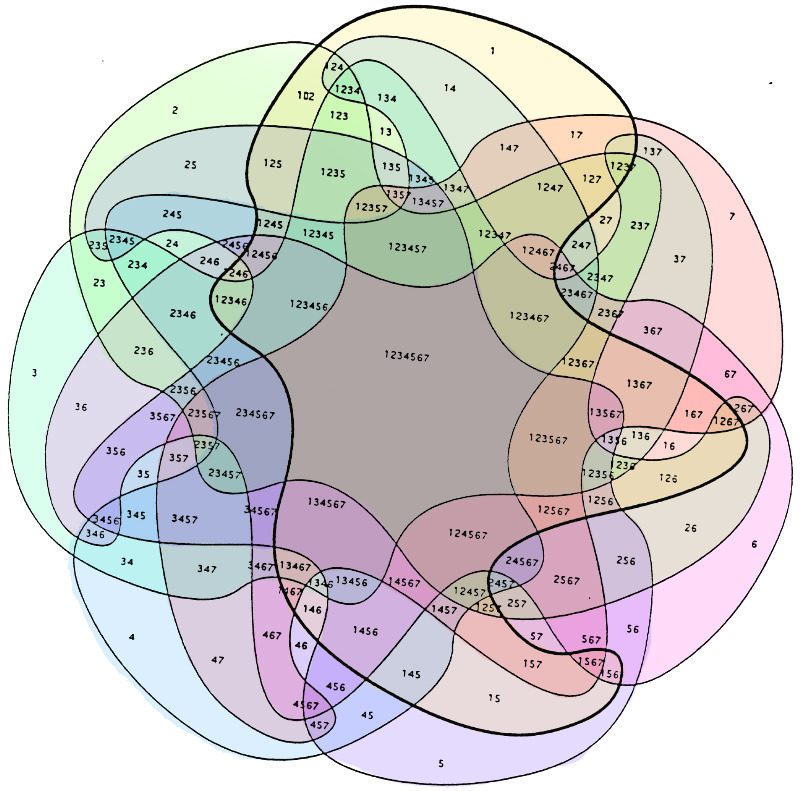
So it is deeply impressive that the ministry of St James'
is just so good. I have been told over and over that there's nowhere like SJP
and good gracious is that true! There is just so much going on - if that's the
diagram of the people, imagine what management of it all would be drawn as! The
key as I see it has been delegation. Ministry is provided by the clergy
certainly, but also the entire team of staff really, like the vergers, and also
a dedicated set of long-term volunteers, enthusiastic mid-term volunteers,
ad-hoc volunteers, and basically everyone is welcome to pitch in.
It's a way to keep the behemoth running, and it works
because of two things. One, the prevailing attitude is of encouragement and a
rejection of judgement. And two, people respond to that attitude because they
have chosen the church themselves, and if you've actively aligned yourself with
a community, you are much more likely to want to support it.
Being
a visitor at weekday services has been interesting; I’ve been to seven, three
in Cambridge and four in London. I didn’t think about it before I started, but I
shouldn’t have been surprised that the churches that are most likely to have
actual services during the week – rather than other activities – are Anglo-Catholic,
and high Anglican churches. So there hasn’t been the diversity of experience I
thought I would get from visiting so many. It has been achingly lovely that the
services are so familiar; the theory of Common Worship in practice is wonderfully
reassuring for a newcomer.
It
didn’t really give me an idea of their ministry though. I occasionally looked
round at notice boards and the like, and the priests were varying degrees of
welcoming. Some didn’t come up to me at all, some stood by the door and did a
basic handshake greeting, and some kept me in conversation about myself, why I
was there etc. Obviously the latter was most enjoyable for me (an extrovert).
So the only ministry I really experienced was a dedication to keeping up
tradition and a regular, frequent schedule of worship and Eucharist. Only two had coffee afterwards, both in Cambridge, and presumably they did so because
they were morning services, as opposed to lunchtime or evening. The third morning
service, also Cambridge, was nice simply because I was the only person who
turned up, which pleased the priest no end. The intimacy of a two-person
Eucharist was novel and absolutely great – the feeling of connection and
sacredness was totally different to a big Sunday morning congregation affair.
The
eighth church I have visited was a Sunday evening service at a conservative,
evangelical church. TOTALLY different ministry, jeez. Not a Eucharist service,
to my surprise. Millions of young people and students, singing worship songs
with a band. A leader in casual normal clothes speaking about the church’s
recent activity, and then interviewing one of the young people about their
journey from Hindu to atheist to Christian, with very leading questions like “What
was it that made atheism just not work for you?” Then a humongous sermon that
didn’t really say much except repeat and underline very basic principles of the
faith. And it was Pentecost, but was that mentioned? Nope. Which made this
outfit I happened to be wearing stick out even more.

The
leader came straight up to me and was very insistent in recommending I read the
Gospel (as if I haven’t). A small part of me wondered if he thought I was
possessed by a fire demon.
So
obviously this experience was a very different ministry. The service was
simple, singing and talking and reading the Bible. The thinking was minimal,
the speaker similarly sticking with simple truths and not going very deep. Doesn’t
appeal to me in the slightest, but people want different things out of their communal
worship, and their religion itself I suppose. Not everyone responds/finds it
useful to have a structured liturgical year, or have a physicality to their
ritual of moving around, bowing, call and response, eating and drinking. For
some, life is complicated, and religion is a way of having easy answers to big
questions, so there is a part of life they don’t need to think or worry about.
It
was popular, so the ministry did appeal to a lot of people. And – leaving the
conservatism aside – creating a simple space for people’s spiritual life to be
a relaxing, easy experience I suppose is a good ministry to provide, and the
basic principles extolled were about the same as I’ve experienced elsewhere. I
just hope that as the congregants get older, they go further afield to seek
deeper wisdom so their journey with God doesn’t get stuck at this surface level beginners stage.
When
it comes to mission, I don’t really think I have any experience. It immediately
brings to mind “God Hates Fags” signs, and that’s definitely from media intake rather
than personal experience. My reflection
on my experience of mission is that I need to get some!
Subscribe to:
Posts (Atom)