Showing posts with label discernment. Show all posts

Wednesday, 7 September 2022

My future in the army? Seven years following a call

I am into my third year of curacy, and my second of priesthood. (If you want to see a little of what I've been up to, I have updated my Steps page with some highlights). As I have said throughout this blog, discernment of vocation is a rolling task, and my journey to ordained priest was just one chapter. Okay, may be more like a volume, but one of many in the series of my life. Our calling as Christians is never just one thing, to be figured out, then just keep doing it until you die. Even for clergy, whose calling has this headline to it, the context in which we are a priest changes; either called to the same place and/or people which will inevitably change simply with time, or called to different places and different people at different times.

Third year of curacy takes a turn towards 'the next step', looking ahead and starting to think about 'what's next', because just like the official discernment process looks to BAP, the BAP looks to college, and college looks to curacy, curacy looks to (usually) First Incumbency. This is often framed as the You've Made It ⭐️ stage: discernment and formation is done, the ordinand caterpillar has gone through the goo of the curacy chrysalis and emerged a slightly wet vicar butterfly. The diocese will help you with things like training, supervision, and mentoring (I believe), and eventually you'll be on the hamster wheel of MDRs (Ministerial Development Reviews). 

From what I can tell, the latter can be used brilliantly as a tool for clergy to continue in discernment and formation, but depends entirely on the drive of the individual, so some use it as a tickbox exercise because they are all-consumed by their parish. Any thought of personal development is dismissed or repressed because it is not priority enough to warrant carving time for amongst the day-to-day demands of their current role. Because it is 'personal', it is hard for clergy to see the wood for the trees - their 'ministry' only counts if it is parish-related.

I don't blame clergy who end up in this position one jot, and I will inevitably find myself in that groove at some point. I can only hope that I will manage to climb back out of it before I am irredeemably entrenched.

Theologian Frederick Buechner defines vocation as the place where “your deep gladness and the world's deep hunger meet.” (See more here.) It is easy to slide from one extreme to the other on that scale, either doing something joyful and purposeless or something worthwhile and soul-sucking. The CofE is built on the parish system; it's the beating heart of this member of the body of Christ on and of this land, and I don't think it is possible to understand oneself to be part of the CofE without some tether into that system. So the majority of the clergy that are ordained into it are rightly called to be parish priests of some variety. I may at some point in the future discern that my calling will take me there, but at the moment, I feel called somewhere else. That is not currently where my deep gladness and the world's deep hunger meet. 

The seed of a calling to chaplaincy was planted in 2014 (God bless the Church Times book tent at Greenbelt!) you can see my post about it in 2015 here, and it has snowballed. From another post, a summary of my calling can be: 

"The main thing the [military] personnel reflected was that the Padre must care; 

and I thought "I can do that". 

I started reading about military chaplaincy. I talked to my first military chaplain in March 2016, see here. I started to grasp that military chaplaincy is a 'niche' calling, and discerning it was going to have to self-directed. At events, I chose to attend anything that discussed chaplaincy (where I got nuggets like thinking of it as a bit like being a friar in a community). Once I got to theological college, I did a placement with a school chaplain, but got excited when an RAF chaplain visited, so signed up to their recruitment stuff and did a visit in the summer of 2019. 

That May, I had talked to an incredible woman. [I love this story so I'll put it in full. A friend of mine from sixth form ended up in Newcastle, so we hung out while I was up in Durham. He invited me to a trip with his uni alpine society that includes alumni, and so we drove down to Cheddar Gorge. Over that weekend, I spoke to another alumni, and the clergy thing came up, and then so did the interest in the army. He said he was a reserves medic and loved their padre, and put me in touch with her.] That conversation not only got me so excited ("Sign me up, I want to do that!") but she put me in touch with the priest running the pilot Chaplain Cadet scheme. So I ended up spending Sep 2019-June 2020 at the NUOTC on placement.

My point is, this idea that I want to sign up as an army chaplain after curacy, rather than be an incumbent, has not come out of the blue, and it's not about running away from something (parish) but towards something (padre). It has been 8 years of discernment as a thread in my wider discernment. I'm looking at my 'next step' fairly early; one usually doesn't look until Christmas in year 3. But the application process means coordinating the behemoth institutions of the Army, the CofE, and the NHS, so I was advised that cracking on in January 2022 meant I would be sorted well in advance of the entry point Sep 2023.

I want to end my curacy with both feet still in the door. It might seem like getting things sorted early is the opposite of that, but doing all the application forms and visits and fitness training (I've joined a gym! WTF?! Follow me on Twitter to keep up with that drama) well in advance means that I won't be doing it in the last six months of being here, so I can really be here up until the last.

Like I said, I am a CofE priest, and that means I be definition can't leave the parish system as such. I am still operating under a bishop's licence as a chaplain, and I might up end up transitioning to be a reservist, where you are much more anchored in a diocese. I don't want to be a chaplain who disconnects, holes up in their institution, and imagines their ordained status as 'absolute' ie unrelated to any place (in the CofE, one cannot be ordained without being ordained into a role), as if their ministry is floating in a bubble. 

Some people suggest chaplaincy as a place for curacy and that is a rather stupid idea in my opinion. Curacy is, as Lucy always says, where you learn your muscle memory as a priest, and a priest in the Church of England is a priest of this Church and of this place, England. The ministry of this member of the body of Christ is defined as on and of this land, most definitively exercised in the parish system. Cof E Chaplains have anything to offer the places they serve because they are rooted in that system, and technically so are all the people they serve. If you are in or of an English diocese, you are under the cure of a bishop, shared to a specific priest in each place. I never want to forget that, and so regardless of my growing call to chaplaincy, this curacy has been my focus for its parochical nature. I am a CofE priest, I cannot pick and choose parts I like and think are 'relevant' to some future role I may have. 

I get that I am sounding a little defensive. I have picked up some very unjust opinions of chaplains from within the parish system, and so it is important to me in my reflections that I do not see them as different and certainly not opposed. Chaplaincy is more important now as less people go to church because it means the church going to where the people are. I see it as a very twenty-first century ministry in that regard, in a similar way to the church waking up to the importance of cathedrals. 

So at the moment, the next chapter looks set to be army chaplaincy. I say looks to be because firm plans are rarely a good idea in discernment; I try to keep to dreams and ideas most of the time, until decisions are needed, and they are not needed yet. The application process is rolling on, but I benefit from the policy that if I am offered a commission, I have five years to take it up. There's a lot of other factors in life to consider in the decisions to be made, and I'm trying not to rush, whilst at the same time sensibly getting on top of things that take time.

My questions are still the same as ever - where am I called to, what am I called to, who am I called to? My prayer always comes back to the verse quoted in this blog's title: "Let me hear of your steadfast love in the morning, for in you I put my trust. Teach me the way I should walk in, for to you I lift up my soul." (Psalm 143). Discernment continues to be hard, which is not what I thought would happen. I thought I would make it through to being a fully qualified priest at the end of curacy and it would let up slightly, that I would have established my sense of purpose so following a path would be easier.

But it is a rolling task, as I said. I feel lucky that I have been gifted the years of groundwork that mean I do not see end of the curacy as a big, scary void that I have to fill with some job somewhere that I'm only starting to think about now. My next step is not decided, but it is slowly being sketched out, a dream of a butterfly with camo wings. I think it will be both worthwhile for the world and joyful for me; I can imagine that I will work to feed a part of the world's deep hunger, and get my own deep gladness. That's what it feels like when I contemplate being a padre. I can do that.
Wednesday, 4 January 2017

Video: This is what discerning feels like/DDO 5

This won't make sense unless you watch the video, which is clips from 5th December and 15th December so make sure you watch it first:

This post was written throughout the following weeks since the video over Christmas.

I will paraphrase the report, as it is a personal document between me, my DDO, and the psychotherapist who wrote it, so I'll try not to break confidence and quote it directly. The part that caused concern was it was felt that my emotional maturity still needed some development; that I didn't let or allow painful experiences affect me ie. I put truly difficult feelings at a distance. This led to doubts that I should go forward for selection at this time. It wasn't a 'no', just a 'not yet'.

Firstly, I'll step back and address why this was flagged; why, if it's true, this is a problem for a potential priest. Lucy was helpful in explaining this context. It has become an important part of the discernment process that as well as assessing whether someone has the call, would be good at the job, and would an asset to the Church and its congregations, etc, there's also an emphasis on assessing whether they will be able to handle the job, and can look after their own health and mental health.

Priests are under so much pressure and encounter so much of the drama of life, so much of other people's suffering, that without the proper tools - eg understanding how they work best, having a support network that is reliable, making good use of that network, having stable strategies to deal with their own emotions in emotional situations - they will probably eventually implode or explode, or 'burn out' as is the common phrase.

This is referencing Criterion D: Personality and Character, which says "Candidates should be sufficiently self-aware, mature and stable to show that they are able to sustain the demanding role of an ordained minister. They should be able to demonstrate how they have faced change and pressure in a balanced and flexible way and how they manage stress." To evidence this to the selectors, candidates "should be able to speak of how they have coped with difficult life experiences, how they have reflected upon them and incorporated them within their life and understanding."

Drawing further from the criteria, I don't think the therapist thought I am completely reconciled to my own vulnerabilities and limitations, and she had worries about my capacity to assimilate and deal appropriately with my own response to negative or difficult life experiences. If I were to be a priest like this, the chances are that it would break me.

Talking with Lucy was tough. I felt like she really jumped on this as a grade A excuse to stop me going forward, making suggestions of what I could do instead in September, like spending a year at a L'Arche community. I was glad I went to her, because she emphasised the importance of not thinking about the timing, not letting the practicalities cloud my thinking about the important stuff, which was in fact discerning something personal. But it was disheartening that she seemed quite so keen to stop me; she did say she would support me if I decided to continue, but with a look that suggested she was already trying to work out how to comfort me when I get rejected. But this could just be bias based on residual resentment from the first part of our exploration, when I was wrongly frustrated at her.

I have since talked to my parents, who have the advantage of coming at this report with a fairly comprehensive understanding of my emotional/psychological history, and I was unsurprised that it was this conversation that has been most helpful. I can now see the grain of truth that the psychotherapist was trying to point out. She didn't get it right, of course not, she met me for only 90minutes, so she over-estimated what she saw. But she did identify something that could be a problem if I went ahead unaware of it.

I do compartmentalise when it comes to crisis or problem-solving or being helpless. And there have been times that I have parked my emotional response to a situation over to one side and not dealt with it as well as I could have. But it's not something I do every time. Most of the time I do deal with it, but up til now it's not been a conscious process - I've been lucky that without realising I needed something, like to do something about the situation, or talk to my boyfriend, or go out with friends, or take a day to myself, or whatever the strategy was, I did it without thinking. So the times I didn't handle it well were the times that I wasn't lucky, that I didn't accidentally sort myself out. Now I'm aware of my lack of strategy, over the next few years I can put conscious thought into what I need and eventually those moments of failing to deal properly will be very rare and not based on accidental luck.

Pausing the discernment process now isn't going to help. Yes, there are things I could do to show I have started addressing the issue raised, and talking to my landlord who is studying to be a priest himself, I understand I can't just give empty reassurance that I will mature in my relationship with my emotions - they need hard evidence, so I will have to do one or two of those things, like work experience with a prison chaplain or volunteering for the Samaritans. Lucy was keen that I get more experience of being in situations where someone is suffering and I cannot fix it, which mean I can't respond with action, and those seem more plausible options than her main suggestion.

Sure I can see her concern that if I was plopped into a job as priest right now, I might not cope so well. That's what the psychotherapist thought as well. But I'm not going forward to be a priest now. I'm going forward to selection for training. Three years of academic study and formation at college, then three to four years of experience and formation in curacy - this will bring me to being a minimum of 31yo before I am officially able to work as an unsupervised priest, and 31yo me will look a lot different to 24yo me. She'll have learnt about herself and gone through years of life, and life generally matures you even if you resist. And now I'm forewarned of one of the issues to put some effort into developing, I'm doing the opposite of resisting!

This report hasn't been given to me to stop me. Like I said in the video, I would know something like that in my gut, in my bones. It's not got the feeling of a change in direction. No, this was handed to me as an opportunity to start digging into myself below the surface, and listen to the people around me. I had a similar experience in the first year at Guildhall, so God has precedent doing this in my life. That time I needed to become more aware of myself and some of my faults to get into the right frame of mind to train as a stage manager; this time I need to do the same and go deeper, building on everything my 8 years in backstage theatre has given me, to begin the second stage of my vocation, and become the priest I'm meant to be.

As Lucy and I discussed, this is what discerning feels like. This is the inward looking journey that I need to go on, because it's not just the Church that needs to get to know me - I need to learn more about myself as well. This has been hard. As you can see, I got this news weeks ago and it's only now that I'm getting a handle on what it means for me. I didn't want to acknowledge that I had issues to resolve - you can see in the video how determined I was in my initial reaction to circumvent the long hard look at myself to which Lucy pushed me. But this is what is needed. Even if I become the Archbishop of Canterbury - first among equals, primate, archbishop, bishop, priest - I am always laity first, a frail human being that is a single part of the body of Christ. If I don't know who I am as a person, I won't come to know myself as a priest.

I want to see Lucy one more time before I go back to the DDO and tell him I want to continue. Hers is always a useful insight and I want to further our conversation with the developments in my own thinking since our last meeting. I've also received a 'write something every day for 365 days' notebook for Christmas, and I've challenged myself to express my emotions in this notebook - not what I think, but how I feel, and it's already proving that I'm not very clear on my own emotions, so hopefully it'll be another useful tool in self-awareness.

Post Script
As for the priest's report, to be honest it was just really nice. He said I seemed to have two sides, a more precise side and a wilder side, and he said that as a compliment, he found me to be engaging; and it's also had quite an impact on me by pointing out that I do in fact have quite a dedicated prayer life, I've just been too perfectionist about it. This was useful to have pointed out, and I'm less anxious now about feeling inadequate vis a vis prayer. Those are the things that have stuck with me, so I'm not going to get it out and analyse further.

Happy New Year! (Next time you see me, I'll be filming on my new camera, wahoo!)


Friday, 9 December 2016

What's the purpose of my being a priest?

In January, 11 months ago, I wrote this post about my existential crisis 'is being a priest what I was born to do', how will I know if I've succeeded at life, and should I try and plan my life with goals to achieve?

Since then I have surrendered to God, plus started the discernment process which will hopefully lead to a conclusive answer to the question of my calling. But these last few months working at St Martin's, I've begun to be plagued by questions going beyond whether I'm meant to be a priest.

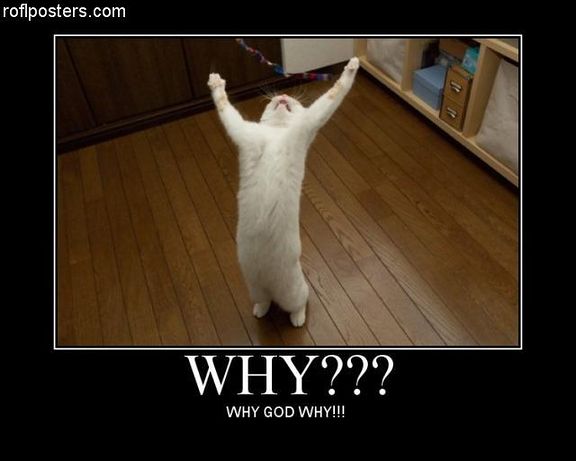
If the answer's yes (of which I am convinced) then what is the purpose of 'Rev. Georgina'? This person in my future, who is she called to serve? Basically, as the kitty says:

WHY GOD WHY!!!

So even though I swore off vocations events, a few women from the SMITF congregation were going to London Calling: Young Women, so I went along as a veteran to support them. It was a great event, and I actually got a few things from it.

  • Liz Adekunle, the Archdeacon of Hackney, was pretty cool, and she used the phrase about women priests being "used creatively" which was the first thing I wrote down, as it struck a chord.
  • The chaplains Julia Candy and Natalie Garnett spoke of being a 'point of contact with God' and "letting people know they're precious".
  • Carys Walsh said that mission and evangelism means "enabling the people of God".
And since the event, I read this in a book by my vicar, Sam Wells - "the person who speaks to God for the people and speaks to the people on behalf of God."

These sort of things have been stewing in me as I contemplate how to be who I am for other people, and what that might look like once I'm a priest. I'm not expecting to figure it out any time soon. I've spent the last 10 years figuring out who I am and what a priest is and how those two go together; if I get recommended to training, I'll be spending 6-7 years figuring out what's beyond that.

The question has been asked and the process has begun, and of course it's not ultimately down to me - God will take me through it and revelation will happen when all is in place and ready. I know that; this isn't me trying to set out a career plan. This is me realising that having accepted who I'm meant to be, and whilst the Church are deciding whether they agree, I should start contemplating why I'm supposed to be a priest.

What am I meant to do with it? What am I meant to do with all the blessings and opportunities I've been given? What's it all for? What does God want me to do once I am a priest? What's my purpose?


Wednesday, 23 November 2016

Three assessments

No video today. Not just because I didn't remember to get my camera out before and after each one of the three meetings I've had, but also I've needed time to collect my thoughts on these meetings. Before each one I was flustered and nervous, scared even. And after, my mind was mostly white noise, digesting the 90 minutes of my life that were pretty important that had just happened.

Assessment one - the priest
This one was pretty fun. I met him at his work where he's a chaplain, and he was wonderful at putting me at my ease. It felt relaxed, which was a nice atmosphere when there was also a threatening undercurrent of assessment. We drank tea from dainty tea cups that he had been amused to find in the kitchen.

Regarding the things I had discussed with the rector, I did remember most of the time to 'answer the question', though I got more chatty towards to last half hour; and I remembered to make eye contact and smile. I only managed to cover 3 out of the 7 important points I had wanted to mention, but at least I got a few in there.

Here are some of the questions I could remember whilst on the bus on my way home, some based on the form I filled in that he had been sent - with timelines of my life, my faith, my church life, my calling, questions like "why do you feel you've been called to be ordained", "what is your greatest failure/your greatest success", employment history, and hobbies - and some based on things he'd read on this blog, which he had found because I mentioned it on the form; and some of the questions are basically based on the Criteria, and the sort of things that are important to cover when considering an application to ordination.

- would you be proud to represent the CofE
- how do you deal with stress
- when has your trust in God been shaken
- what have you learnt from the pastoral assistant job so far
- why did you choose what you did on your form under 'your greatest failure'
- why does being a good stage manager mean you think you'll be a good priest
- what has made you doubt your application to be ordained
- where do you find your stillness
- how do others perceive you
- do you have a life eg what do you do outside work/church
- what does your boyfriend think of your calling
- why did you start your blog
- what do you mean when you say that doing this job feels like 'homecoming'

I think I did okay. We seemed to 'connect' as the rector put it, and I didn't say anything that made me wince or regret opening my mouth. It was nice that he'd shared a bit about himself as well, and I even found myself asking him a question or two, which made it feel much more conversational than interrogative.

But it's impossible to really know how well I did, because whilst the fact that it was a nice conversation is surely a good thing, you can really get on with someone, and still not think they're called to be a priest, or wouldn't be a good priest, and that's ultimately what he was assessing.

Assessment two - the psychotherapist
This was terrifying. Honestly, she was fine and nice but she did her job very well, which meant she was ruthless at digging into what I was saying. Now, I felt with this one that I had an obligation to be completely genuine, a tad less guarded so that it could be a true assessment. I'm still debating whether being so unfiltered was a good idea, but that's what I did.

It was a bad start as I was late getting there. I didn't have the space that I did with the first one to build up to it and prepare my mind with how I would come across and what I wanted to say. But it was very different conversation than the first, which was to be expected. It was a purely psychological assessment rather than anything to do with God or the church. It was almost clichéd that she started with 'tell me about your childhood' and at various points in later conversation seemed a little obsessed with sexuality, grilling me about my teenage romances which was probably the only point that I made the decision to keep some things private, which I don't think was unreasonable. I gave her answers enough without laying bear all the details.

I did cry once during the conversation. I had been giving a description of a part of my past and when she fed back I was overcome with fear that I had made the stupid mistake that I had been worried I would make ie. concentrating on the details and thereby risking her getting the wrong impression of me. At least I did remember to make eye contact, and I did manage to realise I was waffling and shut up on occasion.

Things we talked about included - incompetent managers, crisis, my family, my first memories, my friends, my boyfriend, coming out, previous partners, being bullied, self-development, anger, and change.

90 minutes was not enough time. There seemed vast swathes of who I am and what I've gone through that we didn't cover, which worries me. Again, I have no idea what the report is going to conclude. At a guess, if there were any issues to be raised these are my suspicions - authority, control, self-worth, pride, empathy. Now I'm not saying that these are issues I definitely have or definitely not have, they're just possible things that might get flagged, and only a rough guess. I'm not a professional psychologist, I don't know if these things were issues or not! We all have issues, it's whether they are big enough to be a problem that will be the stumbling block.

Assessment three - the lay person
For the last one, we met on Sunday evening, so I was a little tired after a day's work and I hadn't had a lot of time of switch gears. But overall I think it went well. She was very nice, made us tea, and she had prepared a set of questions, again based on the form and the criteria. A nice moment was when she said that she read my form and she felt that rather than it being just being a bunch of facts, it was written in such an open way that a "real person" was in there.

Again, I remembered eye contact and to just answer the question (mostly) but I definitely waffled more than I had with the chaplain. We talked about:

- my personal development through training and being a stage manager
- the parallels of stage managers and priests
- singing in worship
- leadership
- children's work
- the Gabriel Collective
- this blog
- dealing with difficult people at church
- my brother, parents, and boyfriend
- the rector's role in my journey
- God working in my life through opportunity and bolt-out-the-blue moments
- St James' Piccadilly
- my first children's Bible
- looking after one's physical and mental well-being

*

Blimey Charlie, they've whizzed by. I'm seeing the DDO again this week; he should have at least one report, if not two or even all three. I feel like I used to after exams - as if I should be nervous, but knowing that there's nothing I can do, so I'm suspended, hanging motionless waiting for the next step, the consequences of my actions.

I hope I've done okay. I hope I listened to the small voice of God in my heart and followed where God willed.

I won't be posting the full reports, but I will summarise them for you. So stay tuned!

Thursday, 10 November 2016

Video: Assessments coming up

5/11/16

Contrary to my last statement in the video above, it's not the latest update, I just didn't get round to putting it up before I filmed the next video! That one ^ was about how I'm feeling about the forthcoming Examining Chaplains, and the next one below is about my chat with the rector about how to go about them. You also get a great opportunity to compare what I look like with and without make up!
9/11/16


Tuesday, 18 October 2016

Video: DDO 2


I said at the end of this video that I'd put 'everything else' in the blogpost, but there's not much more to tell really. The meeting happened last week, so since then I've filled in the form and the DDO has said that he himself will be my DO for discernment, so we're going to meet again to go over the form and he can get to know my story. He'll request references, and soon he wants to start setting up 3 assessors, a lay person, a priest, and a psychology professional, with whom I will have 3 hour long conversations on which they will write a report each. I've also registered for the London Diocese Towards Ordained Ministry 'course' which is six Monday evening talks/events in Jan/Feb. And I spent an afternoon this week with a lot of other interns and PAs from the diocese, doing a safeguarding overview.
That's all there is for the moment! It's all quite smooth really, I'm just carrying on, doing my job, filling in forms. It's a feeling of forward motion that's like when you're on a train, where you feel simultaneously like you're sitting still.

Friday, 7 October 2016

Video: DDO 1


I went to see the Area Director of Ordinands for Two Cities Area in the Diocese of London. We spent an hour talking, and like I said in the video, it was mostly going over what The Process will look like. There wasn't any expectation that I would actually contribute or say much beyond a little bit about myself, which was quite a relief to be honest.

In the last clip, because it was the end of the day and I was genuinely about to go to bed, I totally forgot to mention the one exciting part of the conversation.

If you've followed this blog for a while, you'll know that I was originally very eager to get going and went through a period of severe frustration before coming to terms with the slow nature of exploration and discernment of vocation. In the last few months I have become content with letting go of planning and just being led without knowing the long term timetable, only expecting that it would be rather a long time.

So imagine my surprise, when I was asked about a time frame, and I replied that I understood that starting the process October 2016 gave too short a time to aim to go for theological training September 2017, that the response was that, in fact, that is exactly what he would recommend! So going forward, that's what my assigned DO and I will be aiming for! See below for the terrifying details.

Scary new information:
- this part of discernment is in two clear cut phases. Phase One is the part I'm in now, first meeting with the DDO, through the conversations with my assigned DO. Eventually, the DO will set up a meeting with the Archdeacon (on behalf of the Bishop, because in London, the Bishop is understandably busy!) who will then recommend or not to the Bishop that I be put forward for selection, and if yes, the Bishop's office will send a letter authorising moving forward. Once I have that letter in my hand, Phase Two starts - getting a BAP date, then putting together the application paperwork, submitting the paperwork, preparing for the BAP, and then of course going on the BAP. Phase Two is a minimum 12 week period

Looking at the BAP dates 2017, the latest one I could go to with the plan to start college Sep 2017, is Jun 26 - 29, so I would have start Phase Two by Apr 3, and submit paperwork by May 15. Holy smokes, that's so soon! Just 6 months away!!

Other new information:
- the DO is well beyond their own doubts about a candidate when they decide to start proceedings to register them on a BAP; they don't make that decision if they are unsure, and they become an advocate on behalf of the candidate, helping them best present themselves to others
- Evangelical churches, certainly in London, have their own circles of support
- after being recommended for training, you don't have to go immediately. The recommendation has a 3 year use-by date.

I'm going to fill in my form, and meet with the DDO again next week. OMG THIS IS HAPPENING. And breathe.

Tuesday, 4 October 2016

Video: Big news about next steps


That's it, that's the news. That happened Saturday, then Monday I got a phone call from the DDO to arrange a meeting, and suddenly it's happening this Wednesday morning! It's like everything has been calm and serene, then a tidal wave has come out of nowhere and knocked me over and now I can't tell which way is up.

I sort of can't believe it's actually happening. This mysterious 'discernment process' that I've heard others talk about, and imagined what it might be like, is now going to be revealed to me. I'm going to do it, me. This is not a drill people, this is go time, we're going over the top!

I'm a little speechless to be honest, which you might have been able to tell in the video. I suppose it had got to the point that, whilst I had not given up that this day would come, I had at least stopped looking towards it any more.

Blimey charlie. Well, I'll see you on the other side.

Tuesday, 30 August 2016

Video: Fourth chat with the curate, plus being like the Trinity


In the video, I said the curate asked me to write about the nature of God being the Trinity being mirrored in the human experience of relationship. Below is my attempt to expand this.

--

So in a nutshell, I said that I find it reassuring that the Trinity resolves the tension of unity and individuality in God's very being; that what seems like a paradox of relationship vs self is actually a fundamental part of God and therefore a fundamental part of us as made in God's image - it's not something for us to overcome but to embrace about ourselves and our lives. God is the epitome of cohesive relationship without the loss of separate distinctions, and therefore God is the example we can follow to try to resolve the tension in our lives.

I am reassured that I follow a God whose being is one of simultaneous one-ness and three-ness, because however hard it looks when I'm struggling to find compatibility between being myself - having a unique combination of characteristics, temperament, needs, and desires - and being part of so many relationships - and groups, and the responsibilities towards convergence and consensus that those entail - it is possible find harmony in being both simultaneously.

See if you recognise these scenarios from your own life:

Sometimes I feel totally isolated; I prioritise only my own needs, and do things on only my terms. And that leads to problems. Friends and groups in my life feel abandoned or ignored; I as an extrovert get grumpy, and sometimes a bit melancholic. Days start to feel monotonous, and as if I've unplugged from life, and I wonder where my life is going. I feel like I've forgotten something but all my obvious needs are seen to, and doing anything beyond basic requirements seems like a chore.

Sometimes I lose all sense of self; I priotise only the needs of others, and make decisions without factoring in the consequences of my actions on myself. And that leads to problems. I over-extend myself, running out of mental, physical, and emotional resources. I become exhausted but have promised to do something else so keep going, sometimes feeling like crying just because I feel so terrible. I want to resent people and situations draining my resources, and find it difficult to enjoy all the activities I'm doing because they have now become chores.

These are extremes, but I know I've been in both scenarios multiple times, and I think it comes down to this difficult balancing act. My identity as an individual can sometimes feel at odds with my identity as part of relationships. My sense of difference and distance from 'others' doesn't gel with my sense of belonging and being part of 'us'.

This comes up in the context of talking with the curate because I am foreseeing the tension in my future. I look ahead, look at the impending discernment process, and I get double vision, because there are two paths going at the same time (which I've said before) - one journey with God, and one journey with the Church. Now the former feels more 'real', it's the personal journey where I know I can be entirely genuine and trust completely in it. And that clashes with the latter, which I'm scared will feel contrived, because it involves other fallible people and I don't trust myself or them enough to feel confident we'll get it right.

Desmond Tutu quotes the concept of ubuntu, which officially means "the belief in a universal bond of sharing that connects all humanity" and Tutu explains as: "My humanity is caught up, inextricably bound up, in yours. We belong in a bundle of life. We say a person is a person through other persons." which is a bit like what the curate got out of my analogy with the Trinity. I was looking at that the discernment process has this fundamental dual nature of 'ultimately' being an attempt at following God's calling, but also 'ultimately' being a series of relationships with a very human element. He went further and looked at it as an opportunity for us to experience, see and recognise our faith and ourselves through others.

I think that's what he was saying. We were a tad at cross purposes I fear. But it is true that we aren't often naturally inclined to approach faith through others. It always feels like 'faith' is this internal thing totally separate from outside, just between you and God. And yeah, there is a personal connection, but just like the Trinity, there is a communal connection at the same time as the separate one and they intertwine and inform each other! So my discernment journey with God is simultaneously distinct and intimately connected with my discernment journey with the Church, a constant dance of unity and separation, just like the Trinity. We are both connected in unity and also defined as individuals by our humanity. My relationships with the people on the discernment process will inform my relationship with God as well as vice versa. And its helps to know that God is also in a similar dance of relationship as well, so I have a chance of striking a balance. Just as God could not be God without being Trinity, I cannot live my personal truth in the light of God without the feedback loop of faith and identity from relationships with others.

Or something like that.

Tuesday, 21 June 2016

Three priests and me

A bit more catch up on the things that have happened over my hiatus, as I explained in this post. If you missed it, the exciting outfit at an evangelical church I mentioned was discussed in this post (with pictures!)

So, what else happened?

One priest
On May 10th I had my fifth meeting with the rector about my vocation. We talked about my retreat, and the St Martin-in-the-Fields job, and referring me to the diocese official discernment process. Last time we met, we delayed to see if I got the job, because SMITF would need to be involved. This time, she wanted to check with them for confirmation that it was all okay, like, officially for SJP to carry on with me whilst working at SMITF; she also wanted to talk with the curate, as he would become my main point of contact with SJP; and the third thing she wanted to do was read this blog (if you're reading this Reverend, hello!) I sent her a list of posts to watch/read, she's talked to SMITF and the curate, and we've got another meeting this week.

Two priest


On May 16th I finally met my new boss, Revd Sam Wells, vicar at SMITF.


Three priest!
On 19th May, I met with St James' curate for the second time. I caught him up on the things I had been up to, and we also talked about the job, and I told him about meeting Sam. He latched onto Sam's question enthusiastically, which isn't a surprise; the discernment process is a case of me turning to the Church and saying 'I want to be a priest' and the Church responding 'And who are you then?' So a bit of focus on my identity will be a very helpful conversation for us to develop. I've put together two documents of questions to answer by myself to bring anything interesting that turns up to my next meeting with him in two weeks. You can find my document of questions from the DDO paperwork here, and a secular identity question sheet here.


I need to catch up on my news a bit faster! I'm going to pause my Going Further series for the moment and hopefully post quite frequently until I catch up with all that's happened/will happen.

Saturday, 18 June 2016

Going Further: why are you here and why now?

See this post for an intro to this series.

During their meeting with enquirers, DDOs and Vocations Advisers will want to listen carefully to the vocational stories of the enquirers and to tease out from the enquirers their response to two key questions: ‘why are you here?’ and ‘why now?’  


Why are you here?

My life has been leading towards an inexorable future, and I fully embrace it. I am meant to be a priest, and I want to be a priest. Church is where I belong, and I want to continue the tradition, and also improve it, and provide humanity with the tools for living their lives as God's children; give them liturgy, show them wisdom, encourage dialogue and thinking about divine, philosophical, and ethical matters. I'm not wired to be able to prioritise my relationship with God without having it tangibly at the centre of my life ie. as my job, and my very identity, but it has become my priority to serve God in the best way that I can do, so I must arrange my life accordingly.

I feel such a desire to be a priest, but my calling is more than that. There is a resonance, a rightness to it, like my soul has finally been plugged into the universe and powered up. I think I would be good at it, with the right training, practice, and focus. I've always thought I would become a priest, and when the time came to put my feet on the path, I was overjoyed, terrified, unsure of the exact path ahead of me but sure that ordination was on it somewhere along the line. I think it would suit me, and be the best way for me live to the fullest - "The glory of God is a human being fully alive" (Iranaeus).

I want to nourish people's souls, even if they don't realise it. This is my part of the Church's mission to a tangible expression of God's love to the world, and becoming a priest is the best way for me to do that - it's the only way I'll fully realise it. A constant theme in my life has been stories, and I am called to use stories, listen to stories, be in stories, tell stories, spread stories, explain stories, absorb stories, nudge stories. It is by changing the stories in and the story of the world that we end suffering and bring about the next chapter - the kingdom of God.


Being a priest is the best way for me to do that in the most important context, in people's spiritual lives, their most intimate and personal relationships - with God, others, and the world. A priest has that place in people's lives. People expect you to hear their stories, you're allowed to tell stories, it's not surprising for a priest to get stuck in and change the story; your life is dedicated to the greatest story ever told, you represent that story, people look to you to get to heart of stories, and share the stories that matter. The epitome of that is reenacting the story of the Last Supper in the Eucharist, and meeting Christ at the very human setting of a shared meal. It would be amazing to have authority and duty to introduce people to Christ. It is one of my greatest joys to learn, discuss, teach, and expand my and others' horizons.

It's also important to me to express my identity, and the most important part of who I am is being a disciple of Christ. We are called to evanglise, and I think I am best suited to convey that by my unapologetic identity in devotion to following Jesus. I want to communicate the mission of spreading the good news in people's lives by trusting God to work through me, and being a priest gives me the context to do that. My gift is focus, so it makes sense that my job, and beyond that, my full-time identity, is a religious context, to put my focus to God's work. I want to have the licence to be truly enthusiastic about God and Christ, to really let my geek flag fly. I love God, and if my life can be spent in God's company, doing God's work, spreading God's love, being used by God, every day all day, in my favourite place or with lots of different people, challenged, tested, and maybe in the end doing something that has meaning - that sounds like true happiness.

Why now?
God has always been in my life. When I was a child, it was just obvious, a definite truth I didn't think about. My parents didn't tell me God existed or didn't. But when I read my children's illustrated Bible, I loved it. When I went to a CofE primary school, I learnt the Lord's prayer, said grace, went to church for harvest and Christingles; and it was great, and I wasn't really thinking about God but the worship was positive, and I wanted to keep going to Christingles after I left that school.

I realised as a teenager that I needed to start thinking about things a bit more clearly because we were studying different religions. I came to understand that I had a relationship with God through Christianity as a default setting rather than conscious belief, and that wouldn't do. At that point I actually acknowledged my faith in Christ specifically, rather than as just the version of a story of God that I went along with. I learnt about the variety of beliefs and worship styles and built a picture in my head of what sort of Christian I was, and out of the blue decided to wear a cross to publicly express that. 

God has been working my life in this step by step way the entire time, starting as the distant Father. When I started at SJP, I really started to get to know God in Christ, in fellowship and discipleship. Now I think I'm getting to know God the Spirit, a much longer, deeper process that is wakening my spirit within me. 2015 was a tough year in my spiritual life because I was building my stage management career and kept missing things at church, kept failing to develop a prayer life, and the worst point was not going to Holy Week, and feeling no sense of jubilation Easter morning.

It was at the point at which I tried to buckle down in my SM career that the heavens moved. I was not meant to establish a secular career. One day in September, I got a spiritual kick up the backside, the doors opened, and boom, NOW IS THE TIME.

I had always known this would happen. I recognised my sense of calling at 16, very clearly understanding and instantly accepting that I would end up a priest, eventually, one day. But God's schedule was not the one I had anticipated. The call, the kick, the moment that now, NOW I was to seek out my second and ultimate vocation, came much earlier than I thought. But in the grand scheme, it makes perfect sense that I drop everything and begin the next part of my journey.

My spirituality is blossoming. I've gained 8 years of personal development from my first vocation as a stage manager. I've received 5 years of parish experience and religious development. Continuing in theatre would have pushed my faith to the sidelines. And now the perfect opportunity to begin in ministry itself as plopped into my lap, to be the PA at SMITF. The reason I'm here now is because God has called me now, and God has called my now because it is the right time in my life.


Thursday, 9 June 2016

My new job as Pastoral Assistant


(So yes, as I announced in my last post, I got the job that I mentioned in this post - in the video I talk about it 1:45 til 4:40 - I'm going to assume you've watched that and read the post.)

In September, I am going to start as pastoral assistant at St Martin-in-the-Fields, a CofE church on Trafalgar Square, of high worship style, liberal theology, and a great culture of enterprise to get out and help people. It's known for it's charity The Connection at St Martin's, as well as it's Vicar's Relief Fund and almost a century of Christmas Appeals with BBC Radio 4. They also have popular cafes in the Crypt and the Courtyard, and occasionally celebrity/royal events.

The church also has a fantastic music programme, with concerts for free at lunchtime, or by candlelight in the evening, masterclasses, jazz nights, and six in-house choirs. Every time I've been to any service, the first thing I tell people when they ask about it is "well, the music was incredible!" I don't know if I'll be able to join any of the choirs, but I really want to if I can!

I have specific duties in my role in children's ministry, liturgy, and pastoral care; and in general my role will be assisting the clergy, working with all the staff, and experiencing the breadth of the church's work. The job very much has a mutually beneficial dynamic - the PA is a team member who is part of the running of the church's work, but is also there to experience ministry with an eye to going further into it.

As I mentioned in the video, there was some discussion on whether I would be sponsored in discernment through SJP not SMITF, as they have more often sponsored their PAs themselves. As far as I'm aware, it's all okay for me to carry on with St James', so that's good.

I was so nervous before the interview. As I said in the video, I had a gut reaction to this job, and I wanted it BADLY. I've never been so nervous. If I had fucked up and not got it, I really didn't know what I would do - it seemed inconceivable that I would continue being a stage manager. It just made perfect sense that this opportunity came at exactly this moment, but unlike other perfect opportunities in my journey of faith and vocation, this was not just something I had to take. Other people decided whether I could take it.

This has been my first experience of human gate keepers in following my calling from God, and it wasn't pleasant. I had to remain realistic throughout, and whilst I kept a hope and faith alive that what I felt was right would be my path, it ultimately lay in the hands of others, and there was a chance they would say no. That is the same scenario I will encounter at every stage of the official discernment process and this preview has shown me, by gum, it's going to be hard.

But anyway, I did get it. After four days without news, I was so stressed I just upped and walked out the house and stomped out to the fields, and sat on a bench by the river, sighing, crying, and staring into the distance, like I was in an Austen novel, minus lacy hanky. I eventually rang them, but got the answer machine. Despondent, I started back home, and as I walked up church lane, they rang me back. When the good news was imparted, I stopped in my tracks and literally bent over, leaning on my knees, in utter relief. When we finished speaking, I hung up, and thew my hands in the air with an almighty "YEEEESS!" bellowed into the sleepy quiet of the village. When I got back, I told my parents and burst into tears.

I am over the moon. It's going to be an amazing job that I will enjoy, get a lot out of, and also be pretty good at. Only yesterday a friend was congratulating me on managing get paid to spend the majority of my time doing something I love ie being at church! But more seriously, the job is going to put a lot of stuff that I've only thought about in theory to the test ie. ministerial qualities and skills that I need to be a priest - do I have them? We shall see. It's going to be doing ministry, watching clergy at close quarters to see how they do it, be backstage and involved in the liturgy in a depth I just didn't have access to as a lay volunteer, and getting to grips with what it takes to run a church.

To sum up, here's an extract from my application statement:

"I have been involved with various vocations events, like day conferences, and weekends away, as well as attending a variety of services within the Anglican tradition, and going on retreat on Holy Island; but discussing and sharing conversations about my faith, my calling, and myself can only go so far in the exploration of vocation. Actually doing it is the best way to work out how one operates and what one’s gifts are; the difference I saw between talking about being a stage manager and being one at college was tremendous, only overtaken by the difference between training on the job, and doing the job as a professional!

Also being part of a prayerful worship community full-time is a unique context in which to encounter, respond to, and connect with God. I suspect there will be developments in my relationship with God that would only be possible in the opportunity of being a pastoral assistant. The role of service is an integral part of finding freedom in God."

Monday, 25 April 2016

Video: Young Women - Your Call

On Saturday 23rd April, I went to Coventry Cathedral for a young women's vocation's conference. There were 87 young women attending and about 20 ordained and lay women organisers, with a handful of husbands helping! It was the first all-women event I've been to, and I was having flashbacks to my school days at a girls school.

I videoed a quick summary of my thoughts as I waited in the train station, and below is a run down of what we did, and the notes I took during the sessions.


I had train issues but still managed to get there in time (go contingency time!) and we were welcomed before sharing in morning prayer. Celtic morning prayer, which was cool (I recently book the Celtic Daily Prayer book, which I'm looking forward to using). The first key note was Bishop Anne talking about vocation as a woman.
Notes from the welcome:
- under 40 and especially under 30 women under-represented as priests
- feeling of sisterhood! Surrounded by others, all have a story
Notes from the first key note
- God's voice is richer for being the living Word as opposed to human words
- what does God trust me with? Trust me to do?
- courage - embrace pain and joy, the risk of trusting the next step
- phrase 'anunciation moment' [useful to describe my moment in September]
- have sense of the potential of who I can be in God
- children and ministy = careful planning
- lifetime of discerning God's call that weaves in and out of the tapestry of our lives [this was an overriding theme and a really good analogy, such as only being able to see the mess at the back rather than the picture God is weaving on the front]
- women reject job descriptions if they don't think they can do 10% of it
- trust God through fear, like fear that you're on the wrong path - you can't fall beyond the reach of God's will and God's love

After a tea break, the second key note was basically a session on how to defend when someone brings up arguments against the ordination of women. I gotta be honest, I started getting uncomfortable at this stage, and realised that being at a targeted event about vocation may be great for young women who might not otherwise look at themselves as potential priests because of their gender, but I did not have that problem. It also rankled that a) I was basically being defined primarily by my gender which is an attitude I don't tolerate in my life and b) it played into the system of the gender binary, which is itself a factor in the patriarchal systems of female oppression, as well as just out of date thinking that I reject.

But speaker Lis did use the phrase 'the Gender Agenda' and sadly, people do have an agenda based on repressing the female gender. I made notes, and it was, I suppose, useful to hear positive interpretations of scripture, but I'm making the decision not to put them here, as a statement of my belief that we need to get past this position of defense; it was needed 20 years ago, but my generation is putting gender aside. It is not relevant to judging my aptitude at ministry, and as much as I love my gender and am proud to be a woman, I will not even give the space for the possibility of argument any more. It is finished.

I enjoyed talking to the young woman who I ended up sitting next to for the morning, but at lunch talked to others who migrated to the appropriate seating area designated by geography (ie south, south east etc). But sadly, because there were so many of us, and we weren't really pushed to stay in one area and talk to the same people, I spent most of the day feeling a tad isolated, and didn't bond with anyone the way I had at all the other, smaller, events I've been to.

Like in Kettering and York, we took seats at tables, and stayed there for most of the sessions, and lunch, which meant we had motivation to get to know our neighbours. Without the anchoring of a consistent place, I was really lucky to talk to anyone, and even luckier that I bumped into the woman I sat next to in the morning, at the train station, which was great.

After lunch, we split into smaller groups to attend short seminars that we had picked in advance. My first was 'Young and Ordained' and two women, a new curate, and a vicar, introduced themselves, told their stories, and asked us to talk to the person next to us about a person in the Bible that we related to.
My notes from this first half:
- hard to leave settled life - calling is not static, God 'sends'
- ordination is not peak of calling
- I related to Peter; the start and end of his calling by Jesus 'Follow me' and 'Do you love me?' - that's what Jesus is saying to me too
- but what can I, and only I, do in answer?

Then they talked about the challenges and joys of ordination.
Challenges
- 'Wisdom beyond your years' - expectation that clergy know what to say. Not necessarily 'the right quote', 'the right psalm' - no formula. God gives us words, just be yourself.
- 'Making and maintaining friendships' - friends spread out as you move around, especially young people move more. Be intentional - use holiday, make effort to go and to host. Who is important to make time to see?
- 'People taking you seriously' - not as bad as you might expect. Blagging it so people feel calm and reassured. People expect to see a representative of God. God equips.
- 'What people expect of the Vicar' - afraid to tell vicar that they [the vicar] are wrong as the priest should know. Can be asked about ethical and moral decisions.
- 'Being true to yourself' - look like self in dog collar. At first very aware of the collar. Feel judged. Alright to have friends in the parish. Rise to the challenge and adapt. Blurred lines especially for ordained with big personalities [!!] in different situations. Still forming in 20s/30s, getting to know yourself now in a public space.

Joys
- meet lots of different people
- feel right place, time and doing. Not what people expect lead to opening conversations.

Straight into the next seminar, it was really great to have sessions on other callings that parochial ministry, but uniquely in my experience led by actual practitioners of those other callings. I listened to three chaplains talk about school, prison and university chaplaincy.
Notes:
- spontaneous, holy spirit-led ministry
- broad, in every sector
- "religious/spiritual care in an organisation"
- finding God at work
- can volunteer to get experience, go through vicar or DDO
- multi-faith model, for the world
- creative, opportunities
- round peg, square hole in parochial ministry
- God also calls to stop
- drop in income doesn't matter if happy in position
- not imagine self in parish
- [thought to self, could there be an LGBT chaplain, rather than a place chaplain?]
- chaplains are on the edge
- prison - intense and emotionally demanding
   - large capacity to love, love those otehrs would find difficult, and can't loveselves
   - gift of love to loveless place, and bring hope that anyone's broken life can have meaning
   - structured expectations - visit new prisoners within 24hrs, visit segregated, visit hospital
   - paid by prison service, but critical friend eg on policy
- uni - students have less baggage
   - Christian community
   - wider community - all faiths and none, generous
   - element of mission but not priority
   - religious literacy - prepare students for a world that is 85% people of faith
- 'friar' in community [I like this image]
- "be you, there"
- school - welcome and hospitality, mental health
- resources for worship
- put on services for organisation
- "be a good guest"
- not of the organisation whilst in it
- talk to anyone, full access
- earn trust and show integrity
- lovely, a privilege
- transience, let people go
- listening

Bumped into a familiar face from CPAS!


More tea and coffee, then a final session for a panel Q&A.
Notes:
- have to be recommended by vicar
- know where you could engage the debates, and where you can't
- trust each other to be under scripture and under God, and walk together in prayer
- mental health difficult in church context
- at first, revisit feelings of incompetency
- it will cost for family
- look at all college options - not straightforward - what experience do you want, needs in academic theology, time, community, tradition, somewhere you can come alive
- official discernment process comes under Equality Act
- call is complicated - follow and obey but also life does happen and can change course - God works through strange ways
- husbands not so hot on clergy spouse support as wives - careful of boundaries with your spouse - are they called to be part of ministry
- take ordination vows seriously eg obedience - can be part of the Church's own discernment - Issue of Human Sexuality "content to live within these guidelines" - have to accept to be put forward for ordination
- BAP - vulnerability of being 100% convinced whilst also knowing that you're coming into the possibility of being told you're wrong

After one more cup of tea, we have a lovely Eucharist, and as I said, I had a lovely chat with one of the other attendees at the train station, just after I filmed the video.

Sunday, 17 April 2016

Vocations Sunday

My vocation has been a varied and wonderful thing. It started as a vocation to stage management, which led to taking a vocational degree, but that vocation was part of a larger one, the sense of which I've had slowly but steadily growing since the first time I read the stories in my children's illustrated Bibles.

It led me to explore religion in my studies, it gave me the inspiration to start wearing a cross on a chain; my vocation pointed me in the direction of reading the Bible, it pushed me in the direction of Church, then plonked me without much subtlety in a particular church; my vocation pointed me at confirmation, it found voice in choral music; then my vocation kicked me back in the head and I thought "I should do this now."

As you know if you follow this blog, 'this' was start the process of discerning what my long-term vocation is. My stage management has provided opportunity and tools for personal growth, slowly forming the clay into a basic person shape, and now I am turning to the Church to refine and detail what that shape will look like, to be put into the world and formed into the person God is calling me to be.

I feel I am called to facilitate and inspire God's people to worship and to love. The path ahead of me is concealed, all I am doing is following the directions I am pointed in, but my understanding has been and continues to be that somewhere along the journey, I will be ordained. Why do I want to be a priest? It seems inescapable, inevitable, and wholly desirable.

--

On Twitter follow @CofECalling and search #VocationsSunday to hear more.

Wednesday, 13 April 2016

Video: Finally visiting the rector again!


First of all, I will apologise both for the sunglasses, and the wobbly camera action near the end.

Something I didn't talk about in this video is the continuing theme of my discernment which is going against expectations. My own expectations to be precise. Apparently my pre-existing ideas about myself need to be knocked out of me one by one, until I'm pretty sure anything that I think is going to happen in the future isn't likely to work out the way I currently think it will; and certainly the person that I currently imagine I am going to be will probably never actually exist. Instead, slowly but surely God's will is being done, and my end of the bargain is to the respond, accept, and put the leg work in.

This pastoral assistant job for example. As I said, a few months ago I decided it wasn't going to be for me. A few months ago, had I read a job description that involved a heck of a lot of youth and children's ministry, I would have laughed in the face of anyone idiotic enough to suggest I might do it. But now, it's the right time for this opportunity to come to me, so I didn't reject it out of hand, I didn't sneer and grimace at the thought of running the creche and confirmation classes. It clicked, right into place, for that is how I and the universe are built at this moment in time.

This is not to say that I actually have the job yet, nor that I think it's a certainty that I will. I still have to get to the know the community and enterprise by going to some services and 'pre-production research' as I would normally call it in theatre; and then the Big Interview, going up against two other candidates. This is so unlike my usual mode in job hunting, it scares the bejeesus out of me. So I'm not saying this is *dramatic voice* MY DESTINY or any tosh like that. But it's the direction I've been turned in, and in faith and trust (and imaginary pixie dust) I will step out and do my best.


Thursday, 17 March 2016

Video: Step Forward 2016


Step Forward is the Church of England's big annual conference day for people aged 18-30 considering ordination. It was held this year on March 12th (last Saturday as I write) at Bishopthorpe Palace outside York. The Archbishop of York was supposed to attend but was called away.
Entrance hall

The programme looked like this:

10:30 Registration and Refreshments
11.00 Opening Worship – Preacher: the Rt. Revd. Alison White, Bishop of Hull
11:30 “Calling”
12:15 “Discerning” Break into diocesan groups to meet Diocesan Directors of Ordinands (DDOs) and hear about discernment process.
13:00 Lunch
13:45 “Forming” A chance to hear what training is like (with Mark Tanner, Warden of Cranmer Hall, Durham and Father Peter Allen, College of the Resurrection, Mirfield, West Yorkshire.
14:30 “Serving” Stories from a variety of people serving as ordained ministers in very diverse settings.
15:30 “Worshipping” Closing worship including sermon, and opportunity to receive prayer, laying on of hands and anointing.
16:00 Tea and Depart

"Calling" was spent in partners doing some exercises to explore/describe our calling. We filled in a worksheet with 'stepping stones'  to lay out the major steps on our faith journey up to now. Mine looked like this:
  • Part One (age 0-13) Children's Bible - Christingles - The Lord's Prayer - Mrs Currie - Do I believe this?
  • Part Two (age 14-19) I want to wear a cross - You should own a Bible - St Michael le Belfry - I'm going to church tomorrow
  • Part Three (age 19-23) I'm home - I want to get confirmed - Singing with God - I'm going to end up being a priest - Psalm 143:8 - I think I'm going to be a chaplain
(details in my blog posts first, second, third and fourth).

The steps in bold are the ones I think are the biggest turning points, and what I originally put in the five stones on the sheet before drawing in a million other ones to fit the other points of the journey. Then we did a classic discernment exercise called SHAPE - CPAS have a great online tool to do this exercise here. I've done this in the past, but as the leader pointed out, it's good to go over and see if anything new pops up. Mine looked like:

Spiritual gifts - Mercy and forgiveness, Faith, Hospitality
Heart - Doing right; Understanding and creating understanding; Storytelling
Abilities - Communication, Organisation, Energy
Personality - Confident, Generous, Focus, Love, Cheer, Honesty, Passion
Experience - Stage management; Sixth Form graduation Student of the Year; Different churches in Oz/NZ

Next we looked through God calling in scripture, and I connected with three - Jeremiah 1:4-9 "I am too young"; Peter in John 21:15-19 "Do you love me?"; and Paul in Acts 9:1-22 because he was blinded by his call (obviously I have only been metaphorically blinded).
Window in the main conference room

"Discerning" was great, mostly because I haven't met a DDO yet, and hearing the process from their perspective was really interesting, plus it was a lot more comfortable grilling them knowing they weren't your own DDO.

After lunch was "Forming", which was definitely my favourite part. Introducing themselves as a 'double act', the heads of the two theological colleges gave two very inspiring talks, not about grades, essays and course structure, but about the nature of the formation that goes alongside the academia, the spiritual and personal development that, at a more fundamental level, makes a priest a priest. Notes I made during this bit were:
  • hold the presence of Christ in the church and in the world
    • non-negotiable icons of Christ
    • burden of non-stop priesthood
  • learn who I am, who God is, and to be attentive
  • Both in the world and in God's world
  • Become the person I didn't think I could be, incl. a theologian, and a person who can pray
  • Imperfections can lead to positive surprises
  • Live from within my heart
Gives me goosebumps just reading it back.

Lastly was "Serving", the stories of four priests is different circumstances about their work. It wasn't the most diverse group - a catholic, male, village curate; a young, female, rural curate; a female, village vicar; and a male urban vicar - but I supposed it's always interesting hearing different stories.

Another note that I don't remember where it came from says simply "There is a cost to following the love of Christ." I think it might have been the urban vicar or the female, village vicar.

Two to-do things I got out of the day were arranging some chaplaincy 'placements' or whatever experience I can get, and be a calmer person, which will take more time and effort than the former task!

Overall it was a really lovely day with really interesting, inspiring and lovely people. I got to talk with Bishop Alison over lunch, and empathise with other delegates over the terrible state of online vocation resources, or at least the difficulty in finding them. They also gave out contact details of DDOs so I now know who the London DDO is and who the Two Cities Area Director of Ordinands is, who I presume will be involved in my case, when it finally gets that far.

I had dinner at the pub with these two lovely delegates
-
-

On that point, the rector said last Friday we could set up a meeting, so that'll hopefully happen after Easter next week. I've put up the quick vlog I did about meeting with the uni chaplain today - as I said in that, I'm meeting another uni chaplain, and a uni college/police chaplain next week, and hoping to meet with a prison chaplain as well, though that's not bearing fruit as yet. They're being very nice and helpful, I've only contacted them this week and already filling the diary. I'm going to shadow the guy I talked to today for a day in April!

Next week will be great, being Holy Week. Sadly because I'm not living in London, I won't be going to the daily reflections, but I'll go to Maundy Thursday, and the Three Hours Good Friday which is always one of my favouites. I don't know when I'll get into London on Easter Saturday; I normally go to the St Paul's Cathedral service but that might be a pipe dream. I'll at least end up at church for Compline and the over night vigil; there'll be a dawn service (which is also one of my favourite), then Mum and Dad are bringing American guests to Easter Sunday, and some of us 'youth' going to the pub in the evening for the young people's monthly group, because sod organising a session at the end of all that. I'll sing at all the services, including the audience-participation-flashmob Hallelujah Chorus from Handel's Messiah, which is always fun! Including trumpet, obvs.

I'll stop rambling now. Future blogposts plan is I'll write something about my meeting with the military chaplain separately, and finally get round to answering the questions that came out of the CPAS conference day.

Tuesday, 8 March 2016

How I've changed in the last 6 months

So I'm not yet on the official diocese discernment process, I've only talked to my rector and my curate about my calling, but I've been on a discernment process since the start of September 2015. It's been six months, and yes, it's frustrating that it's taking what feels like forever to feel like I'm getting anywhere, but I was reflecting recently, and looking at myself, I think I have actually already got somewhere.

Six months ago, I was ball of excitement and impatience, and I've got a handle on that now. God is doing what God always does in my life. My path is a series of steps, and I am given the opportunity to progress to the next step ONLY when I am ready, and almost never when I actually
want it. God gives me the amount of time I need on each step to grow and develop in whatever way that step is for - it's like completing a level on a computer game and going up to the next, except I don't know the aim of the step, or how long it will be for, or how many levels there are (I suspect, from the trend of the last 23 years, I won't ever run out of levels), or how close I am to completing it. But I just have to keep faith, because I'm on God's schedule, not mine. That has always been the path that has served me well, and so unsurprisingly, the last 6 months haven't been the purposeless waiting game that they felt like many times.

I am more confident talking about my calling. In my first conversation with the rector, I talked in vague terms and she had to coax me to even say the word 'ordination'. I had generally been embarrassed to talk about my sense of calling, worried about people thinking less of me for listening to the 'imaginary friend in the sky telling you your destiny'.

But I know what I feel. I am called to do the right thing, be a good person and show others they should be too, for many reasons, but ultimately in response to the universe and the love of God that permeates every place and moment in spacetime.  That's what the story of Jesus Christ, the good news, tells me. I am called to be part of God's church, to have role in helping humanity have a relationship with God and the universe that balances inner truth and outer truth in active and reactive harmony. This discernment process is to explore the interpretation of that call that leads me to believe that I can fulfill that call best in the priesthood.

A big part of these last months has been reading the stories of others on their discernment of ordination (see my blog roll), and being inspired and educated. It's inspiring even reading of people who are rejected at BAP, because they don't give up, they keep going in their journey to serve God. That's so encouraging when I face the prospect that it might one day happen to me. And the stories that reach a 'yes' answer from the BAP fill me with hope and excitement that God willing that is what will happen to me.

As you know, if you've been reading my blog, I've been working on prayer, knowing that it needs to become the cornerstone of my life. That in itself is a slow process, God and I are something like sporadic penfriends rather than bosom buddies right now, but that's an improvement on relatives who talk 3 times a year because they have to, which is sort of what it was like before I got the massive kick from my calling and started putting some effort in. My main barrier is I am terrible at getting into habits, especially as freelance stage management doesn't have the same routine for more than 4 weeks max. But over this period, I have stopped worrying so much about 'being bad at prayer' or not praying enough, and taking the pressure off makes it less scary. So that's an improvement.


As well as reading blogs, a huge part of my activity has been reading books (see my reading list). I love reading, which is helpful, but it hasn't just been a case of leisurely interest. It has kept my focus, explained about the priesthood, military chaplaincy, prayer, vocations, the theology of Jesus, being friend's with Christ, and whetted my appetite to keep learning, deepen my understanding, and not stop, forever and ever amen. Whilst reading, I get a touch of what a God centred life is like, because they're good at being a constant reminder to turn back to God, to remember God.


It's been a similar thing reading the Bible everyday - the same as the other books, it's turning my focus back to God, back to the divine within the ordinary. My eyes have also been opened to the narrative structure of the OT; before I was used to hearing the individual extracts of specific episodes, and now I have a much clearer understanding of who Abraham, Isaac, Jacob and Moses were.

I worked a job in September/October/November and then took December off to do Christmas at church. Things weren't too bad during that contract; I was excited about setting up this blog, and meeting the rector several times, and simply getting used to starting the discernment process, finding out what it involves and working out how I was going to come at it. Then I did a job January/February, and this happened. I stressed out to the point that I did break down a week before the job ended, and my beloved had to put the pieces back together so I could hobble to the end. That's not job stress. Yes, the job was more stressful than previous jobs, but I think it got to me because I was stretched, torn between two paths that I was attempting to follow simultaneously. I have been challenged to follow my path whilst also working as a Deputy Stage Manager, and basically I think I failed. I'm not sure yet if it was my failing, or an indication that the two are incompatible, but I lean towards the latter.

It was horrible, but I love my job. Even that bastard of a contract was enjoyable. Here and now, reflecting on both jobs, I can see a comparison of the happiness for myself that I get at work vs the joy inspired in me by the happiness of others when I help at church. And it is the latter that feels the most right, and also the more fulfilling. I'm now taking March and April off to do Easter, some more conferences, and a spiritual retreat, and these last few weeks of first recovering, and then setting out my to-do list for church things, and life things, and discernment things - I feel back on track.

Another gain over the last six months has been affirmation, be it not very much so far. Several people when asked have said they think I'd make a good priest, and a couple have said so without prompting.

A more recent change has been starting to appreciate evangelism. You'll remember from my selection criteria video (which was a bit long, true, here's a link to the relevant section of the video) that I don't like charismatic worship, and have issues with the mission element of ministry (this section of the video). Reading about RainbowGirl's similar problems has helped me work through some of my own, and I'm a lot more open to learn about the positive evangelical worship and ethos, without being worried it'll be all conservative negativity.

Changes galore. Baby steps along the path, but at least heading in the right direction and making progress.